A peace lily can be one of the most graceful houseplants in the home. When it is healthy, it produces deep green leaves and elegant white blooms that rise above the foliage. It can make a room look calm, fresh, and alive. But when a peace lily begins to struggle, the change can feel dramatic. The leaves droop, the edges turn brown, flowers collapse, and the whole plant may look as if it is fading fast.
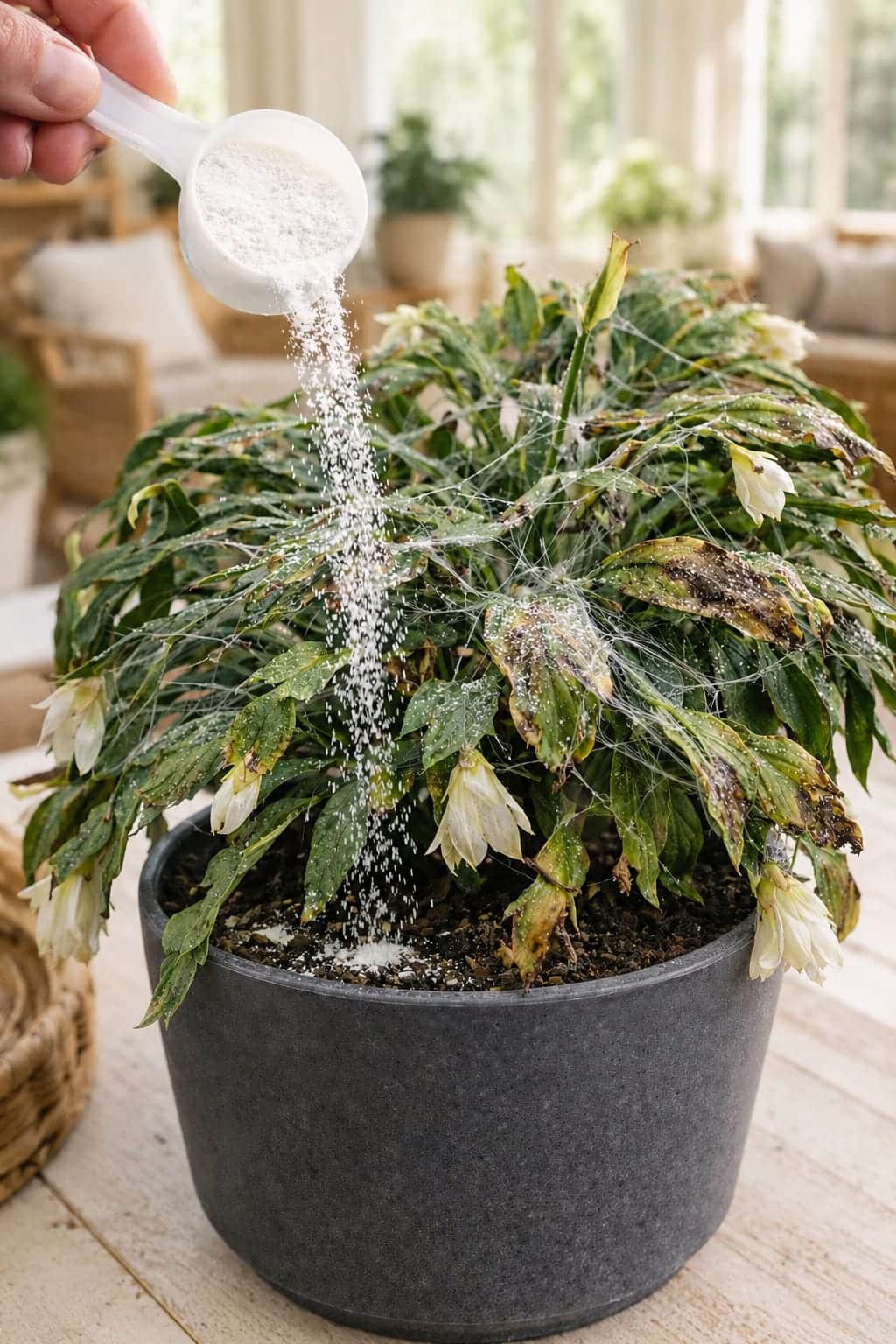
The image shows a tired peace lily with drooping leaves, browning edges, fading white blooms, and a white powder being sprinkled over the pot. This kind of plant-care image is often connected with Epsom salt, a common household ingredient used by some gardeners as a magnesium supplement. Epsom salt can be useful in certain plant-care situations, but it must be used carefully. It is not a miracle cure, and it should never be poured heavily over a stressed plant.
A struggling peace lily usually does not need a dramatic powder treatment first. It needs diagnosis. Brown leaves, drooping stems, and fading flowers can be caused by several different problems: underwatering, overwatering, low humidity, too much direct sun, poor drainage, old soil, cold drafts, fertilizer buildup, or root rot. If you add Epsom salt without understanding the real cause, you may make the plant’s stress worse.
Used correctly, Epsom salt may support a peace lily if the plant has a mild magnesium deficiency or if the leaves look pale despite good care. But it cannot repair rotten roots, reverse brown leaves, revive dead flowers, or replace proper watering and light. The safest method is not to sprinkle a thick layer of dry powder on the soil. The safer method is to dissolve a very small amount in water, apply it rarely, and only use it on a plant that is healthy enough to benefit.
This guide explains how to help a struggling peace lily recover, how to identify the real problem, how to use Epsom salt safely, and what care steps actually bring back strong leaves and future blooms.
What Epsom Salt Is and Why People Use It on Plants
Epsom salt is magnesium sulfate. It contains magnesium and sulfur, two elements that plants use in small amounts. Magnesium is important because it is part of chlorophyll, the green pigment that helps plants use light. When a plant truly lacks magnesium, its leaves may lose some of their healthy green color.
This is why Epsom salt is often used as a homemade plant supplement. Many gardeners believe it can help with greener leaves, stronger growth, and better flowering. In some cases, when magnesium is actually lacking, a small amount can be helpful.
However, Epsom salt is not a complete fertilizer. It does not provide nitrogen, phosphorus, or potassium in the balanced amounts a peace lily may need. It also does not fix bad soil, soggy roots, or poor light. It is only a specific mineral supplement.
The biggest mistake is treating Epsom salt like a universal cure. If a peace lily is drooping because its roots are rotting, magnesium will not help. If leaves are brown because of dry air or inconsistent watering, Epsom salt will not turn them green again. If the plant is burned from too much fertilizer, adding more salts can make the situation worse.
What the Image Suggests
The peace lily in the image appears stressed. The leaves are drooping, several leaf edges are brown, and the white blooms are hanging down. There are also web-like strands across the plant, which may be decorative or may suggest the kind of visual often used to show a plant that has been neglected or attacked by pests. A white powder is being sprinkled over the pot, creating the idea of a simple rescue treatment.
This is a powerful image for a plant-care article because it shows a common mistake: trying to save a plant with one ingredient before checking what the plant actually needs. A peace lily in this condition may need water, or it may need less water. It may need humidity, or it may need fresh soil. It may need root inspection, not fertilizer.
If the white powder is Epsom salt, it should not be applied heavily. A thick layer can dissolve unevenly and create mineral concentration around the roots. Peace lilies have sensitive roots, and mineral buildup can cause more brown tips and stress.
The safest message is: Epsom salt can be used only as a mild supplement, but the first step is always to inspect moisture, roots, light, and drainage.
Why Peace Lilies Droop
Peace lilies are famous for drooping when they are thirsty. This is one reason many people think drooping always means the plant needs water. Sometimes that is true. If the soil is dry and the leaves are limp, a thorough watering may help the plant perk up within hours.
But drooping can also happen when the plant has been overwatered. This is more dangerous. When soil stays wet for too long, roots lose oxygen and begin to rot. Rotten roots cannot absorb water properly, so the plant wilts even though the soil is wet. If you water again, the damage gets worse.
That is why you should never treat drooping blindly. Always check the soil first. Touch the top inch of soil. Lift the pot if possible. Smell the soil. Look at the drainage situation. These simple checks can tell you whether the plant needs water or whether the roots are drowning.
If the soil is dry, water may be the answer. If the soil is wet and the plant is still drooping, root inspection is more important than Epsom salt.
Why Peace Lily Leaves Turn Brown
Brown tips and edges are very common on peace lilies. They can happen for several reasons. Dry air is one cause. Peace lilies enjoy moderate humidity, and indoor air can become dry, especially near heaters or air conditioners.
Inconsistent watering can also cause brown edges. If the plant repeatedly dries out too far and then receives a lot of water, the leaves may show stress. Too much fertilizer can also burn leaf tips. Minerals in hard tap water may contribute to browning over time.
Too much direct sun can scorch the leaves, creating dry brown patches. Peace lilies prefer bright indirect light, not harsh direct afternoon sun. Cold drafts can also damage leaves and make them brown or yellow.
Epsom salt will not reverse brown tissue. Once a leaf edge turns brown, it will not become green again. The goal is to prevent new damage by fixing the cause. You can trim brown edges for appearance, but the plant’s recovery will appear through new healthy leaves.
Why Peace Lily Flowers Fade
Peace lily flowers do not last forever. The white spathe eventually turns cream, green, brown, or dry. This is natural aging. A faded flower does not always mean the plant is sick.
However, if blooms collapse quickly, the plant may be stressed. Common causes include underwatering, overwatering, heat, cold drafts, low humidity, or sudden changes in location. Strong fertilizer or mineral buildup can also affect flower quality.
When flowers are spent, cut the flower stem near the base with clean scissors. This helps the plant redirect energy into roots and leaves. Do not leave old decaying flowers lying on the soil because they can attract pests or mold.
Epsom salt cannot restore old flowers. It may support future growth only if the plant truly needs magnesium and the basic care is correct.
Can Epsom Salt Save a Dying Peace Lily?
Epsom salt cannot save a dying peace lily by itself. A dying plant needs diagnosis and correction. If the plant is dying from root rot, it needs rotten roots removed and fresh soil. If it is dying from dehydration, it needs proper watering. If it is dying from low light, it needs a brighter location. If it is suffering from pests, the pests must be treated directly.
Epsom salt may help only in a narrow situation: when the plant is otherwise healthy but showing signs that may match magnesium deficiency. Even then, it should be used carefully and sparingly.
Many plant owners add Epsom salt because the plant looks pale or weak, but weakness can have many causes. If roots are unhealthy, the plant cannot use nutrients properly. Adding magnesium to damaged roots is like offering food to a plant that cannot eat.
The honest answer is this: Epsom salt can support some plants in small amounts, but it is not a rescue cure for a seriously stressed peace lily.
⚠️ Important: Epsom salt is not a substitute for proper watering, drainage, or root care. Always diagnose the cause of stress before adding any supplement.
Why Sprinkling Dry Epsom Salt Can Be Risky
Sprinkling dry Epsom salt directly onto the potting mix can create concentrated spots. When the plant is watered, the crystals dissolve and move into the soil. The areas closest to the crystals may receive a stronger dose than the rest of the pot.
This can stress roots, especially in a small container. Indoor pots do not have unlimited soil volume to dilute minerals. If Epsom salt is added repeatedly, salts can build up. Salt buildup may cause brown tips, leaf burn, root stress, and poor water absorption.
Another problem is that people often use too much. A spoonful may look harmless, but for a potted peace lily, it can be excessive. More magnesium does not mean more growth. Plants need balance.
The safer method is to dissolve a small amount in water and apply it evenly. Even then, it should be used rarely.
The Safest Epsom Salt Recipe for Peace Lily
A gentle beginner-safe mixture is one teaspoon of Epsom salt dissolved in one gallon of water. Stir until the crystals dissolve completely. Use this solution only when the peace lily is already due for watering.
Do not pour the entire gallon into one pot. Use only enough to water the plant normally, then allow the excess to drain. The rest of the mixture can be discarded.
For a small peace lily or a plant that is already stressed, make the mixture weaker. Half a teaspoon per gallon is safer. It is always better to use too little than too much.
Do not use Epsom salt water weekly. Once every two to three months during active growth is more than enough if you choose to use it. Many peace lilies do not need it at all.
When to Use Epsom Salt
Use Epsom salt only when the peace lily is stable, not sitting in soggy soil, and not suffering from root rot. The plant should have healthy roots and be in active growth. If it is producing new leaves and the soil drains well, a mild supplement may be tolerated.
It may be useful if the leaves look pale even though the plant receives good light, correct water, and light balanced feeding. It may also be considered if you have reason to believe the potting mix is low in magnesium.
The best time to use it is during spring or summer when the plant is actively growing. During winter or low-light periods, peace lilies use fewer nutrients, and extra minerals are less helpful.
Use it as one watering session. Do not water with plain water and then add Epsom salt water immediately after. Too much liquid can keep the roots wet too long.
Continue to Page 2
Continue to page 2 for more details about this article and the key points many readers miss on the first page.