Snake plants are famous for being tough, stylish, and easy to care for. Their tall sword-like leaves, deep green patterns, and upright shape make them one of the most popular indoor plants for homes, offices, bedrooms, and living rooms. A healthy snake plant can look elegant for years with very little attention. It can tolerate some neglect, survive in different light levels, and go longer without water than many common houseplants.
But even a strong plant like a snake plant can struggle when its care routine is not balanced. Leaves may become soft, bend, wrinkle, turn yellow, develop brown tips, or stop producing new shoots. When this happens, many plant owners start looking for a simple homemade trick to help the plant grow stronger. One common natural idea is using diluted milk water.
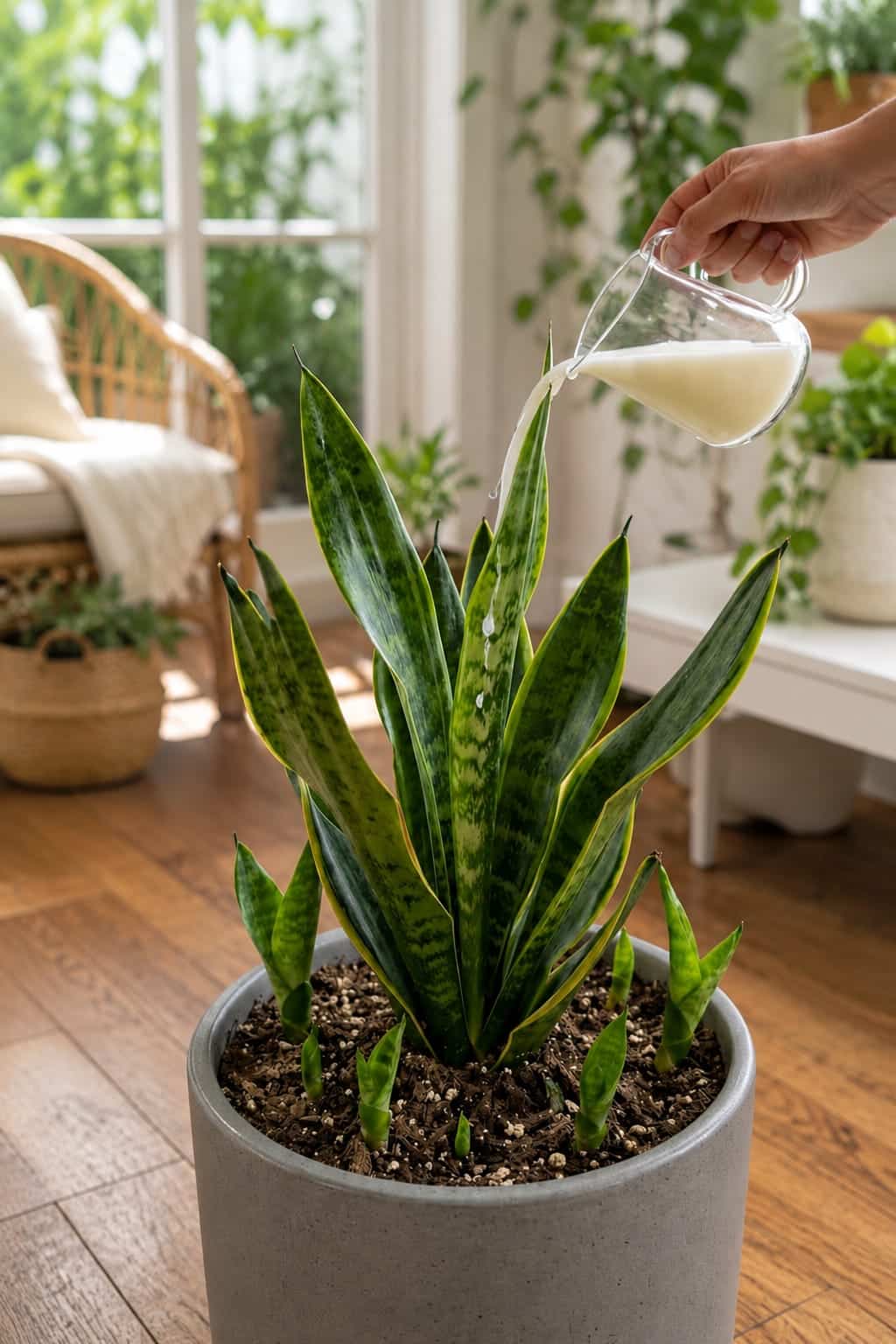
The image shows a healthy snake plant with several new shoots growing from the soil while a milky liquid is being poured over the leaves and toward the pot. This creates a powerful visual message: a simple kitchen ingredient may support growth and help the plant look fuller. However, the safest way to explain this method is with realistic expectations. Milk is not a miracle fertilizer. It will not make a snake plant grow overnight, and it will not fix root rot, poor drainage, low light, or overwatering. If used too strongly or too often, milk can even create problems such as sour soil, mold, fungus gnats, and unpleasant odor.
Used correctly, milk water should be extremely diluted, fresh, and applied rarely. It can be treated as a mild occasional supplement for a snake plant that is already healthy and growing. But the real reason a snake plant stays strong is not milk. It is fast-draining soil, a pot with drainage, careful watering, enough light, and patience.
This guide explains how to use diluted milk safely for snake plants, when it may be useful, when to avoid it, and what care habits truly help your plant produce strong leaves and healthy new shoots.
Why Snake Plants Are Different From Many Houseplants
Snake plants, often known as Sansevieria or Dracaena trifasciata, are succulent-like plants. They store water in their thick leaves and underground rhizomes. This makes them much more drought-tolerant than many tropical foliage plants. A snake plant does not need constantly moist soil. In fact, constantly moist soil is one of the easiest ways to damage it.
Because snake plants store water, they prefer a wet-dry cycle. This means the soil should dry out well before the next watering. The roots need oxygen, and if the potting mix stays wet for too long, the roots can rot. Once the roots are damaged, the leaves may soften, yellow, collapse, or stop growing.
This is why homemade liquids need extra caution with snake plants. A peace lily or fern may tolerate more frequent moisture, but a snake plant does not want rich, wet soil. Anything added to the pot should not make the soil heavy, sticky, or slow to dry.
Milk water can only be considered safe when it is highly diluted and used rarely. A strong milky mixture in a snake plant pot is risky because it adds organic material and moisture to a plant that prefers dry, airy conditions.
Can Milk Help a Snake Plant?
Milk contains water, small amounts of minerals, proteins, fats, and natural compounds. Some gardeners use very diluted milk water as a mild homemade plant supplement. The idea is that a tiny amount of milk mixed into plenty of water may provide small amounts of calcium and other elements while supporting a natural care routine.
However, milk is not a complete fertilizer. It does not provide balanced plant nutrition in a predictable way. A snake plant still needs proper soil, light, and watering more than it needs milk. If the plant truly needs nutrients, a diluted cactus or succulent fertilizer used during the growing season is usually more reliable.
The biggest concern with milk is spoilage. Milk can sour when it sits in warm soil. It can create odor, attract insects, encourage mold, and leave residue. If the soil already stays damp too long, milk water can make the problem worse.
So the answer is: diluted milk water may be used as a very occasional supplement for a healthy snake plant, but it should never be used as a rescue treatment or regular watering method.
What the Image Shows
The image shows a strong snake plant in a decorative pot, with several young shoots emerging from the soil. These new shoots are a positive sign. They show that the plant is actively growing and that the underground rhizomes are producing new growth. This usually happens when the plant has enough light, healthy roots, and a suitable potting environment.
The milky liquid suggests a natural feeding routine. But the important detail is that the plant already appears healthy. It has upright leaves, visible new shoots, and a stable shape. This is the type of plant that may tolerate a very mild homemade supplement occasionally.
This method should not be presented as “pour milk and your dying snake plant comes back to life.” A safer and more believable message is: “If your snake plant is healthy and actively growing, a very diluted milk-water treatment can be used rarely as a gentle supplement, but proper watering and drainage matter much more.”
That message is better for the plant and more trustworthy for readers.
When Diluted Milk May Be Useful
Diluted milk water may be useful when a snake plant is already healthy, planted in fast-draining soil, and producing new growth. If the plant has firm leaves, no signs of rot, and the soil dries properly between waterings, a very weak milk-water mixture may be used occasionally as a small natural support.
It may also be useful if you want a gentle, low-cost, kitchen-based plant routine, but only if you understand that it is optional. Many snake plants grow perfectly well without milk. In fact, most problems with snake plants come from overwatering, not from lack of homemade supplements.
The best time to use diluted milk water is during the active growing season, usually spring and summer. This is when the plant is more likely to produce new leaves or shoots and can use mild nutrients more effectively.
If the plant is in a warm, bright location and growing well, it is more suitable for a light supplement than a plant sitting in a cold, dark corner.
When You Should Avoid Milk Water
Do not use milk water if your snake plant is already struggling from overwatering. Warning signs include yellowing leaves, soft leaf bases, mushy stems, a sour smell from the soil, or soil that stays wet for many days. Adding milk water in this situation can make the problem worse.
Do not use milk water if the pot has no drainage holes. Snake plants need drainage. If water collects at the bottom of the pot, roots can rot. Adding an organic liquid to a no-drainage pot increases the risk.
Avoid milk water if you see mold on the soil or fungus gnats flying around the pot. Milk can add more organic material and moisture, which may encourage these problems.
Do not use milk water in winter if the plant is not actively growing. During colder or darker months, snake plants need less water and fewer nutrients. Extra liquid can sit in the soil for too long.
Also avoid milk water on a newly repotted snake plant. Freshly disturbed roots need time to settle. Wait until the plant is stable before using any homemade supplement.
The Safest Milk-Water Ratio for Snake Plants
The safest milk-water mixture for a snake plant should be very weak. A good beginner ratio is one part milk to fifteen or twenty parts water. The final mixture should look only slightly cloudy. If it looks like a glass of milk, it is too strong.
For a small amount, mix half a teaspoon of plain milk into one cup of water. For a larger pot, one teaspoon of milk in two cups of water is still mild enough for a light application. You do not need much. A snake plant is not a heavy feeder.
Use plain milk only. Do not use sweetened milk, chocolate milk, flavored milk, condensed milk, or milk mixed with sugar. Sugar can attract insects and create sticky residue in the soil.
Low-fat or skim milk is usually safer than rich whole milk because it leaves less fatty residue. The goal is not to feed the soil with dairy. The goal is a very light, diluted supplement.
How to Apply Milk Water Correctly
Although the image shows liquid touching the leaves, the safest method is to apply diluted milk water to the soil, not over the leaves. Snake plant leaves are thick and upright, and milk residue can sit on the surface. This may leave marks, attract dust, or smell unpleasant if the leaves are not cleaned afterward.
Apply the mixture around the soil surface, away from the base of the leaves. Do not pour it into the central leaf rosette or allow it to collect between leaves. Trapped moisture in the leaf base can increase the risk of rot.
Use only a small amount. Do not flood the pot. If your pot has drainage holes, allow excess liquid to drain out fully and empty the saucer. If the pot does not have drainage, avoid this method completely.
After applying, wait and observe. Do not repeat the treatment quickly. The plant needs time, and the soil must dry properly before the next watering.
Step-by-Step Diluted Milk Routine for Snake Plants
Step 1: Check the Soil
Before using diluted milk water, check the soil moisture. Snake plant soil should be dry before watering again. Push your finger into the soil or use a wooden stick to test moisture deeper in the pot. If the soil is damp, wait.
Never apply milk water to wet soil. This is one of the most important safety rules. Wet soil plus organic liquid can create sour smells and root problems.
Step 2: Check the Leaves
Healthy snake plant leaves should feel firm and upright. If leaves are soft, mushy, yellowing at the base, or collapsing, do not use milk water. These symptoms may indicate root rot or overwatering.
If the leaves are firm and the plant is producing new shoots, it is in a better condition to receive a mild supplement.
Step 3: Prepare a Weak Mixture
Mix half a teaspoon of plain milk into one cup of water. Stir well. The water should look only slightly cloudy. If it looks too white, add more water.
Step 4: Apply to the Soil Only
Pour a small amount around the edge of the potting mix. Avoid pouring directly onto the leaves or into the center of the plant. Keep the leaf bases dry.
Step 5: Let It Drain
If water drains from the bottom, let it drain fully. Empty the saucer after watering. Do not leave the plant sitting in liquid.
Step 6: Wait Several Weeks
Do not repeat the treatment for at least two or three months. Watch for signs of odor, mold, gnats, or soil staying damp too long. If any of these appear, stop using milk water.
How Often Should You Use Milk Water?
Milk water should be used rarely. Once every two to three months during the active growing season is enough, and many snake plants do not need it at all.
Do not use milk water weekly. Do not use it every time you water. Snake plants grow slowly and do not need frequent feeding. Too much attention is often more harmful than too little.
If your plant is in low light, use milk water even less often or skip it completely. Low-light plants grow slowly and use less moisture. Extra liquid can stay in the pot too long.
If you already use a cactus or succulent fertilizer, you may not need milk water. A balanced fertilizer is more predictable, while milk water is only an optional natural supplement.
Can Milk Water Make a Snake Plant Grow New Shoots?
Milk water cannot directly force a snake plant to produce new shoots. New shoots come from the plant’s underground rhizomes. They appear when the plant has enough energy, healthy roots, proper light, and a suitable potting environment.
If your snake plant is already producing pups, that is a sign that the main care conditions are working. A mild milk-water treatment may support the plant slightly, but it is not the reason new shoots appear by itself.
To encourage pups naturally, focus on bright indirect light, a snug pot, healthy roots, and careful watering. Snake plants often produce more shoots when they are slightly root-bound and growing in good light.
Do not overfeed or overwater to force pups. That can damage the plant.
Can Milk Water Make Snake Plant Leaves Shinier?
Milk water should not be used as a leaf shine product. Pouring or wiping milk on leaves can leave residue. This residue may attract dust or cause spots if it dries unevenly.
If you want snake plant leaves to look clean and glossy, use plain water and a soft cloth. Gently wipe each leaf to remove dust. Clean leaves can absorb light better and look healthier immediately.
A naturally shiny snake plant comes from clean leaves, correct light, and healthy roots. Milk on the leaves is not necessary.
What Milk Water Cannot Fix
Milk water cannot fix root rot. If the roots are rotten, the plant must be removed from the pot, damaged roots or leaves must be trimmed, and the plant must be repotted into dry, well-draining soil.
Milk water cannot fix a pot without drainage. If water cannot escape, the roots are at risk. Drainage holes are essential for snake plants.
Milk water cannot fix low light. A snake plant can tolerate low light, but it grows better in brighter conditions. If your plant is not producing new shoots, light may be the main issue.
Milk water cannot repair old damaged leaves. Brown tips, scars, or yellowed areas will not turn green again. The goal is to support new healthy growth.
Milk water cannot replace fertilizer. It is not balanced plant food.
Continue to Page 2
Continue to page 2 for more details about this article and the key points many readers miss on the first page.