Geraniums are some of the most cheerful flowering plants you can grow on a windowsill, balcony, patio, or garden table. Their round green leaves, upright stems, and bright flower clusters can bring color into a home even when the weather outside looks cold and gray. When a geranium is happy, it can bloom again and again, producing red, pink, white, coral, or lavender flowers that make the plant look fresh and full for months.
But even geraniums can slow down. They may stop blooming, stretch toward the light, develop yellow leaves, or look tired after a long flowering period. When this happens, many plant lovers look for a simple homemade trick to help the plant recover and bloom better. One popular idea is using an aspirin tablet dissolved in water as a gentle plant stress-support treatment.
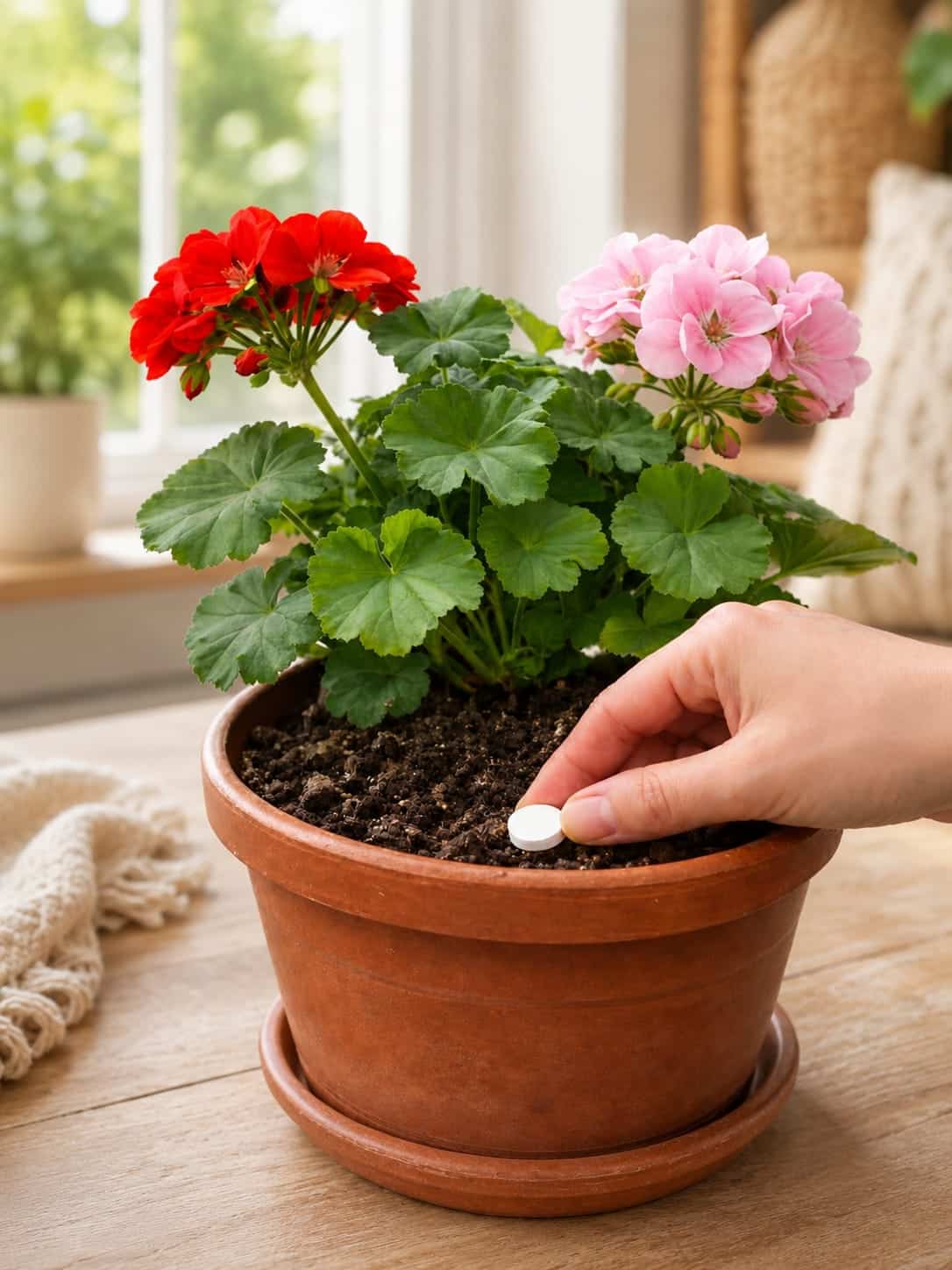
The image shows a healthy flowering geranium near a window while a small white tablet is being placed into the soil or near the potting mix. This kind of image suggests a simple “tablet trick” for stronger blooms. However, it is important to explain this method carefully. Aspirin is not a miracle fertilizer. It will not force a weak geranium to explode with flowers overnight. It will not fix root rot, poor light, compacted soil, overwatering, or lack of proper feeding. Used too strongly or too often, it can stress the plant rather than help it.
When used properly, aspirin water may be used as a very occasional stress-support treatment for a geranium that is still healthy enough to grow. The key is dilution. A full aspirin tablet should not be pushed directly into the soil and left there to dissolve around the roots. A concentrated tablet in one spot can be too strong. A safer method is to dissolve a small amount in plenty of water, then apply it occasionally only when the plant is already due for watering.
The real secret to full, blooming geraniums is not one tablet. It is bright light, correct watering, good drainage, regular deadheading, occasional pruning, and light balanced feeding. Aspirin water can be one small optional step, but the plant’s basic care routine matters much more.
What Is Aspirin Water for Plants?
Aspirin contains acetylsalicylic acid, which is related to salicylic acid, a compound involved in plant stress responses. Because of this, some gardeners use aspirin water as a homemade tonic for stressed plants. The idea is that a very diluted aspirin solution may support the plant during mild stress, especially after transplanting, pruning, environmental changes, or a period of weak growth.
However, aspirin water should not be confused with fertilizer. It does not provide a balanced supply of nutrients. It does not contain the full range of nitrogen, phosphorus, potassium, calcium, magnesium, and trace elements that flowering plants need. If a geranium is hungry, aspirin water is not the correct replacement for fertilizer.
Aspirin water is also not a cure for disease. If a geranium has root rot, fungal problems, pest infestations, or poor growing conditions, the real cause must be fixed. A tablet cannot replace fresh soil, drainage, sunlight, or correct watering.
The safest way to think about aspirin water is this: it is an occasional stress-support rinse, not a regular feeding routine and not a rescue miracle.
Can Aspirin Water Help Geraniums Bloom?
Aspirin water may support a geranium indirectly if the plant is mildly stressed, but it cannot directly create flowers. Geranium blooms depend mainly on light, plant maturity, healthy roots, correct watering, temperature, pruning, and nutrition.
If your geranium is not blooming, the first thing to check is light. Geraniums need a lot of brightness to flower well. A plant sitting in a dim corner may produce leaves but few flowers. In that case, aspirin water will not solve the problem. The plant needs more light.
The second thing to check is deadheading. Old flower clusters should be removed once they fade. If spent blooms remain on the plant, the geranium may direct energy toward seed production instead of new flowers. Regular deadheading encourages a cleaner, longer blooming cycle.
The third factor is feeding. Geraniums are flowering plants, and they usually perform better with light, balanced nutrition during active growth. Aspirin water does not replace that.
So, can aspirin water be part of a bloom-support routine? Yes, occasionally. But the flowers come from strong care habits, not from the tablet alone.
Why You Should Not Put the Tablet Directly Into the Soil
Although the image shows a tablet being placed near the soil, the safer method is to dissolve aspirin in water first. Pushing a tablet directly into the pot can create a concentrated area as it dissolves. The roots closest to that spot may receive too much at once.
Geranium roots need an even, balanced soil environment. A concentrated tablet sitting in one area may irritate roots or change the local soil chemistry. This is especially risky in a small indoor pot, where there is not much soil volume to dilute the tablet naturally.
Another issue is that tablets often contain binders, coatings, or inactive ingredients. These are not plant food. Leaving them in the pot may create unnecessary residue.
The better method is simple: dissolve a small amount of plain aspirin in a large amount of water, stir well, and use only a small portion of that solution when the plant needs watering. This spreads the mixture evenly and reduces the risk of root stress.
The Safest Aspirin-Water Ratio for Geraniums
A gentle beginner-friendly dilution is one plain aspirin tablet dissolved in one gallon of water. This creates a weak solution that is much safer than placing a tablet directly into the pot or dissolving a full tablet in a small glass.
If you only have one small geranium pot, do not use the whole gallon on one plant. Mix the solution, then use only enough to water the plant lightly when the soil is ready. The rest can be discarded. Do not keep aspirin water stored for long periods.
Use plain aspirin only. Do not use pain relievers that are not aspirin. Do not use tablets combined with caffeine, sleep aids, cold medicine, or other active ingredients. Do not use flavored or sweetened tablets. These are not suitable for plants.
For sensitive plants or smaller pots, you can make the solution even weaker. With homemade plant routines, less is usually safer.
When Aspirin Water May Be Useful
Aspirin water may be useful when a geranium is mildly stressed but not severely damaged. For example, if the plant was recently moved indoors, repotted, pruned, or exposed to a short period of inconsistent watering, a very diluted aspirin-water treatment may be used as one small support step.
It may also be considered after a plant has been deadheaded and lightly pruned, especially during active growth. The goal is not to force flowers, but to support the plant while it returns to steady growth.
Aspirin water may also be used if the plant looks slightly tired after a long blooming period but still has firm stems, healthy roots, and green leaves. In this case, one weak treatment may be acceptable.
The best time to use it is when the plant is already due for watering. If the soil is still wet, wait. Geraniums do not like soggy roots, and adding any liquid to wet soil can cause problems.
⚠️ Important: Aspirin water is not a regular fertilizer. Use it only rarely and never on a plant that already has root rot, wet soil, or poor drainage.
When You Should Avoid Aspirin Water
Do not use aspirin water if the soil is already wet. A geranium that is wilting in wet soil may have root damage. Adding more liquid will not help.
Do not use aspirin water if the pot has no drainage holes. Drainage is essential for geraniums. Without drainage, water collects around the roots and can cause rot.
Do not use aspirin water if the plant has root rot. Root rot usually appears as soft stems, yellowing leaves, foul-smelling soil, or roots that are brown and mushy. The plant needs fresh soil and root care, not a tablet.
Do not use aspirin water every week. It is not a regular fertilizer. Repeated use can stress the plant or create unnecessary buildup.
Do not use aspirin water on a plant that is cold-damaged, pest-infested, or severely diseased without solving the main problem first. Always diagnose before treating.
How to Use Aspirin Water on Geraniums Step by Step
Step 1: Check the Soil
Before using aspirin water, check the soil moisture. Geraniums prefer soil that dries slightly between waterings. The top inch of soil should feel dry before watering again. If the soil is damp, wait.
If the pot feels heavy and the soil is wet, do not water. If the soil feels dry and the pot is lighter, the plant may be ready.
Step 2: Prepare a Weak Solution
Dissolve one plain aspirin tablet in one gallon of room-temperature water. Stir until the tablet is fully dissolved. The solution should be weak and clear.
Do not use a full tablet in a small cup of water. That mixture may be too strong for the roots.
Step 3: Apply to the Soil Only
Pour a small amount of the solution onto the soil around the plant. Do not pour it over the flowers or leaves. Wet flowers can age faster, and residue on leaves is unnecessary.
Use only enough to moisten the root zone. Do not flood the pot.
Step 4: Let the Pot Drain
If water drains from the bottom, let it drain fully. Empty the saucer afterward. Geranium roots should not sit in standing water.
Step 5: Wait Before Repeating
Do not repeat the treatment quickly. Wait at least six to eight weeks before considering it again, and only repeat if the plant is healthy enough and actually needs watering.
Continue to Page 2
Continue to page 2 for more details about this article and the key points many readers miss on the first page.