How Often Should You Use Aspirin Water?
Aspirin water should be rare. For most geraniums, one application during a stress period is enough. If repeated, once every six to eight weeks during active growth is the maximum cautious approach.
It should not be part of every watering. It should not replace fertilizer. It should not be used as a weekly bloom booster.
If your geranium is already growing and flowering well, skip aspirin water. Healthy plants usually need consistency more than extra treatments.
If your plant keeps declining after one careful treatment, the issue is likely not something aspirin can solve. Check roots, light, watering, pests, and soil.
The Real Secret to More Geranium Blooms
Geraniums bloom best with bright light. Indoors, they need the brightest location you can provide, ideally near a sunny window. Outdoors, they usually enjoy several hours of sun, though very hot afternoon sun may require some protection in intense climates.
If your geranium is leafy but not flowering, it may not be receiving enough light. Move it gradually to a brighter spot. Do not expect flowers from a plant kept in a dim room.
Deadheading is another major bloom secret. Remove faded flower clusters by cutting or snapping the flower stem back to the node. This encourages the plant to continue producing flowers instead of putting energy into seeds.
Feeding matters too. A balanced flowering plant fertilizer used lightly during active growth can support bloom production. Avoid overfeeding with high nitrogen fertilizer, which can encourage leaves at the expense of flowers.
How to Deadhead Geraniums Properly
Deadheading means removing old flowers after they fade. This keeps the plant tidy and encourages new bloom cycles. Geranium flowers grow in clusters, and when a cluster begins to dry or lose color, it is time to remove it.
Follow the flower stem down to where it joins the main plant. Pinch or cut it off cleanly. Do not just pull off individual petals and leave the old stem. Removing the full spent flower stem gives the plant a clearer signal to produce more growth.
Use clean scissors if the stem is tough. If the stem snaps easily, you can remove it by hand.
Regular deadheading can make a bigger difference than any homemade tablet treatment.
Pruning for a Fuller Geranium
Geraniums can become leggy, especially indoors or in low light. Pruning helps keep them compact and full. If stems stretch too long, cut them back just above a leaf node. New branches often grow from below the cut.
The best time for stronger pruning is during active growth, usually spring or early summer. Light trimming can be done as needed, but avoid heavy pruning when the plant is already severely stressed.
After pruning, give the plant bright light and steady care. Do not overwater immediately after cutting. The plant will need time to produce new shoots.
A fuller plant usually blooms better because it has more healthy growing points.
Watering Geraniums Correctly
Geraniums like moisture, but they do not like soggy soil. Let the top inch of soil dry before watering again. When you water, water thoroughly until excess drains out, then empty the saucer.
Do not give tiny daily sips. Small frequent watering can keep the surface damp and encourage weak roots or fungus gnats. A deeper watering followed by a drying period is usually better.
Indoor geraniums may need less water in winter when light is lower. Outdoor geraniums may need more frequent watering during hot weather.
Always check the soil instead of following a strict calendar. The plant’s needs change with light, temperature, pot size, and season.
Best Soil for Geraniums
Geraniums need well-draining soil. A good potting mix should hold some moisture but not stay wet for too long. If the soil is dense, heavy, or compacted, roots may struggle.
You can improve potting mix by adding perlite or coarse material to increase drainage. A terracotta pot can also help because it allows moisture to evaporate through the sides.
If your geranium’s soil smells sour, stays wet for many days, or pulls away in hard clumps, it may be time to repot. Fresh soil can revive a struggling plant more effectively than aspirin water.
When repotting, choose a pot with drainage holes. Do not move the plant into a much larger pot than necessary. Oversized pots hold extra wet soil and can slow recovery.
Light Requirements for Indoor Geraniums
Geraniums need strong light to bloom indoors. A south-facing or west-facing window can be ideal in many homes, especially during cooler seasons. An east-facing window may also work if it receives enough morning sun.
If the plant stretches toward the window or produces fewer flowers, it likely needs more light. Rotate the pot occasionally so growth remains balanced.
In winter, indoor light may be too weak for heavy flowering. The plant may slow down naturally. During this time, reduce watering and avoid pushing it with too many treatments.
If you want consistent indoor blooms, a grow light can help. Light is one of the strongest bloom factors.
Temperature and Airflow
Geraniums prefer moderate temperatures and good airflow. They do not like cold drafts, freezing windows, or hot dry air from heaters. Sudden temperature stress can cause yellowing leaves or dropped buds.
Place indoor geraniums away from cold glass during winter nights. If the plant is on a windowsill, make sure the leaves are not pressed against freezing glass.
Good airflow helps reduce fungal issues, especially when plants are grown indoors. Avoid crowding the plant too tightly among other pots if the room is humid and cool.
Stable conditions support better blooming.
Feeding Geraniums the Right Way
Geraniums benefit from light feeding during active growth. Use a balanced fertilizer or a fertilizer made for flowering plants. Follow the label, but consider using a weaker dose for potted indoor plants.
Too much fertilizer can cause problems. High nitrogen feeding may lead to lots of leaves but fewer flowers. Excess fertilizer can also burn roots or create salt buildup.
Feed during spring and summer when the plant is actively growing. Reduce or stop feeding during winter if growth slows.
Aspirin water is not fertilizer. It should not replace a proper feeding routine if the plant needs nutrients.
Can Aspirin Water Fix Yellow Leaves?
Aspirin water will not turn yellow leaves green again. Once a geranium leaf is yellow, it usually will not recover. The goal is to stop more leaves from yellowing and support new healthy growth.
Yellow leaves can come from overwatering, underwatering, low light, cold stress, old age, nutrient issues, or root problems. Before treating, check the soil and roots.
If only a few old lower leaves are yellowing, that may be normal. Remove them once they are fully yellow or dry.
If many leaves are yellowing at once, aspirin water is not the first answer. Diagnose the cause first.
Can Aspirin Water Help After Repotting?
Aspirin water may be used as a mild stress-support treatment after repotting, but not immediately if the roots were heavily disturbed. Freshly handled roots can be sensitive.
After repotting, plain water and stable conditions are usually enough. Place the geranium in bright light, avoid overwatering, and let it adjust.
If the plant remains slightly stressed but the soil is drying normally and the roots are healthy, a weak aspirin-water treatment can be considered later. Keep it very diluted.
Do not use aspirin water as a way to compensate for bad repotting conditions. If the pot is too large or the soil is too wet, fix that first.
Can Aspirin Water Help With Pests?
Aspirin water is not a reliable pest treatment. If your geranium has aphids, whiteflies, spider mites, or fungus gnats, identify the pest and treat it directly.
For aphids or whiteflies, rinsing the plant and using an appropriate insecticidal soap may help. For fungus gnats, reduce excess moisture and use sticky traps. For spider mites, improve humidity slightly and clean the leaves while using a suitable treatment.
Do not rely on aspirin water to solve pest infestations. It is not designed for that.
Warning Signs After Using Aspirin Water
If the plant wilts after aspirin water and the soil is wet, stop watering and check the roots. The plant may be overwatered or the solution may have been too strong.
If leaf edges brown suddenly, the plant may be reacting to stress, fertilizer buildup, or a strong solution. Flush the pot with plain water if it drains well, then let it dry appropriately.
If the soil smells sour, the issue is likely moisture or root trouble. Repot if needed.
If no improvement appears, do not keep adding aspirin. The plant likely needs better light, pruning, feeding, or root care.
What Results Can You Realistically Expect?
Realistic results from aspirin water are subtle. A mildly stressed geranium may stabilize. It may continue growing after a move or repotting. It may support recovery when combined with good care.
You should not expect instant flowers. You should not expect a weak plant to become full overnight. You should not expect a tablet to replace sunlight or fertilizer.
The best signs of progress are fresh green leaves, new buds, stronger stems, and continued blooming after proper deadheading and light care.
If the plant is already healthy and flowering, the best thing you can do may be to leave the routine simple.
A Simple Blooming Routine for Geraniums
Place the geranium in the brightest suitable location. Give it several hours of sun if possible. Water when the top inch of soil dries. Let the pot drain fully.
Remove faded blooms regularly. Pinch back leggy stems to encourage branching. Feed lightly during active growth with a balanced fertilizer.
Use aspirin water only rarely, and only in a very weak dilution, if the plant is mildly stressed. Do not use it as a weekly bloom trick.
This simple routine is more reliable than relying on one tablet.
Common Mistakes to Avoid
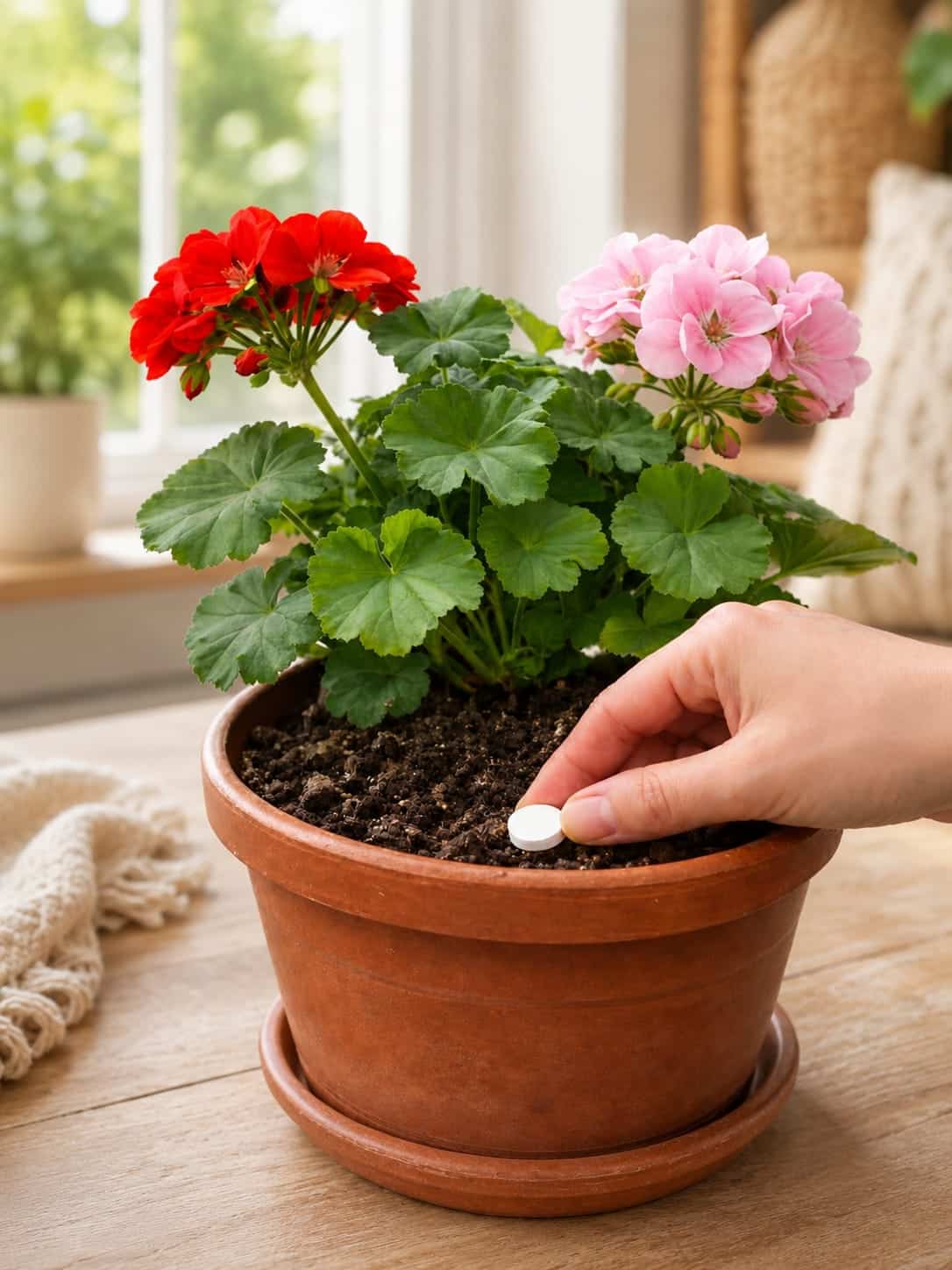
- Putting a tablet directly into the soil – dissolve in plenty of water first.
- Making the solution too strong – a full tablet in a small glass can be too much.
- Using aspirin water too often – it is not regular fertilizer.
- Applying it to wet soil – geranium roots need oxygen and can rot in soggy conditions.
- Ignoring light – geraniums need bright light to bloom well.
- Leaving old flower heads on the plant – deadheading is essential for repeat blooming.
- Trying to save a rotting plant with aspirin – root rot needs repotting and corrected watering.
Frequently Asked Questions
Can aspirin water make geraniums bloom?
Aspirin water cannot force blooms by itself. Geraniums bloom best with bright light, healthy roots, regular deadheading, proper watering, and light balanced feeding.
Can I put an aspirin tablet directly in the soil?
It is safer not to. A tablet can dissolve in one concentrated spot. Dissolve one plain aspirin tablet in one gallon of water and use only a small amount when the plant needs watering.
How often should I use aspirin water?
Use it rarely, usually once during a mild stress period. If repeated, wait at least six to eight weeks.
Is aspirin water fertilizer?
No. Aspirin water is not fertilizer. It does not provide balanced nutrients. Use a proper flowering plant fertilizer during active growth if the plant needs feeding.
Can aspirin water save a dying geranium?
No. A dying geranium needs diagnosis first. Check for root rot, poor drainage, low light, pests, or watering problems. Aspirin water is only a mild support, not a rescue cure.
Should I spray aspirin water on geranium leaves?
It is better to apply it to the soil only. Leaf spraying is unnecessary and may leave residue. If leaves are dusty, clean them with plain water.
Why is my geranium not blooming?
The most common reasons are low light, lack of deadheading, too much nitrogen fertilizer, overwatering, stress, or an immature plant. Improve care before using homemade treatments.
What should I do if I used too much aspirin?
Flush the pot with plain water if it has good drainage, then let the soil dry appropriately. Avoid using aspirin again until the plant is stable.
🌿 Remember: Aspirin water is a gentle stress-support option, not a miracle bloom booster. Bright light, proper watering, good drainage, regular deadheading, and light balanced feeding are the real foundations of beautiful geraniums. Use aspirin only rarely and in a very weak dilution.