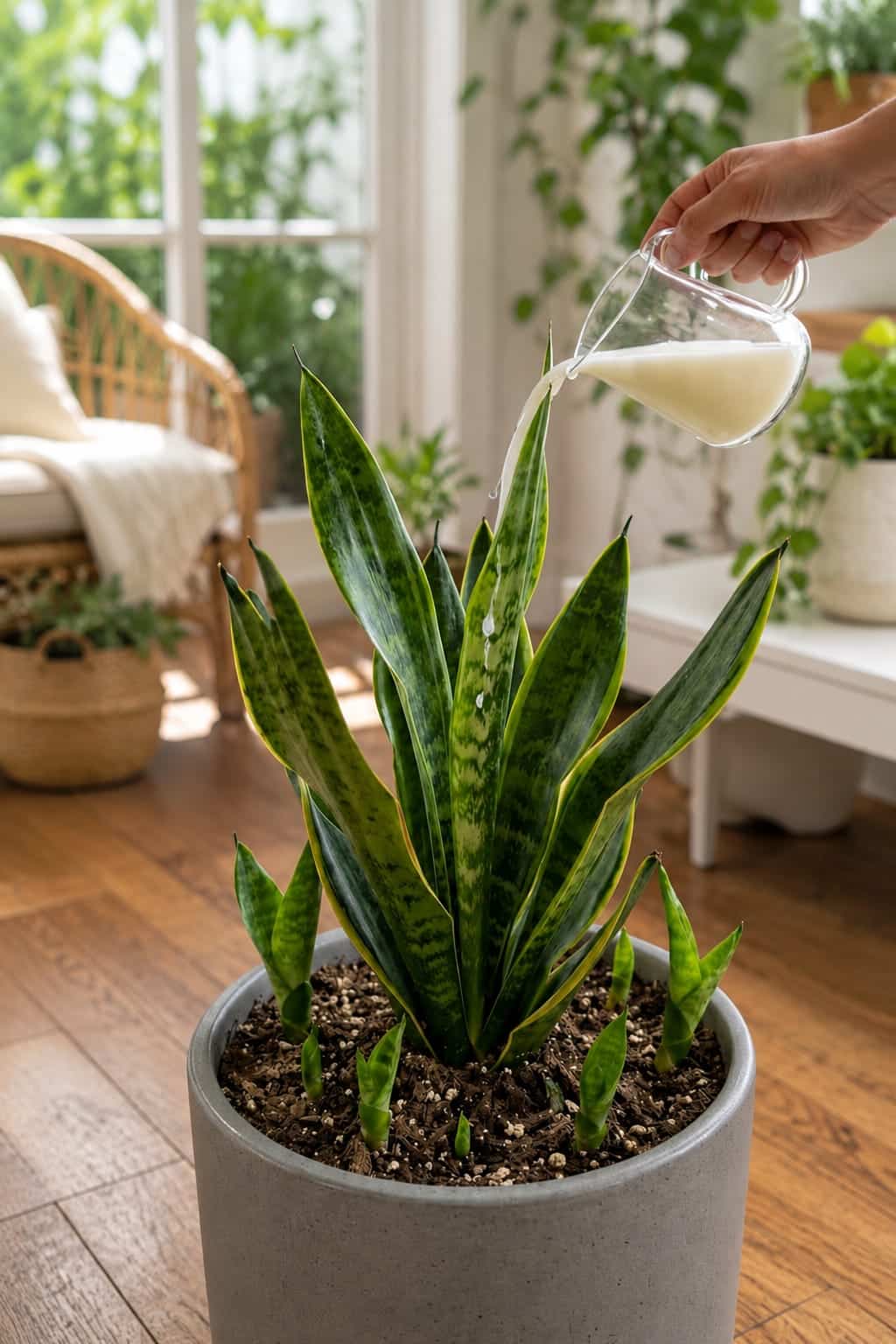
The Real Secret to a Strong Snake Plant
The real secret to a strong snake plant is a dry, airy root environment. The plant needs fast-draining soil and careful watering. It should not sit in soggy soil. It should not be watered on a strict weekly schedule unless the soil is truly dry.
Bright indirect light also makes a big difference. Snake plants are often sold as low-light plants, and while they can survive in low light, they usually grow stronger and produce more shoots in brighter conditions.
A good pot matters too. Terracotta, ceramic, or plastic can all work if there are drainage holes. The pot should not be much larger than the root system. Oversized pots hold extra wet soil and can increase root rot risk.
When these basics are correct, the plant can grow slowly but steadily. A gentle supplement is only a small extra.
Best Soil for Snake Plants
Snake plants need a well-draining soil mix. A cactus or succulent mix is a good starting point. You can improve it by adding perlite, pumice, coarse sand, or small bark chips. The goal is to help water move through the pot quickly.
Dense regular potting soil can hold too much moisture, especially indoors. If your snake plant is in heavy soil, milk water is not a good idea because it may make the potting environment even more moisture-retentive.
If water sits on top of the soil before draining, or if the pot stays heavy for many days after watering, the mix may be too dense. Repotting into a better mix can do more for your snake plant than any homemade liquid.
How to Water Snake Plants Properly
Water snake plants only when the soil is dry. This may be every two weeks, every three weeks, or even less often depending on your home. Light, temperature, humidity, pot size, and soil type all affect watering frequency.
When you water, water thoroughly and let the excess drain out. Then wait until the soil dries again. Avoid giving tiny sips every few days. Frequent small watering can keep the top layer damp and encourage pests.
In winter, water much less often. Snake plants grow slowly in colder, darker months, so they use less moisture.
If you are unsure, wait a few more days. Snake plants usually tolerate dryness better than excess water.
Light for Better Snake Plant Growth
Snake plants tolerate low light, but they grow best in bright indirect light. A spot near a window is often ideal. Direct harsh sun can scorch leaves if the plant is not used to it, but gentle morning sun or filtered light can be beneficial.
If the plant is leaning toward the window, stretching, or producing very slow growth, it may need more light. Move it gradually to a brighter location.
More light usually means the plant can use water and nutrients more effectively. A snake plant in bright light may produce pups more often than one in a dark corner.
Milk water cannot replace light. Light is the plant’s energy source.
Should You Fertilize Snake Plants?
Snake plants do not need much fertilizer, but light feeding during the growing season can support growth. A diluted cactus or succulent fertilizer used once or twice during spring and summer is usually enough.
Do not fertilize during winter if the plant is not actively growing. Do not fertilize a sick or rotting plant. Feeding damaged roots can make stress worse.
If you use fertilizer, you do not need milk water. If you use milk water, keep it rare and weak. Do not combine several feeding methods at once.
Simple care is better than complicated care.
Signs Your Snake Plant Is Healthy
A healthy snake plant has firm, upright leaves. The color should be stable, and the leaves should not feel mushy. New shoots may appear from the soil during active growth. The soil should dry between waterings and should not smell sour.
Healthy growth is usually slow. Do not worry if your snake plant does not produce new leaves every week. These plants are naturally patient growers.
New pups are an excellent sign. They show that the plant is strong enough to expand from the root system. If you see new shoots, avoid disturbing the plant too much. Let them grow.
Warning Signs After Using Milk Water
If the soil smells sour after using milk water, the mixture was too strong, used too often, or applied when the soil was too wet. Stop using milk water immediately.
If mold appears on the soil surface, remove the affected top layer and let the soil dry more thoroughly. Improve airflow and avoid homemade liquids for a while.
If fungus gnats appear, pause all organic treatments. Let the soil dry well between waterings and use sticky traps if needed.
If leaves become soft or yellow at the base, inspect the roots. This may indicate rot. Remove the plant from the pot, trim damaged parts, and repot into dry, fast-draining soil.
What to Do If You Used Too Much Milk
If you accidentally poured strong milk into the snake plant pot, remove any visible residue from the soil surface. If the pot has drainage holes, flush the soil with plain water and let it drain completely. Then allow the soil to dry thoroughly before watering again.
If the soil smells bad or stays wet, repot the plant. Remove it from the pot, shake away the old soil, inspect the roots, and trim any rotten parts. Let cut areas dry before repotting into fresh succulent mix.
After repotting, do not water immediately if roots were trimmed. Wait a few days, then water lightly when appropriate.
Do not try to correct too much milk with another homemade ingredient. Keep recovery simple.
Can You Pour Milk Water on the Leaves?
It is better not to pour milk water on snake plant leaves. The image shows milk touching the leaves, but for real plant care, soil application is safer. Milk can leave residue on the leaf surface and may collect in the center of the plant.
If milk touches the leaves, wipe them afterward with a damp cloth. Do not let it dry into sticky streaks. Clean leaves are important because dust and residue reduce the plant’s ability to absorb light.
For a clean look, plain water is best for leaves. Save diluted milk water, if used, for the soil only.
How to Encourage More Snake Plant Pups Naturally
To encourage more pups, give the plant bright indirect light. Keep it in a pot that is not too large. Use fast-draining soil and water only when dry. Feed lightly during the growing season if needed.
Snake plants often produce pups from underground rhizomes when they are established and slightly snug in the pot. A plant in an oversized pot may focus on roots or stay too wet, slowing visible growth.
Do not keep digging around the soil to check for pups. Disturbing the roots can slow growth. Let new shoots emerge naturally.
Patience is important. A healthy snake plant may take months to produce visible new growth.
Can Milk Water Help With Brown Tips?
Milk water is not a reliable fix for brown tips. Brown tips can come from inconsistent watering, low humidity, mineral buildup, physical damage, too much fertilizer, or stress.
For snake plants, brown tips are often cosmetic and do not always mean the plant is unhealthy. If the rest of the leaf is firm and green, the plant may be fine.
You can trim brown tips with clean scissors if they bother you. Follow the natural shape of the leaf. The brown area will not turn green again.
To prevent more brown tips, keep watering consistent, avoid overfertilizing, and protect the plant from cold drafts or harsh direct sun.
Can Milk Water Help Yellow Leaves?
If a snake plant leaf is yellowing, milk water is usually not the answer. Yellowing often points to overwatering, poor drainage, cold stress, or root problems. A yellow leaf will not turn green again.
If only one old leaf is yellowing and the rest of the plant is healthy, it may be natural aging. If multiple leaves are yellowing from the base, inspect the roots.
Do not feed a yellowing snake plant until you know the cause. If the soil is wet, let it dry and check for rot. If the plant is cold, move it to a warmer spot. If the pot has no drainage, repot it.
A Simple Monthly Snake Plant Care Plan
Every week, look at the plant and check the soil moisture. Do not water unless the soil is dry. Rotate the pot occasionally so the plant grows evenly toward the light.
Every month, wipe the leaves with a damp cloth to remove dust. Check for pests, soft leaves, or signs of rot. Remove dead leaves only when necessary.
During spring and summer, feed lightly once or twice if the plant is actively growing. If you choose to use diluted milk water, use it rarely and do not combine it with fertilizer.
During fall and winter, reduce watering and avoid feeding unless the plant is still actively growing in a warm bright spot.
Common Mistakes to Avoid
- Using straight milk – can spoil, smell bad, attract insects, and damage soil.
- Using milk water too often – snake plants need rare supplements.
- Applying milk water to wet soil – only use when soil is dry.
- Pouring milk over leaves – apply to soil only, keep leaf bases dry.
- Using milk water on a rotting plant – root rot needs trimming and fresh soil.
- Ignoring drainage – a snake plant pot must have drainage holes.
- Expecting instant growth – snake plants grow slowly.
Frequently Asked Questions
Can I pour milk directly on my snake plant?
No. Straight milk can spoil in the soil, smell bad, attract insects, and encourage mold. If you use milk at all, dilute it heavily with water.
What is the safest milk-water ratio for snake plants?
A very weak ratio is best. Use about half a teaspoon of plain milk in one cup of water, or one part milk to fifteen or twenty parts water.
How often should I use milk water?
Use it rarely, about once every two to three months during active growth, if at all. Do not use it weekly.
Can milk water make my snake plant grow pups?
Milk water cannot force pups. New shoots come from healthy roots, enough light, proper watering, and time. A mild supplement may support a healthy plant, but it is not the main cause.
Should I pour milk water on the leaves?
No. Apply it to the soil only, and keep the leaf bases dry. If milk gets on the leaves, wipe it off with plain water.
Can milk water save a dying snake plant?
No. A dying snake plant needs diagnosis first. Check for root rot, overwatering, poor drainage, cold stress, or low light. Milk water is not a rescue treatment.
Why does my snake plant smell bad after milk water?
The mixture may have been too strong, used too often, or applied to soil that was too wet. Stop using milk water and let the soil dry. Repot if the smell continues.
Is milk better than fertilizer?
No. Milk is not a complete fertilizer. A diluted cactus or succulent fertilizer used during active growth is more predictable. Milk water is only an optional occasional supplement.
🌿 Remember: Diluted milk water is a gentle occasional supplement, not a miracle treatment. Strong snake plants grow from well-draining soil, bright indirect light, careful watering, and patience. Use milk water only when the plant is already healthy and rarely.