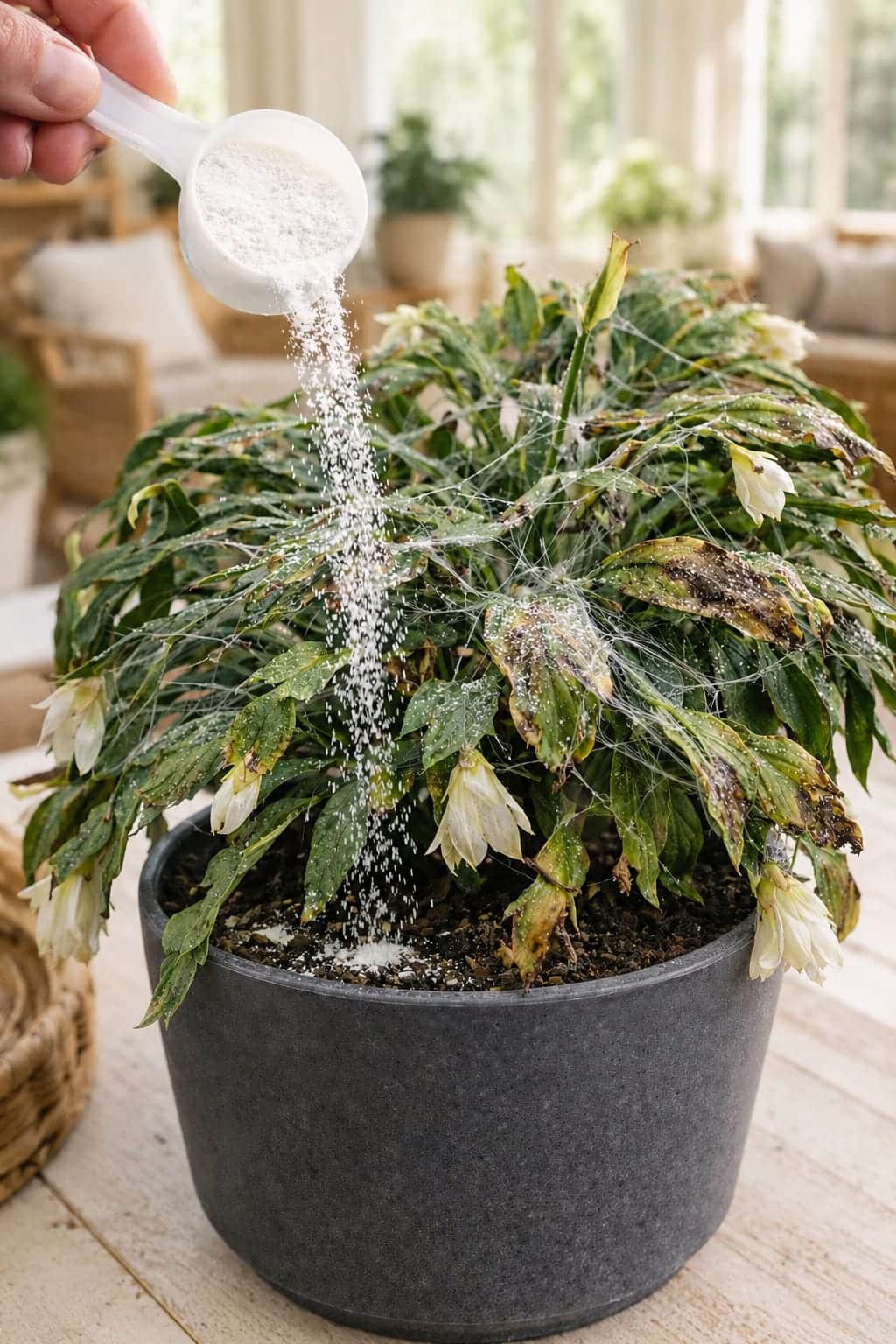
When Not to Use Epsom Salt
- If the soil is wet and the plant is drooping – This may indicate root rot. Adding more liquid or minerals can worsen the problem.
- If the plant already has brown tips from fertilizer burn or mineral buildup – Epsom salt is still a salt; adding more can increase stress.
- If the plant is in a pot without drainage holes – Drainage is essential because excess minerals and water must be able to leave the pot.
- Do not use it repeatedly on a sick plant – If one careful application does not help, more will not magically fix the problem.
- Do not sprinkle it on leaves, flowers, or into the crown – Apply only to the soil in diluted water if you choose to use it.
Step-by-Step Recovery Plan for the Peace Lily in the Image
Step 1: Stop Adding Powder
If a lot of white powder has already been applied, stop adding more. Remove excess powder from the soil surface if possible. A small amount may not cause major harm, but a heavy layer can stress the plant.
Step 2: Check the Soil Moisture
Touch the soil. If it is dry, the plant may need water. If it is wet, do not water again. A drooping peace lily in wet soil is a warning sign.
Step 3: Check Drainage
Make sure the pot has drainage holes. If there is a saucer, empty it. Peace lilies should not sit in standing water.
Step 4: Inspect the Roots if Needed
If the soil is wet and the plant is still collapsing, remove the plant from the pot and inspect the roots. Healthy roots should be firm. Rotten roots are mushy, dark, or foul-smelling.
Step 5: Remove Dead Leaves and Flowers
Cut off fully brown leaves and spent flowers with clean scissors. Do not remove every damaged leaf if some green tissue remains, because the plant still needs leaves for energy.
Step 6: Repot if the Soil Is Bad
If the soil smells sour, stays wet for too long, or roots are rotting, repot into fresh airy soil. Use a pot with drainage.
Step 7: Return to Stable Care
Place the plant in bright indirect light, water carefully, increase humidity if needed, and avoid more treatments until the plant stabilizes.
How to Fix Overwatering
If the peace lily is overwatered, the first step is to stop watering. Let the soil dry slightly if the roots are not severely damaged. If the plant continues to decline, remove it from the pot.
Inspect the roots. Trim rotten roots with clean scissors. Repot into fresh soil that drains well. A good mix may include potting soil with added perlite, orchid bark, or coco chips to increase airflow.
After repotting, water lightly and let the plant settle. Do not fertilize immediately. Do not apply Epsom salt right away. Freshly disturbed roots need time to recover.
Overwatered plants recover slowly. The first sign of improvement is usually that the plant stops getting worse. New growth may take time.
How to Fix Underwatering
If the soil is completely dry and the plant is drooping, water thoroughly with plain room-temperature water. Let water soak the soil evenly and drain from the bottom. Empty the saucer afterward.
If the soil has become extremely dry and pulls away from the pot edges, it may repel water at first. In that case, water slowly in stages until the mix absorbs moisture again.
Do not use Epsom salt as the first response to dehydration. Plain water is the correct treatment. After the plant recovers and becomes stable, you can consider mild feeding later if needed.
A thirsty peace lily often perks up quickly after watering. If it does not, roots may be damaged.
Best Soil for Peace Lily Recovery
Peace lilies need soil that holds some moisture but still drains well. A dense, muddy mix can suffocate roots. A mix that dries too fast can cause repeated wilting.
A good indoor peace lily mix may include quality potting soil, perlite, coco coir, and a small amount of orchid bark. The goal is moisture plus airflow.
If your peace lily is in old compacted soil, repotting may help more than any supplement. Old soil can hold too much water and reduce oxygen around the roots.
Choose a pot only slightly larger than the root ball. A pot that is too large holds extra wet soil and increases the risk of root rot.
Light for Peace Lily Recovery
A recovering peace lily needs bright indirect light. Too little light slows recovery, while harsh direct sun can burn stressed leaves. A spot near a bright window with filtered light is ideal.
If the leaves have dry brown patches, the plant may have received too much direct sun. Move it slightly away from the window or use a sheer curtain.
If the plant is in a dark corner, it may survive but grow slowly and bloom poorly. Move it gradually to brighter indirect light.
Light helps the plant produce energy for new leaves and roots. Epsom salt cannot replace light.
Humidity and Brown Edges
Peace lilies enjoy moderate humidity. Dry air can cause crispy edges and make the plant look tired. This is especially common in winter when indoor heating dries the air.
To increase humidity, group plants together, use a pebble tray, or place a humidifier nearby. Avoid misting too heavily if airflow is poor, because wet leaves can encourage spotting.
Humidity should not be confused with watering. You can increase humidity around the leaves while still allowing the soil to dry slightly between waterings.
Better humidity can help prevent future brown edges, but it will not repair old brown tissue.
Should You Fertilize a Struggling Peace Lily?
Do not fertilize a severely stressed peace lily. If the roots are damaged, fertilizer can burn them. Wait until the plant stabilizes and begins producing new growth.
Once the plant is healthy, use a balanced houseplant fertilizer at half strength during active growth. Peace lilies do not need heavy feeding.
If you use regular fertilizer, you may not need Epsom salt. Too many supplements can cause mineral buildup. Keep the routine simple.
Feeding should support growth, not force a weak plant to perform.
How to Flush Mineral Buildup
If your peace lily has brown tips and you suspect fertilizer or mineral buildup, flushing the soil can help. This means running plain water through the pot and allowing it to drain out completely. Only do this if the pot has drainage holes.
Flushing helps wash away excess salts from fertilizer or hard water. After flushing, let the soil dry appropriately before watering again.
If the soil is old, compacted, or sour-smelling, repotting may be better than flushing. Fresh soil gives the roots a cleaner start.
Do not add Epsom salt when you suspect salt buildup. That may add more minerals to an already overloaded pot.
What to Do With Damaged Leaves
Brown and yellow leaves will not become perfect again. You can trim brown edges with clean scissors, following the natural shape of the leaf. Fully dead leaves can be cut at the base.
Do not remove too many leaves at once unless they are completely dead. A stressed peace lily needs green leaves to make energy.
After trimming, focus on new growth. Healthy new leaves are the sign that your care routine is improving.
Damaged leaves are part of the plant’s history. New leaves are the plant’s future.
How to Encourage New Blooms
Peace lilies bloom best when they receive bright indirect light and stable care. If your plant is in low light, it may produce leaves but few flowers. Move it gradually to a brighter spot.
Keep watering consistent. Repeated severe wilting can stress the plant, while soggy soil can damage roots. Both extremes reduce blooming.
Feed lightly during active growth with a balanced fertilizer. Avoid overfeeding. Too much fertilizer can cause leaf burn and may not improve flowering.
Remove old blooms when they fade. Cut the flower stem near the base so the plant can direct energy toward new growth.
Can Epsom Salt Make Peace Lily Bloom?
Epsom salt does not directly make a peace lily bloom. It may support green growth if magnesium is lacking, but blooming depends more on light, root health, maturity, and balanced nutrition.
If the plant is not blooming, check light first. Peace lilies tolerate lower light, but they bloom better in bright indirect light.
Also check the roots. A plant with stressed roots will focus on survival, not flowers.
Use Epsom salt only as a rare supplement, not as a bloom button.
Warning Signs After Using Epsom Salt
If leaf tips become more brown after using Epsom salt, stop using it. The plant may be reacting to mineral buildup or root stress.
If the plant droops while the soil is wet, inspect the roots. Do not add more water or more Epsom salt.
If white crust appears on the soil surface, there may be mineral buildup. Remove the crusted top layer or flush the pot if it drains well.
If the soil smells sour, repotting may be necessary. Epsom salt cannot fix decaying soil.
What Results Can You Realistically Expect?
If the plant’s main issue is mild magnesium shortage, a diluted Epsom salt treatment may support greener future growth. But results will not be instant. You may see improvement only in new leaves, not old damaged ones.
If the plant’s main issue is water stress, light stress, or root rot, Epsom salt will not solve it. Improvement will come from correcting those conditions.
A recovering peace lily may take weeks to look better. First it should stop declining. Then new leaves may appear. Blooms may come later once the plant has regained strength.
Patience matters. Do not keep adding treatments every few days.
Common Mistakes to Avoid
- Sprinkling a heavy layer of Epsom salt directly onto the soil – a diluted solution is safer.
- Using Epsom salt before checking soil moisture – a drooping peace lily may be overwatered, not hungry.
- Using Epsom salt as fertilizer – it is not complete plant food.
- Applying it to a plant with root rot – rotten roots need trimming and fresh soil.
- Expecting brown leaves to turn green – damaged tissue will not reverse.
- Keeping the plant in poor light and hoping supplements will make it bloom.
- Using too many treatments at once – simple care is safer.
Frequently Asked Questions
Can Epsom salt save a dying peace lily?
No. Epsom salt cannot save a dying peace lily by itself. First check watering, roots, drainage, light, and soil condition. Epsom salt is only a mild magnesium supplement when used correctly.
Can I sprinkle Epsom salt directly on the soil?
It is safer not to sprinkle dry crystals directly. Dissolve a small amount in water first so it spreads more evenly and reduces the risk of concentrated salt pockets.
How much Epsom salt should I use for a peace lily?
A gentle mixture is one teaspoon of Epsom salt in one gallon of water. For a stressed or small plant, use half that amount.
How often should I use Epsom salt?
Use it rarely, about once every two to three months during active growth, and only if the plant appears to need it. Many peace lilies do not need Epsom salt at all.
Why is my peace lily drooping?
Drooping can come from underwatering or overwatering. Check the soil. Dry soil usually means the plant needs water. Wet soil with drooping may indicate root rot.
Why are the leaf tips brown?
Brown tips can come from dry air, inconsistent watering, too much fertilizer, mineral buildup, direct sun, or root stress. Epsom salt is not always the solution.
Can Epsom salt make peace lilies bloom?
Not directly. Peace lilies bloom best with bright indirect light, healthy roots, stable watering, and light balanced feeding.
What should I do if I added too much Epsom salt?
Remove visible crystals if possible. Flush the soil with plain water if the pot drains well, then let it dry appropriately. Repot if the plant continues to decline or if the soil smells bad.
🌿 Remember: A struggling peace lily often recovers by fixing the basics – light, water, drainage, and soil. Epsom salt is only a mild optional supplement, not a cure-all. Use it rarely, always diluted, and never as a substitute for proper care.