Root Health Comes First
A spider plant’s beauty starts underground. Healthy roots help the plant absorb water, support greener leaves, produce stronger new growth, and create more baby plantlets. Weak roots lead to weak results above the soil line.
Healthy roots help the plant:
· Stay hydrated more evenly
· Tolerate dry periods better
· Produce fuller, greener leaves
· Maintain a stronger center
· Grow more babies
· Hold a more graceful overall shape
People may never see the roots, but they absolutely see the effect of healthy roots. A plant with strong roots looks clean, vibrant, and decorative. A plant with stressed roots often looks ordinary or worn out.
Why Watering Mistakes Cause So Many Problems
Spider plants are often called easy houseplants, and that is true. But because they are easy, people often become casual about watering.
Some water too often. Others forget for too long. Some let the soil get extremely dry, then flood the pot. Others keep the soil damp all the time.
Both extremes create problems.
Poor watering can lead to:
· Brown tips
· Limp leaves
· Weak center growth
· Root stress
· Reduced baby production
· Dull color
Spider plants usually look their best when the soil is allowed to dry slightly between waterings, but not stay severely dry for too long. They also dislike heavy, soggy soil.
The real skill is not watering more. It is watering well.
Why Water Quality Matters
One of the most common complaints with spider plants is brown tips, and water quality is often part of the reason. In some homes, tap water contains enough minerals or salts to gradually stress the plant over time.
This can contribute to:
· Crispy tips
· Mineral buildup in the soil
· Dull foliage
· Root stress
· Reduced decorative appeal
That is why some homeowners feel tempted to try unusual liquids. They sense the plant needs something different. But often the better answer is not a more interesting liquid. It is cleaner, better‑balanced watering and occasional flushing of the soil.
Flushing the Soil (A Simple, Overlooked Trick)
Every 4–6 weeks, run room‑temperature water slowly through the pot for 1–2 minutes. This washes away excess salts and minerals that accumulate in the soil. Let it drain completely. This single habit can reduce brown tips and improve overall health more than any golden tonic.
Soil Is Often the Hidden Issue
A spider plant can survive in poor soil for a long time while slowly looking worse. Over time, potting mix becomes compacted, loses its structure, and holds too much moisture. The roots struggle, and the plant’s appearance declines.
Signs Your Spider Plant Needs Fresh Soil:
· Water sits on the surface or drains very slowly.
· The soil smells sour or musty.
· The plant has stopped producing new leaves or babies.
· Brown tips persist even with good water and light.
The fix is simple: repot every 1–2 years with fresh, well‑draining potting mix. Add perlite for extra drainage. A spider plant in fresh soil looks noticeably better within weeks.
Light: The Overlooked Factor for Lush Growth
Spider plants grow best in bright indirect light. They can survive in low light, but they will not look lush. Leaves may become pale, long, and thin. The variegation may fade. Baby plantlets may stop forming.
Ideal Light for a Lush Spider Plant:
· East‑facing window (gentle morning sun)
· South or west window with a sheer curtain
· A bright room with natural light
If your spider plant looks weak and stretched, move it closer to a window. You will see more compact, vibrant growth within weeks.
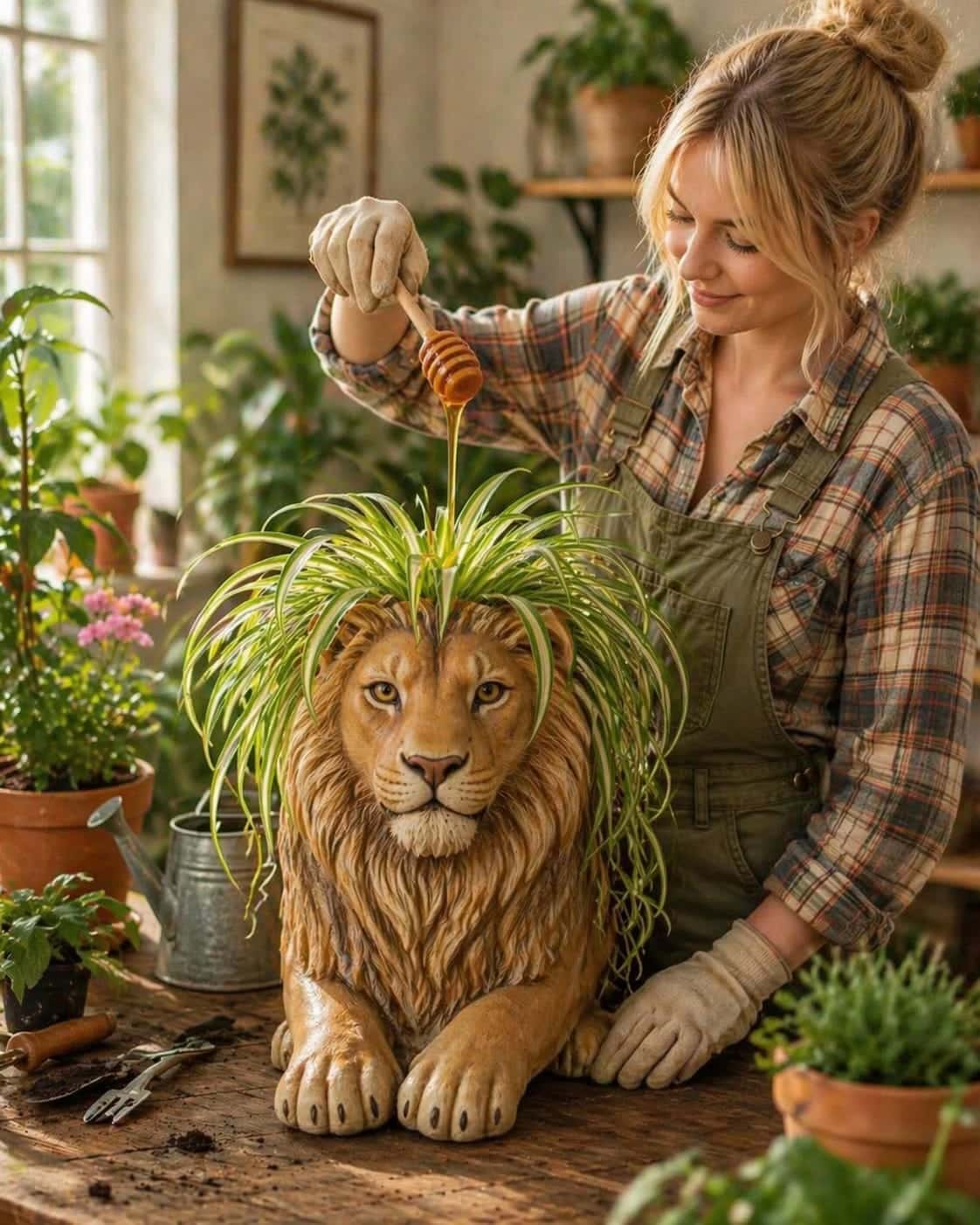
What About the “Honey‑Like Liquid”? A Realistic Assessment
If the golden liquid in question is a properly diluted, plant‑safe tonic (such as weak compost tea, seaweed extract, or a mild organic fertilizer), it can be a supportive addition to a healthy care routine. It may provide trace minerals and beneficial microbes.
But even then, it is not the reason a spider plant becomes lush. It is a small helper, not the main event.
If the liquid is actual honey or a sugary mixture, it is generally not recommended for indoor spider plants. It can:
· Attract fungus gnats and ants
· Sour in the soil
· Encourage mold
· Coat the roots and block water absorption
In almost every case, a spider plant will look better with clean water, good light, proper soil, and consistent care than with any honey‑like trick.
A Simple Routine for a Lush, Decorative Spider Plant
Here is a weekly and seasonal plan that works better than any viral hack.
Weekly
· Check soil moisture. Water when the top inch of soil is dry.
· Wipe leaves with a damp cloth to remove dust.
· Rotate the pot for even light.
Monthly
· Flush the soil with plain water to remove salt buildup.
· Inspect for pests (spider mites, aphids, mealybugs).
· Remove any dead or yellow leaves.
Spring & Summer (Active Growth)
· Bright indirect light (10–12 hours).
· Water every 5–7 days (when top inch dries).
· Feed once a month with half‑strength balanced fertilizer (optional).
· Watch for baby plantlets.
Fall & Winter (Resting Period)
· Still bright light, but days are shorter — consider a grow light.
· Water less often (every 10–14 days).
· Stop fertilizing.
· Keep away from cold drafts.
Annually
· Repot with fresh, well‑draining potting mix.
· Divide if the plant is overcrowded.
· Trim any dead or brown roots.
Why a Lush Spider Plant Is the Best Decor
A spider plant that is truly thriving does not need a golden trick to look impressive. It looks impressive because it has what it needs: healthy roots, fresh soil, good light, consistent watering, and clean leaves.
When those basics are right, the leaves are glossy, the stripes are bold, the babies cascade, and the plant becomes a living piece of art. It softens a room. It adds life. It makes a space feel finished.
That is the real secret. Not a bottle of anything. Just good care, repeated consistently.
Final Thoughts
The “honey‑like liquid” trick may look beautiful in a video, but the truth is that spider plants become lush and decorative because of the basics: healthy roots, fresh soil, good light, proper watering, clean water, and occasional soil flushing. A plant‑safe tonic can be a small supporting step, but it is never the main reason a spider plant looks amazing.
If you want a spider plant that turns heads, skip the sticky shortcuts. Give it a bright window, fresh soil, and consistent watering. Flush the soil every month. Repot when needed. Then watch as your spider plant transforms from ordinary to extraordinary — all on its own.
That is the only trick that works every time.
Have you tried a honey‑like liquid on your spider plant? Share your experience in the comments below. And if you found this guide helpful, save it for later or send it to a friend who wants a fuller, healthier spider plant without the guesswork.
This article is for informational purposes only. Growing conditions vary. Always observe your plant and adjust care as needed. When in doubt, focus on light, water, and soil before any supplement.