- Occasional Feeding – Light Fertilizer Every Few Weeks
During spring and summer, feed your peace lily with a balanced liquid fertilizer (e.g., 20-20-10) diluted to half strength, once every 4–6 weeks. Do not feed in fall and winter.
- Stable Environment – Avoid Sudden Changes
Peace lilies are sensitive to drafts, temperature swings, and dry air.
· Temperature: 18–27°C (65–80°F). Avoid cold windows and heating vents.
· Humidity: 50–60% is ideal. Use a pebble tray or humidifier in dry homes.
· Stability: Keep the plant in one spot – constant moving causes stress.
Peace Lily Bloom Optimization Table – Quick Reference
Factor Ideal Condition Result
Light Bright, indirect (east/west window) More blooms
Water Slightly moist – water when top inch dries Healthy leaves
Soil Airy, well‑draining (potting soil + perlite) Strong roots
Feeding Light & occasional (spring/summer, diluted fertilizer) Bloom support
Humidity Moderate (50–60%) Longer‑lasting flowers
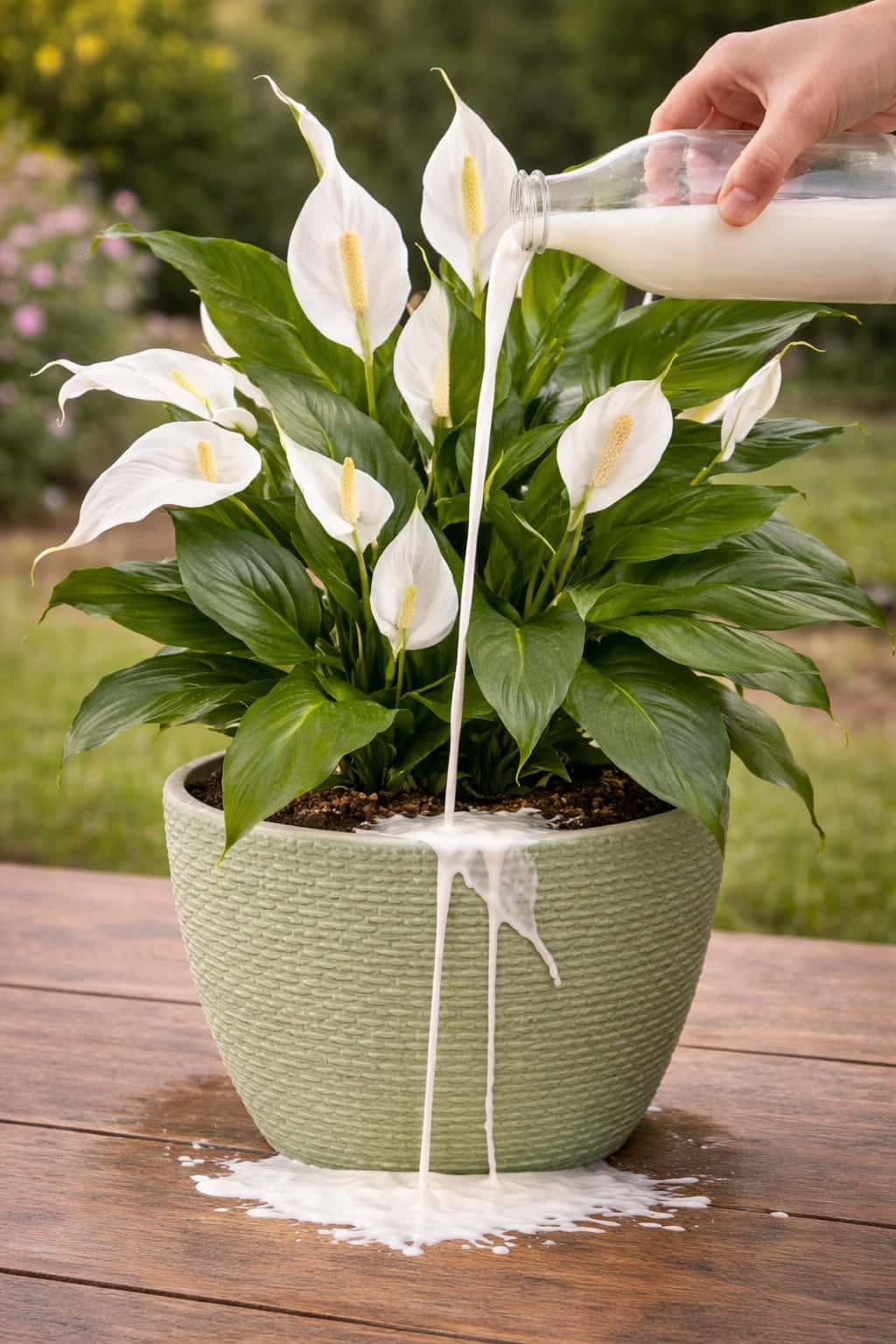
White liquid Occasional, heavily diluted (once every 3–4 weeks, optional) Gentle nutrient boost
Common Mistakes That Prevent Blooms (Even with the White Liquid)
Mistake Why It’s Harmful Correct Approach
Too little light No energy for flowers Move to brighter indirect light.
Overwatering Root rot, yellow leaves Let top inch dry before watering.
Using undiluted milk or fertilizer Burns roots, causes mold Always dilute heavily.
Frequent white liquid use Odor, root rot, pests Use once every 3–4 weeks max.
Ignoring drainage Waterlogged soil Use pot with holes; add perlite.
Low humidity Brown tips, short bloom life Use pebble tray or humidifier.
How to Revive a Non‑Blooming Peace Lily – Step by Step
If your peace lily has not bloomed in over a year, follow this plan.
- Move to brighter indirect light – an east window is perfect.
- Check soil drainage – repot if soil is heavy or old.
- Water correctly – let the top inch dry out before watering.
- Increase humidity – pebble tray or humidifier.
- Feed lightly – use a diluted balanced fertilizer once a month (spring/summer).
- Be patient – after conditions improve, blooms may take 4–8 weeks.
Frequently Asked Questions (FAQs)
Q: Why is my peace lily not flowering?
Most common cause: low light. Move it closer to a window. Also check for overwatering or old soil.
Q: Can milk really help plants?
In very diluted amounts, milk can provide trace calcium and feed soil microbes. But it is not a fertilizer and can cause odor and mold if overused. Plain water and proper fertilizer are safer.
Q: How often should I water my peace lily?
When the top inch of soil feels dry. In typical indoor conditions, every 7–10 days.
Q: Can I overfeed my peace lily?
Yes – too much fertilizer burns roots and causes brown leaf tips. Use half strength and feed only during spring/summer.
Q: Do peace lilies need direct sunlight?
No – they need bright indirect light. Direct sun scorches leaves.
Q: How long do peace lily blooms last?
With good care, each bloom lasts 2–4 weeks. After fading, cut the flower stalk at the base to encourage new blooms.
Q: Should I mist peace lily leaves?
Occasional misting helps with humidity, but avoid wetting the flowers. A pebble tray is more effective
Q: Is fertilizer necessary for peace lilies?
Not strictly necessary, but it helps produce more and larger blooms. Use a balanced fertilizer diluted to half strength.
Q: Why are my peace lily leaves drooping?
Usually due to underwatering (they perk up quickly after watering) or overwatering (root rot – check soil moisture).
Q: Is the white liquid necessary?
No – it is an optional supplement. The real keys are light, water, soil, and occasional feeding.
Printable Peace Lily Bloom Checklist
☐ Place in bright, indirect light (east/west window)
☐ Use a pot with drainage holes
☐ Use well‑draining potting soil (add perlite)
☐ Water when top inch of soil is dry
☐ Empty saucer after watering
☐ Maintain temperature 18–27°C (65–80°F)
☐ Increase humidity with pebble tray or humidifier
☐ Feed with diluted balanced fertilizer once a month (spring/summer)
☐ Use white liquid (diluted milk or mild fertilizer) occasionally – optional
☐ Remove spent blooms at the base
☐ Be patient – blooms take time
Final Thoughts – Support, Not Magic
The “white liquid” trend is not magic. A diluted milk or mild fertilizer can provide a small nutrient boost, but it will never replace the fundamentals: bright indirect light, consistent watering, good drainage, and occasional feeding.
If your peace lily isn’t blooming, don’t reach for a bottle first. Move it closer to a window, check the soil, and adjust your watering. Once those are right, a little white liquid every few weeks can give it a gentle nudge – but it’s never the cure.
With patience and the right care, your peace lily will reward you with those elegant, pristine white blooms that make this plant so beloved.
Now it’s your turn! Have you tried a white liquid on your peace lily? What worked – or didn’t? Drop a comment below – I’d love to hear your experience.
And if you found this guide helpful, share it with a friend who’s struggling to get blooms. Pin it for later, and subscribe to our newsletter for more practical plant care.
Stay bright, stay consistent, and watch your peace lily bloom. 🌿🤍✨