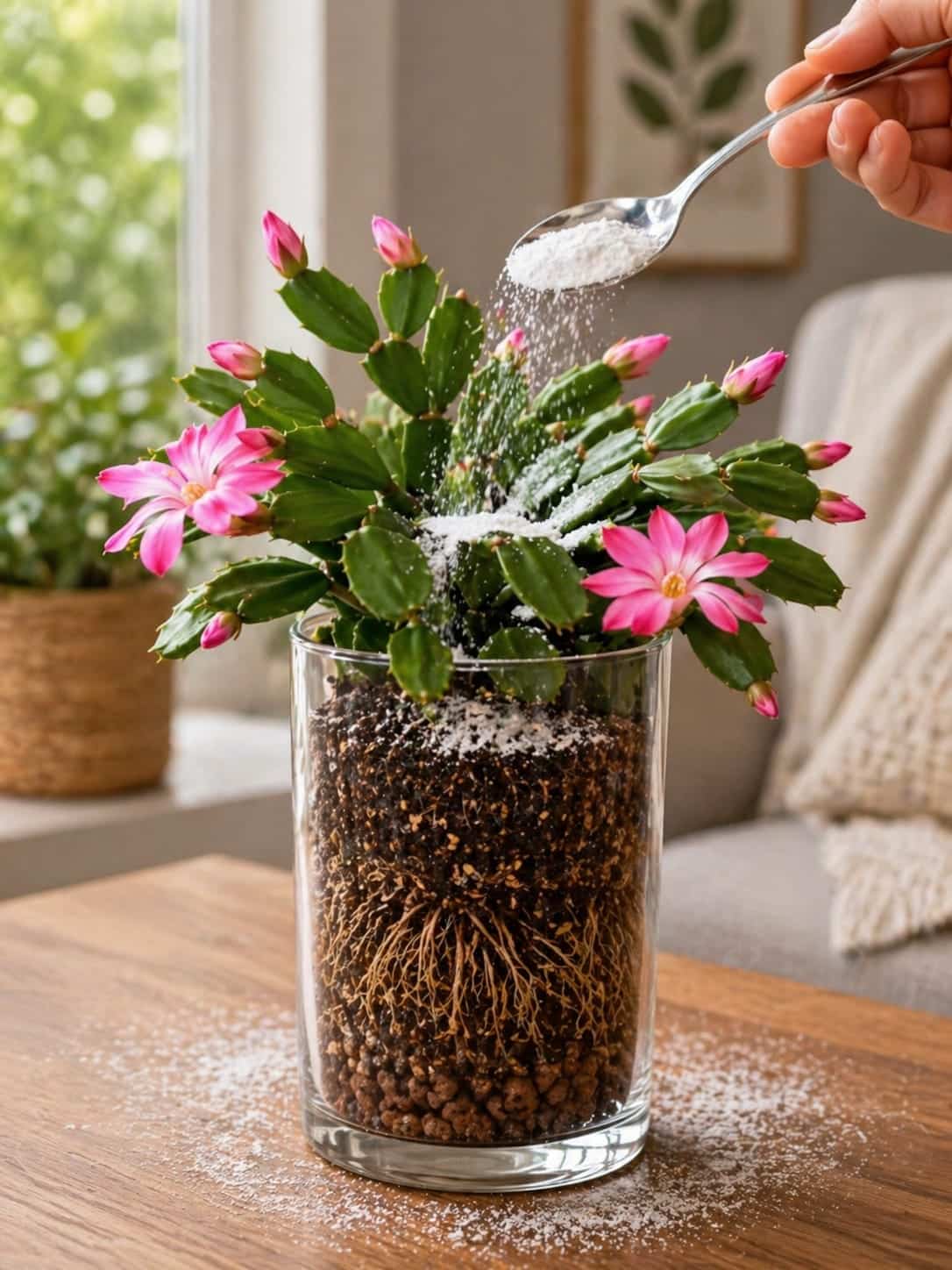
How to Water After Applying White Powder
After applying a small amount of eggshell powder, do not immediately flood the pot unless the plant actually needs water. Christmas cactus should be watered when the top inch of the soil begins to dry.
When it is time to water, pour slowly and evenly. Let water drain from the bottom if the pot has drainage holes. Empty the saucer. Do not let the plant sit in standing water.
If your pot does not have drainage holes, be extra cautious. Use less water and monitor moisture closely. However, for long-term success, a drainage pot is strongly recommended.
Eggshell powder does not need to dissolve immediately. It breaks down slowly over time. There is no need to force it with heavy watering.
Can the White Powder Make Christmas Cactus Bloom?
The white powder does not directly make Christmas cactus bloom. It may support the soil slowly, but blooms depend mostly on the plant’s seasonal rhythm. Christmas cactus needs long dark nights and cooler temperatures in fall to set buds.
If your plant is not blooming, do not assume it needs more powder. It may need a better fall routine. About six to eight weeks before you want flowers, give it 12 to 14 hours of darkness each night. Keep it in a cooler room if possible. Reduce watering slightly and stop fertilizing.
During the day, give bright indirect light. Once buds appear, keep the plant stable. Do not move it around constantly, and avoid drafts or heat vents.
The white powder can support general root health, but the bloom trigger comes from darkness, cool nights, and stable care.
Can the White Powder Strengthen Roots?
Eggshell powder may support root health indirectly by adding a slow calcium amendment, but it cannot repair damaged roots. Strong roots come from proper soil structure, drainage, oxygen, and balanced watering.
If the roots are healthy, a tiny amount of eggshell powder may be part of a good routine. If the roots are rotten, mushy, or damaged, the plant needs repotting and cleanup.
To strengthen roots, use an airy mix. Avoid overwatering. Make sure the pot drains. Keep the plant in bright indirect light. Feed lightly during active growth. These actions matter far more than the powder itself.
Can the White Powder Stop Bud Drop?
No. Bud drop is usually caused by stress. Christmas cactus buds may fall because the plant was moved, exposed to drafts, watered inconsistently, kept too dry, kept too wet, placed near heat vents, or exposed to sudden temperature changes.
Once buds form, stability is the key. Keep the plant in one location with bright indirect light. Water when needed, but do not overwater. Keep it away from cold windows and hot air.
Do not add a lot of powder, fertilizer, or homemade treatments while the plant is full of buds. Extra changes can create more stress.
Can the White Powder Help With Surface Mold?
Eggshell powder is not the best mold treatment. Surface mold usually happens because the soil stays too moist or airflow is poor. If you see mold, remove the moldy top layer first. Let the soil dry slightly more. Improve airflow. Check drainage.
A very light dusting of cinnamon is often used by some plant owners for mild surface mold, but even cinnamon is only a temporary helper. The real fix is moisture control.
If mold keeps returning, repot into a fresher, better-draining mix. Do not keep covering mold with white powder.
Can the White Powder Help With Fungus Gnats?
Eggshell powder will not reliably stop fungus gnats. Gnats are attracted to moist organic soil. Their larvae live in damp potting mix. If the pot stays wet, gnats can continue breeding.
To control gnats, let the top layer dry more between waterings. Remove dead plant debris from the soil surface. Use sticky traps for adult gnats. Improve drainage. If the problem is severe, replace the top layer of soil or repot.
Do not use flour, sugar, milk powder, or food powders to fight gnats. Those can make pests worse.
How to Keep Christmas Cactus Blooming Year After Year
Keeping Christmas cactus blooming is all about timing. After flowering, let the plant rest for a few weeks. Water a little less and do not feed heavily. In spring, resume normal watering and light feeding as new growth appears.
During spring and summer, keep the plant in bright indirect light. Feed lightly once a month with diluted fertilizer if needed. This is the time when a tiny amount of eggshell powder can be used as a soil support.
In late summer or early fall, stop feeding. In fall, provide long dark nights and cooler temperatures for six to eight weeks. Once buds appear, keep the plant stable. During bloom, avoid sudden changes.
This seasonal rhythm is much more important than any single trick.
How to Feed Christmas Cactus Properly
Christmas cactus benefits from gentle feeding during active growth. Use a balanced houseplant fertilizer diluted to half strength once a month in spring and summer. Do not overfeed.
If using eggshell powder, do not treat it as full fertilizer. It is only a slow calcium amendment. The plant still needs balanced nutrients if the soil is depleted.
Stop feeding in late summer or early fall before the bloom-trigger period. Too much feeding at the wrong time can encourage green growth instead of buds.
If you recently repotted into fresh potting mix, wait several weeks before fertilizing.
How to Prune Christmas Cactus for More Blooms
Pruning helps Christmas cactus become fuller. More branches mean more tips, and flowers form at the tips. The best time to prune is after blooming, usually in late winter or spring.
Twist off one or two segments from the ends of long stems. This encourages branching. You can use the removed pieces for propagation.
Do not prune heavily in fall because you may remove the very tips where buds would form. If the plant is already budding, leave it alone.
After pruning, give bright indirect light and normal care. Feed lightly only once new growth begins.
How to Propagate Christmas Cactus
Christmas cactus is easy to propagate. Take a cutting with two to four segments. Let it dry for a day. Place the bottom segment into lightly moist, well-draining mix. Keep it in bright indirect light.
Do not sprinkle white powder heavily onto fresh cuttings. Young cuttings need clean, airy conditions and careful moisture. Too many amendments can stress new roots.
Once the cutting is rooted and growing, it can be cared for like a mature plant.
Common Mistakes With the White Powder Trick
Using Too Much Powder
A thick layer is unnecessary. Use only a tiny pinch or small measured amount.
Using the Wrong Powder
Do not use flour, sugar, salt, detergent, or random household powders. Use plant-safe eggshell powder or a proper soil amendment.
Applying It to Flowers
Keep powder off blooms and buds. If it lands on them, gently brush it away.
Expecting Instant Blooms
Eggshell powder is slow. Blooms come from seasonal light and temperature changes.
Ignoring Drainage
No powder can fix a pot that traps water. Drainage is essential.
Using It on Rotten Roots
Rot needs repotting and root cleanup. Powder is not a cure.
Signs the Trick Is Helping
If the white powder trick is being used safely, the plant should remain stable and healthy. The soil should not smell bad. The plant should not droop after application. New segments may continue growing during the active season. Roots should stay firm and clean.
Over time, if the rest of the care routine is good, the plant may grow fuller and prepare better for bloom season. But the improvement will be gradual. Do not expect instant transformation.
The best signs are steady growth, healthy roots, firm green segments, and reliable buds when the seasonal bloom routine begins.
Signs You Should Stop Using It
Stop using the white powder if you notice crusting on the soil, worsening leaf segments, sour smells, mold, gnats, or any sign that the soil is becoming unhealthy. Remove excess powder if you used too much.
If the plant continues to struggle, check the roots and soil. Repot if the mix is compacted, wet, or old. Return to plain water and simple care until the plant stabilizes.
A good trick should support the plant quietly. If it creates mess or stress, skip it.
A Safe White Powder Routine for Christmas Cactus
If you want to try the white powder trick safely, follow this simple routine:
- Use finely ground clean eggshell powder.
- Apply only a tiny amount.
- Use it during spring or early summer, not during heavy bloom.
- Keep it on the soil, not on flowers or leaves.
- Gently mix it into the top layer.
- Do not pile it against the stems.
- Water only when the plant needs water.
- Use a pot with drainage holes.
- Repeat only every few months if needed.
- Focus on light, drainage, watering, and fall darkness for blooms.
Frequently Asked Questions
What is the white powder used on Christmas cactus?
The safest homemade version is finely crushed eggshell powder. It can be used lightly as a slow calcium-based soil amendment.
Can white powder make Christmas cactus bloom?
Not directly. Blooms are triggered by long dark nights, cooler temperatures, bright indirect daytime light, and proper seasonal care.
How much eggshell powder should I use?
Use a tiny pinch for a small pot, 1/8 to 1/4 teaspoon for a medium pot, and no more than 1/2 teaspoon for a large pot.
Can I use baking soda?
Baking soda is not the best choice for regular Christmas cactus care. It contains sodium and can disturb the soil if overused.
Can I use flour or powdered sugar?
No. Flour can mold, and sugar can attract pests. They should not be used in houseplant soil.
Should I sprinkle the powder on the flowers?
No. Keep the powder on the soil only. Brush it off gently if it lands on buds or blooms.
How often should I use it?
Once every three to four months is enough, and many plants need it less often.
Can it fix root rot?
No. Root rot requires removing the plant, trimming rotten roots, and repotting into fresh airy soil.
Can I use it in a glass pot?
You can use a tiny amount, but make sure the plant has drainage. Glass containers without drainage can trap water and cause root problems.
What is better than powder for blooms?
The best bloom method is a fall rest period with 12 to 14 hours of darkness each night, cooler temperatures, slightly reduced watering, and no fertilizer for six to eight weeks.
Final Thoughts
The white powder Christmas cactus trick is simple, attractive, and easy to try, but it works best when you understand what the powder should be and what it can actually do. The safest version is finely crushed eggshell powder used sparingly as a slow soil amendment. It may support the root zone gently, but it is not a miracle bloom booster.
A Christmas cactus blooms because of healthy roots, bright indirect light, proper watering, and the right seasonal trigger. Long dark nights and cooler fall temperatures are the real secrets behind heavy bud formation. The white powder can be a small part of spring and summer care, but it cannot replace the plant’s natural rhythm.
Use only a tiny amount. Keep it off the flowers. Avoid flour, sugar, salt, baking soda overload, and unknown powders. Make sure the pot drains well. Use an airy mix. Water only when the top inch begins to dry. Feed lightly during active growth and stop feeding before the fall rest period.
With steady care, your Christmas cactus can grow stronger roots, fuller green segments, and more reliable blooms year after year. The white powder may be the little trick that catches attention, but the real transformation comes from giving the plant exactly what it loves: air around the roots, gentle moisture, bright indirect light, and a calm seasonal routine.