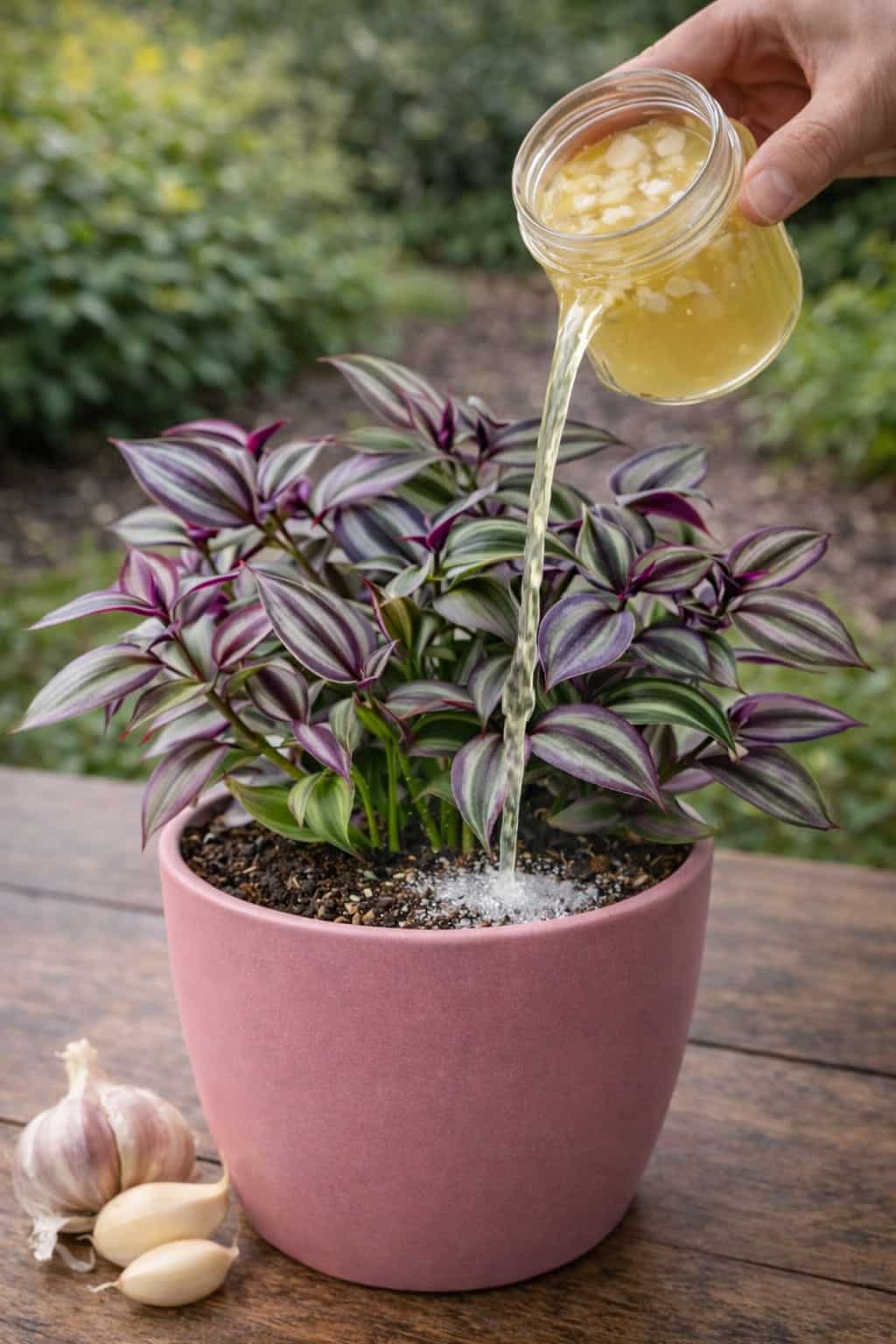
Possible reasons include:
· Helping maintain soil freshness
· Supporting a balanced growing environment
· Reducing unwanted conditions in soil (mild antifungal effect)
· Acting as a mild natural solution
· Encouraging healthier plant appearance
Because of its strong nature, garlic water is always used highly diluted and occasionally. It is not a fertilizer and does not provide significant nutrients.
💧 How Garlic Water Is Typically Used
Most indoor gardeners who try this method follow a very gentle approach.
Common Method – Step by Step
- Crush 2–3 cloves of fresh garlic (do not use garlic powder).
- Soak in 1 liter (4 cups) of room‑temperature water for 24 hours.
- Strain the liquid to remove all solid pieces.
- Dilute with additional water – use 1 part garlic water to 3–4 parts plain water.
- Apply lightly to the soil – never to leaves.
- Use only occasionally – once every 3–4 weeks at most.
Important Reminders
· Do not use more than once a month.
· Do not use on already wet soil.
· Do not use on stressed or rotting plants.
· Test on one plant first before applying to all.
Moderation is key to avoiding stress on the plant.
⚠️ Important Precautions
Although garlic water is natural, improper use can cause issues. Garlic is strong, and indoor plants are sensitive.
Things to Watch Out For
Risk Consequence
Strong concentration Can burn roots; causes leaf yellowing.
Overuse Disturbs soil balance; kills beneficial microbes.
Residue buildup Soil may develop a crust; water repellency.
Unpleasant odor indoors Garlic smell can linger in the room.
Watering too frequently Leads to root rot – the #1 killer.
It’s always best to test on a small scale first – one plant, one application – and wait a week to see how it responds.
🌱 Ideal Conditions Still Matter Most
Even with natural tricks, the basics remain essential. Garlic water is at best a tiny supplement; it will never replace these core factors.
Factor Ideal Condition Benefit
Light Bright, indirect (east/west window) Strong leaf growth
Soil Well‑draining mix (cactus soil + perlite) Healthy roots
Water Moderate – let soil dry between waterings Prevents overwatering
Airflow Good circulation Balanced environment
Feeding Occasional nutrients (diluted fertilizer) Supports steady growth
When these are right, plants naturally thrive. Garlic water can be a very minor extra – but never a substitute.
Indoor Plant Care Overview – Quick Reference
Factor Ideal Condition Benefit
Light Bright, indirect Strong leaf growth, vibrant color
Soil Well‑draining (cactus mix + perlite) Prevents root rot
Water Moderate – let soil dry Healthy roots
Airflow Good circulation Reduces fungal issues
Feeding Occasional, diluted fertilizer Steady growth
Garlic water Occasional, highly diluted (optional) Gentle supplement – not necessary
Frequently Asked Questions (FAQs)
Q: Is garlic water safe for all indoor plants?
It can be used carefully on hardy plants like snake plants, pothos, and peace lilies, but always diluted and infrequently. Avoid using on sensitive plants like ferns or orchids.
Q: How often should it be applied?
Every few weeks at most – once a month is plenty. Never weekly.
Q: Can garlic water replace fertilizer?
No, it’s not a full nutrient source. It contains no significant nitrogen, phosphorus, or potassium. Use a balanced fertilizer for feeding.
Q: Should it be sprayed on leaves?
No – apply to soil only. Garlic water can burn leaves and may clog leaf pores (stomata).
Q: Does garlic water help growth?
Results may vary depending on conditions. It is not a growth booster. It may help with mild soil hygiene, but light and water matter far more.
Q: Can it cause odor indoors?
Yes, if overused. A strong garlic smell can linger in the room. Use sparingly.
Q: Is it beginner‑friendly?
Yes, if used lightly. Start with a very weak dilution and test on one plant.
Q: Can it damage roots?
Only if too concentrated. Always dilute heavily (1:4 or weaker). Never pour undiluted garlic water.
Q: What plants respond best?
Hardy indoor plants like snake plants, pothos, and ZZ plants. Avoid delicate plants.
Q: Is it necessary for plant care?
No, just an optional method. Proper light, water, and soil are far more important.
Printable Garlic Water Usage Checklist
☐ Use fresh garlic cloves (2–3), not powder
☐ Crush cloves and soak in 1 liter water for 24 hours
☐ Strain out all solid pieces
☐ Dilute 1 part garlic water with 3–4 parts plain water
☐ Check soil moisture – only apply if soil is dry
☐ Apply to soil, not leaves
☐ Use once every 3–4 weeks at most
☐ Do not use in winter (plant resting season)
☐ Stop if you see yellowing leaves or foul odor
☐ Always prioritize light, water, and soil first
Final Thoughts – A Gentle Supplement, Not a Miracle
The “garlic water trick” is not a miracle solution. A very diluted garlic solution may help with mild soil hygiene, but it will never replace the fundamentals: bright indirect light, well‑draining soil, proper watering, and good airflow.
If your plants are struggling, don’t reach for garlic water first. Check the soil, adjust your watering, and move them to a brighter spot. Once those basics are right, a little garlic water every few weeks can be a tiny experiment – but it’s never the cure.
With patience and the right care, your indoor plants will thrive naturally.
Now it’s your turn! Have you tried garlic water on your indoor plants? What worked – or didn’t? Drop a comment below – I’d love to hear your experience.
And if you found this guide helpful, share it with a friend who loves natural plant care. Pin it for later, and subscribe to our newsletter for more practical plant advice.
Stay natural, stay consistent, and watch your plants thrive. 🌿🧄✨