Why Timing Matters So Much
A lot of people assume feeding is always good. It is not.
If you feed a snake plant heavily when:
· It is sitting in very low light.
· The soil is already wet.
· The weather is cool.
· The plant is resting.
…the nutrients may not be used efficiently. Instead, the soil can become overly rich, root stress can build up, and the plant may actually look worse.
That is why timing matters.
The Best Time to Feed Is When the Plant Is:
· Getting brighter light.
· Producing new growth.
· In warm, active conditions.
· Drying properly between waterings.
This is when the snake plant can actually use that extra support.
Can Homemade Plant Liquids Help?
Sometimes, yes.
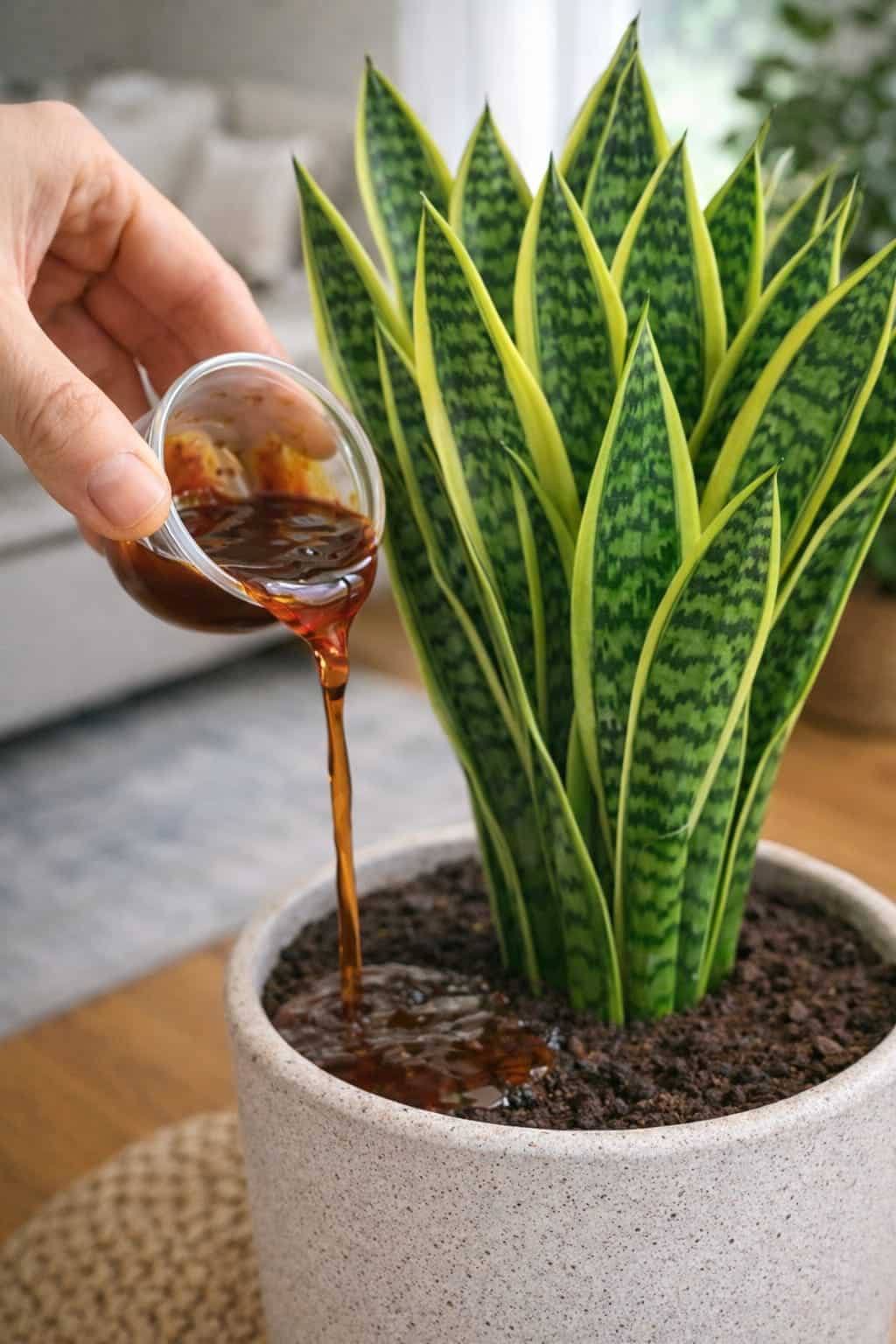
Many viral plant posts show brown or amber homemade liquids being poured into the soil. These are often:
· Diluted rice water.
· Weak compost‑style tea.
· Banana peel water.
· Another mild homemade tonic.
Used very lightly, these may provide a small growth boost. But they only help if the plant is already in a healthy setup.
A homemade liquid is not the magic.
The real magic is:
· Good light – bright indirect.
· Dry‑down time between watering – let soil dry completely.
· Airy soil – cactus mix with perlite.
· Light feeding, not overfeeding.
So if you want to try a homemade tonic, use it as a gentle support – not as the main solution.
The Best Way to Feed a Snake Plant – Step by Step
If your goal is stronger, faster, healthier growth, follow this simple routine.
Step 1: Make Sure the Soil Drains Well
Before feeding anything, check the potting mix. Snake plants need loose, fast‑draining soil (cactus/succulent mix + 30% perlite). Heavy wet soil makes feeding risky.
Step 2: Wait Until the Plant Is in Active Growth
Spring and summer are best. That is when the plant is most ready to use extra nutrients.
Step 3: Use a Mild Fertilizer or Very Diluted Tonic
Less is better. A light feed once in a while is enough.
· Liquid fertilizer option: Use a balanced fertilizer (e.g., 10-10-10) at quarter strength once a month in spring/summer.
· Homemade option: Diluted rice water or compost tea – use sparingly.
Step 4: Water Correctly
Never feed into constantly soggy soil. Let the soil dry well between waterings.
Step 5: Watch the Plant’s Response
If leaves become firmer, greener, and more upright, and if new growth appears, you are on the right track.
What Actually Makes a Snake Plant Grow Taller
Feeding helps, but it is not the only factor.
For taller growth, a snake plant also needs:
- Bright Indirect Light
This is one of the biggest growth triggers. More usable light means more energy for taller, stronger leaves.
· Ideal spot: East or west‑facing window.
· Acceptable: A few feet back from a south window with a sheer curtain.
- Healthy Roots
If the roots are stressed, the leaves will not perform well no matter what you feed.
· Signs of healthy roots: Firm, white or light tan.
· Signs of root rot: Brown, mushy, foul smell.
- Proper Watering
Too much water weakens the root system. Strong roots create strong leaves.
· When to water: Only when the top 2–3 inches of soil are completely dry.
· Frequency: Every 2–4 weeks, depending on light and temperature.
- A Stable Environment
Snake plants like consistency. Sudden changes in care often slow them down.
How to Help It Grow More Pups Too
A healthier snake plant does not just grow taller – it also becomes more likely to produce pups (baby shoots) from underground rhizomes.
If you want that fuller, more multiplied look, focus on:
· Bright indirect light – energy for multiplication.
· Slightly snug roots – a pot that is not too large.
· Dry periods between watering – healthy rhizomes.
· Light feeding during active growth – gentle support.
That is what encourages the plant to expand from the base.
Common Mistakes to Avoid
If you want better growth, avoid these:
Mistake Why It’s Harmful
Overfeeding More fertilizer does not mean faster success – burns roots.
Feeding in winter The plant grows more slowly; unused nutrients cause salt buildup.
Feeding in dark corners Without enough light, the plant cannot use nutrients well.
Watering too often Even good feeding cannot overcome root stress from soggy soil.
Using random strong kitchen mixtures Heavy or sugary mixtures usually harm more than help.
Signs Your Snake Plant Is Responding Well
A happy, well‑fed snake plant usually shows:
· Firmer upright leaves – no drooping.
· Cleaner green color – rich and vibrant.
· Stronger yellow margins on variegated types.
· More active center growth – new leaves emerging.
· New pups appearing at the base – baby plants.
These are the real signs of progress. Not fake overnight size changes. Not instant miracles. Just healthier, steadier growth.
Snake Plant Growth Summary Table
Factor Ideal Condition Why It Matters
Light Bright, indirect (east/west window) Energy for taller, stronger leaves
Water Let soil dry completely between waterings Prevents root rot
Soil Fast‑draining cactus mix + perlite Airflow, healthy roots
Feeding Light, diluted fertilizer once a month (spring/summer) Gentle nutrient support
Pot size Slightly snug (not too large) Encourages pups and stability
Temperature 65–85°F (18–29°C) Active growth
Rest period Reduce feeding and watering in fall/winter Plant rests, prepares for next season
Printable Snake Plant Growth Checklist
☐ Place in bright, indirect light (east/west window).
☐ Use a pot with drainage holes (terracotta preferred).
☐ Fill with fast‑draining cactus/succulent soil + perlite.
☐ Water only when soil is completely dry (check with finger).
☐ Water deeply, then empty saucer.
☐ Do not water again for 2–4 weeks (depending on light).
☐ In spring/summer: feed with diluted balanced fertilizer once a month.
☐ Or use diluted rice water or compost tea as a gentle alternative.
☐ Do not feed in fall/winter.
☐ Keep temperature 65–85°F, avoid cold drafts.
☐ Wipe leaves with damp cloth monthly.
☐ Remove dead or yellow leaves at base.
☐ Repot every 2–3 years when root‑bound.
Frequently Asked Questions (FAQs)
Q: How can I make my snake plant grow taller faster?
A: Provide bright indirect light, let soil dry completely between waterings, and feed lightly with a diluted balanced fertilizer during spring and summer.
Q: Can I use coffee grounds or banana water on my snake plant?
A: Use very sparingly and only if the plant is healthy. Dilute heavily. Plain water and proper light are more important.
Q: Why is my snake plant not growing at all?
A: Most common reasons: too little light, overwatering, or old, compacted soil. Move to a brighter spot and check soil moisture.
Q: Should I fertilize my snake plant in winter?
A: No – stop feeding in fall and winter. The plant rests and cannot use nutrients efficiently.
Q: What’s the biggest mistake people make when trying to grow snake plants faster?
A: Overwatering. Let the soil dry completely. A dry snake plant grows; a wet one rots.
Q: How do I know if my snake plant is getting enough light?
A: Leaves should be firm and upright. If they are dark green but floppy, it needs more light. If they are pale or yellow, too much direct sun.
Final Thoughts – Support, Not Force
If you want your snake plant to grow faster, taller, and healthier than ever, the secret is not expensive fertilizer and it is definitely not overdoing random hacks.
It is this:
· Feed lightly – once a month in spring/summer.
· Feed at the right time – during active growth.
· Give bright indirect light – east/west window.
· Let the soil dry properly – between waterings.
· Keep the roots healthy – well‑draining soil, snug pot.
That is what makes the difference.
Because the best way to grow a stronger snake plant is not forcing it.
👉 It is supporting it at the exact moment it is ready to grow.
Now it’s your turn! Have you tried feeding your snake plant? What results did you see? Drop a comment below – I’d love to hear your experience.
And if you found this guide helpful, share it with a friend who loves snake plants. Pin it for later, and subscribe to our newsletter for more practical plant care.
Stay bright, stay dry, and watch your snake plant thrive. 🌿✨