
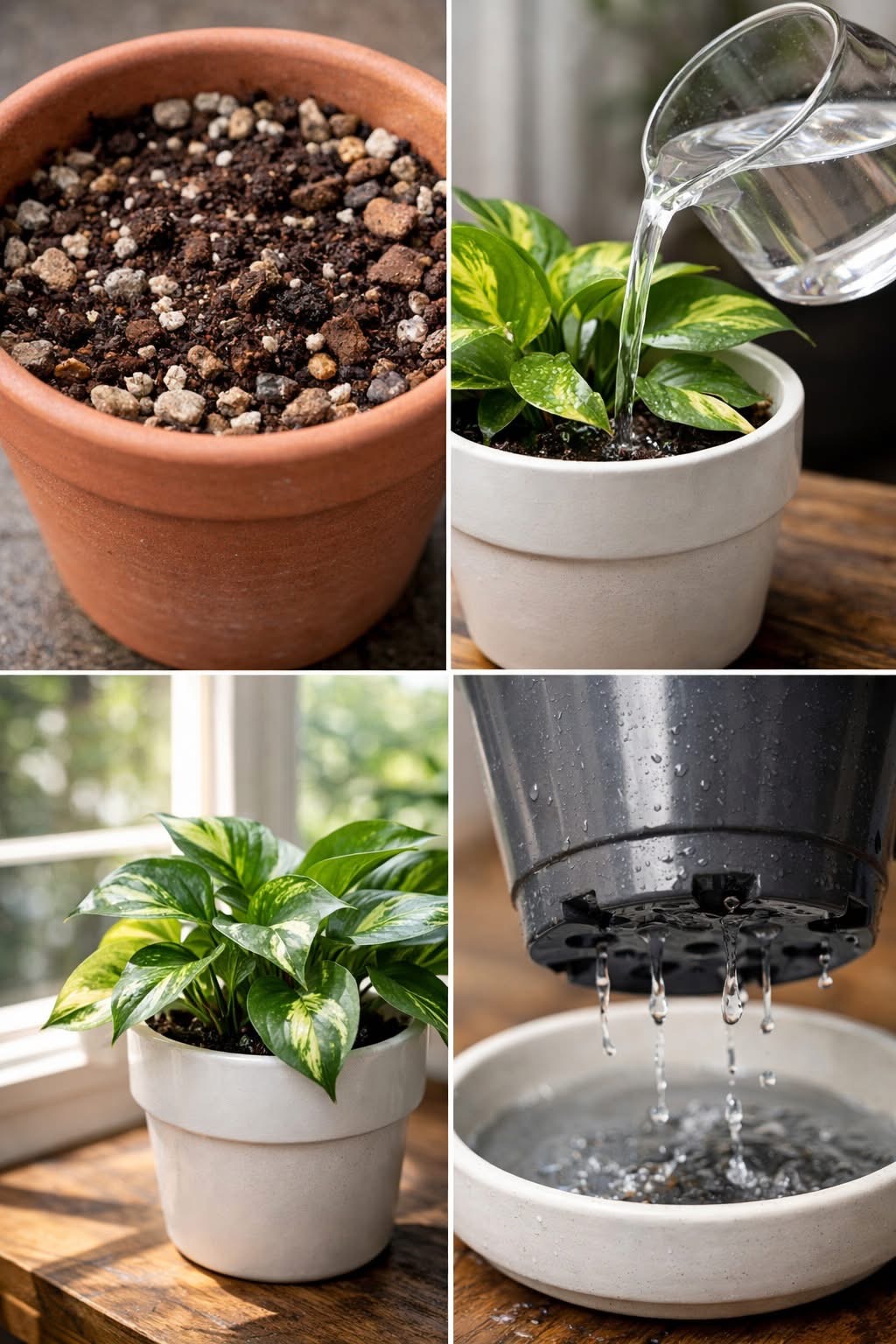
Watering Techniques to Avoid Pothos Root Rot 🌿💧
A Complete Guide to Keeping Your Pothos (Epipremnum aureum) Healthy and Thriving
Pothos is one of the most محبوب (popular) houseplants in the world—and for good reason. Its trailing vines, heart-shaped leaves, and ability to survive in low light make it perfect for beginners and experienced plant lovers alike. But even this hardy plant has one major weakness: root rot caused by improper watering.
If you’ve ever noticed yellow leaves, mushy stems, or a dying pothos despite your best efforts, overwatering is likely the السبب (cause). The good news? Root rot is completely preventable with the right techniques.
In this detailed guide, you’ll learn exactly how to water your pothos correctly, avoid common mistakes, and keep your plant growing strong for years.
🌱 Understanding Root Rot in Pothos
Root rot is not just “too much water”—it’s a fungal condition that develops when roots sit in wet, oxygen-poor soil for too long.
Healthy vs. Rotting Roots:
- ✅ Healthy roots: Firm, white or light tan
- ❌ Rotten roots: Brown/black, soft, mushy, bad smell
When roots can’t breathe, they تبدأ في التعفن (start to decay), and the plant can no longer absorb water or nutrients—even if the soil is wet.
👉 Ironically, overwatered plants often look like they need more water.
🪴 Step 1: Choose the Right Soil Mix
Your soil is the first line of defense against root rot.
Ideal Pothos Soil Recipe:
2 parts indoor potting soil
1 part perlite or coarse sand
Optional: 1 part coco coir or peat moss
Why This Works:
Good drainage prevents water buildup
Air pockets allow roots to breathe
Balanced moisture keeps roots hydrated but not soaked
💡 Pro Tip: If your soil stays wet for more than 7–10 days, it’s too heavy—add more perlite.
🏺 Step 2: Use the Right Pot
Even perfect watering won’t save a plant in the wrong container.
Always Choose:
Pots with drainage holes
Slightly breathable materials like terracotta
Avoid:
- Decorative pots with no drainage
- Oversized pots (they hold excess moisture)
💡 Smart Trick:
Use a plastic nursery pot inside a decorative pot—remove it when watering.
⏱️ Step 3: Follow a Smart Watering Schedule
Forget strict calendars—the best method is to check the soil, not the date.
Golden Rule:
👉 Water only when the top 2 inches of soil are dry
General Guideline:
- 🌸 Spring/Summer: Every 5–7 days
- 🍂 Fall/Winter: Every 10–14 days
But remember:
✔ More light = faster drying
✔ More humidity = slower drying
💡 Your environment always matters more than schedules.
🚿 Step 4: Use the Correct Watering Technique
How you water is just as important as when you water.
The Best Method: Deep Watering
Pour water evenly across the soil
Continue until water drains from the bottom
Let excess water fully drain
Empty the saucer immediately
Why It Works:
Hydrates all roots evenly
Flushes out salt buildup
Prevents shallow root growth
❌ Avoid light “sips” of water—they encourage weak roots and uneven moisture.
🌦️ Step 5: Adjust Watering by Season
Your pothos changes with the seasons—and your watering should too.
☀️ Warm Months:
Faster growth
Soil dries quicker
Needs more frequent watering
❄️ Cool Months:
Slower growth
Soil stays wet longer
Higher risk of root rot
💡 Winter is when most people accidentally overwater.
⚠️ Step 6: Watch for Early Warning Signs
Catching root rot early can save your plant.
Signs of Overwatering:
Yellow leaves (especially lower ones)
Drooping despite wet soil
Mushy stems
Bad smell from soil
What To Do Immediately:
Stop watering
Check roots
Remove damaged parts
Repot in fresh soil
🪨 Step 7: Improve Drainage Even More
If your pothos struggles with wet soil, boost drainage with these tricks:
Easy Fixes:
Add extra perlite
Keep soil loose (don’t press it down)
Ensure drainage holes are not blocked
💡 Optional: Add mesh or a small layer above the hole to prevent clogging.
💧 Step 8: Increase Humidity the Right Way
Pothos loves humidity—but not wet soil.
Better Alternatives to Overwatering:
Pebble tray (water below pot, not touching roots)
Group plants together
Use a humidifier
❌ Avoid daily misting—it doesn’t replace humidity and can cause مشاكل (issues).
🔄 Step 9: How to Save a Pothos with Root Rot
Don’t panic—pothos is very resilient.
Recovery Steps:
Remove plant from pot
Cut off all mushy roots
Rinse healthy roots
Repot in fresh, dry soil
Reduce watering
💡 Bonus Tip:
You can propagate healthy stems in water to save the plant faster.
🌟 Advanced Watering Tips (Most People Don’t Know)
✔ Use Room Temperature Water
Cold water shocks roots—always use lukewarm water.
✔ Water in the Morning
Gives plant time to absorb moisture during the day.
✔ Rotate Your Plant
Ensures even growth and drying.
✔ Use a Moisture Meter (Optional)
Great for beginners unsure about soil dryness.
❌ Common Watering Mistakes to Avoid
Watering on a fixed schedule
Letting plant sit in water
Using heavy, compact soil
Ignoring seasonal changes
Overpotting
💡 Biggest mistake: Caring too much. Pothos prefers slight neglect.
🌿 Final Thoughts
The secret to a thriving pothos isn’t complicated—it’s about balance.
Not too much water
Not too little
Just the right conditions for roots to breathe
When you combine:
✔ Well-draining soil
✔ Proper pots
✔ Smart watering habits
…you eliminate root rot completely.
Your Pothos (Epipremnum aureum) will reward you with:
🌱 Fast growth
🌿 Lush green leaves
✨ Beautiful trailing vines
💬 Quick Engagement Hook (for your blog or social media)
“Is your pothos turning yellow no matter what you do? 😳
You might be watering it WRONG! 💧❌
Discover the simple trick that keeps roots healthy and rot-free—check the full guide now 👇”
If you want, I can also turn this into a high-RPM AdSense version with keywords, SEO title, meta description, and headings optimized for U.S. traffic 👍