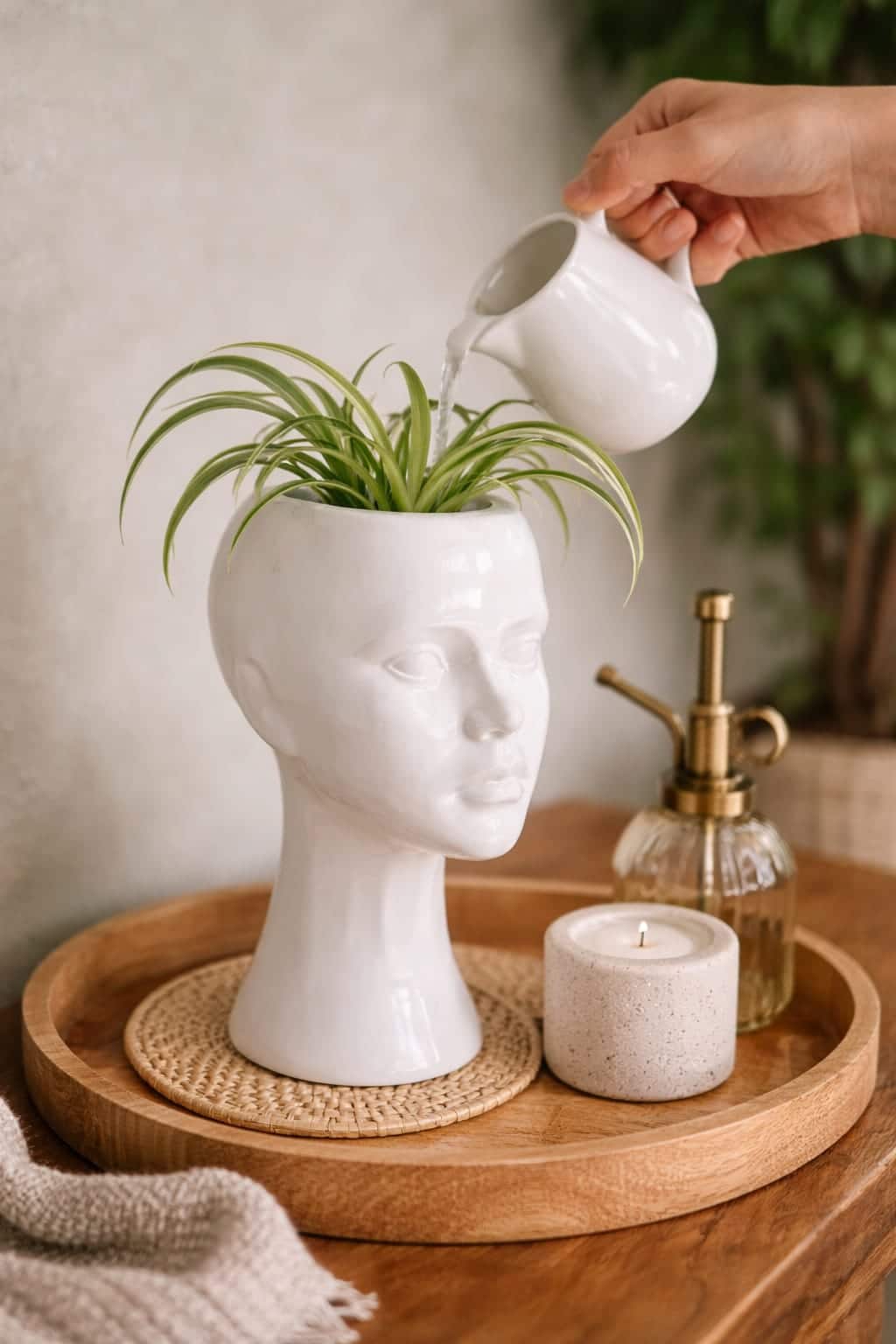
The Décor Impact Is Bigger Than You Expect
What makes this idea so good is that it does more than hold a plant. It adds:
· Texture – The soft leaves contrast with the hard mannequin.
· Shape – The human‑like form draws the eye.
· Personality – It is playful without being childish.
· Conversation – Every guest will ask about it.
· Movement – The leaves sway slightly in the air.
Instead of another standard plant pot, you get something sculptural and memorable. It is the kind of décor piece that feels curated, like something from a boutique or design studio.
How to Keep the Plant Looking Like “Good Hair”
To keep the effect beautiful, the spider plant needs basic but consistent care. A healthy plant equals great hair.
Light
Spider plants need bright, indirect light to thrive. An east window or a south/west window with a sheer curtain is ideal.
· Too little light: Leaves become pale, and the plant stops producing new growth. The “hair” looks thin and sad.
· Too much direct sun: Leaves scorch and turn brown at the tips.
If your mannequin planter is in a dark corner, the spider plant will slowly decline. Move it closer to a window or add a grow light.
Water
Spider plants like moderate moisture, but they do not like soggy soil.
· Water when the top inch of soil feels dry.
· Water thoroughly, then let excess drain.
· Empty the saucer (or remove the inner pot) so the plant never sits in water.
If the leaves develop brown tips, it is often a sign of mineral buildup or inconsistent watering. Flush the soil with plain water every month.
Humidity
Spider plants tolerate normal indoor humidity, but they appreciate a little extra moisture. Brown tips can indicate dry air. Use a humidity tray or group plants together.
Trimming
Trim brown tips with clean scissors to keep the “hair” looking fresh and polished. Cut at an angle following the natural leaf shape. Remove any dead or yellow leaves at the base.
Rotate the Planter
If one side is always facing the light, the plant may start leaning unevenly. Rotate the mannequin planter every few weeks to encourage even growth.
Fertilizer
Spider plants are not heavy feeders, but a light feeding in spring and summer supports healthy growth.
· Use a balanced houseplant fertilizer (10‑10‑10) diluted to half strength.
· Feed once a month during spring and summer.
· Do not fertilize in fall and winter.
Repot When Necessary
As the plant grows, it may need a slightly larger inner pot. Repot every 1–2 years into fresh soil. If the plant becomes too large for the mannequin, you can divide it (split the root ball into two plants) and keep the smaller portion in the planter.
Styling Ideas to Make It Even Better
This kind of planter can be styled in different ways depending on your home.
Minimalist Look
Use a white mannequin planter on a clean wooden table with very little around it. Let the plant be the only accessory. Add a single candle or a stack of books in neutral tones.
Boho Look
Place it near woven wall décor, baskets, and warm natural textures like jute or macrame. A terracotta or unfinished wood mannequin works well here.
Modern Gallery Look
Pair it with framed art, a sculptural lamp, and one or two geometric objects. Use a glossy white or black mannequin. Keep the color palette simple.
Whimsical Look
Let the spider plant grow fuller and wilder for a dramatic “hair” effect. Add tiny decorative clips or fake flowers to the plant for a playful touch. Use a brightly painted mannequin.
Seasonal Styling
· Spring: Add small faux flowers or butterflies.
· Summer: Keep it fresh and green.
· Fall: Place it near a pumpkin or autumn leaves.
· Winter: Add a small string of battery‑operated fairy lights.
A Few Mistakes to Avoid
If you want this project to look good long‑term, avoid these common errors.
Planting Directly into a Container with No Drainage and Watering Carelessly
This is the #1 mistake. Root rot will kill your spider plant and ruin the project. Always use an inner pot with drainage holes.
Choosing a Plant That Is Too Small to Create Impact
A tiny spider plant will look lost on a mannequin head. Start with a mature plant in a 4‑inch or 6‑inch pot, or let a smaller plant grow for several months before displaying it.
Placing It in a Very Dark Spot
The plant will slowly weaken and lose its fullness. Mannequin planters look best in well‑lit areas.
Overwatering
Spider plants are more tolerant of underwatering than overwatering. When in doubt, wait another day.
Letting Dead or Brown Leaves Build Up
Dead leaves make the “hair” look messy. Trim regularly.
Ignoring Pests
Spider plants can get spider mites or mealybugs. Check under leaves occasionally.
Frequently Asked Questions (Spider Plant Mannequin Planter)
Can I use a real mannequin head from a salon?
Yes, but make sure it is clean and free of hair products. Also, many salon mannequins are foam — you will need to reinforce the top to hold a pot.
What if I cannot drill a hole in the mannequin?
Do not drill. Use the inner pot method. Place a small nursery pot on top of the mannequin head. You can secure it with a strong adhesive or by creating a small indentation.
How do I clean the mannequin planter?
Dust it regularly with a soft cloth. For deeper cleaning, use a damp cloth with mild soap. Do not soak the mannequin if it is made of foam or unsealed material.
Will the spider plant eventually outgrow the planter?
Yes, after 1–2 years. When that happens, you can divide the plant (split it into two) and repot the smaller half back into the mannequin. Or upgrade to a larger mannequin head.
Can I use a different plant instead of a spider plant?
You can, but the effect will be different. Plants with trailing vines (like pothos or string of pearls) look more like long hair. Upright plants (like snake plants) look like punk or spiky hair. Spider plants are the best balance of fullness and softness.
Is this project safe for pets?
Spider plants are non‑toxic to cats and dogs according to the ASPCA. However, the mannequin itself might be a chewing hazard if your pet is destructive. Place it out of reach if needed.
How do I get my spider plant to produce baby plantlets?
Give it bright indirect light, a slightly snug pot, and occasional feeding in spring and summer. Mature, healthy spider plants naturally produce long stems with baby plantlets.
Why People Love Décor Like This
This kind of DIY piece is getting attention because it feels personal. It is not generic. It is not mass‑produced looking. It is fun, stylish, and memorable.
It shows creativity without feeling cluttered, and it turns a simple houseplant into something with character. That is the kind of décor people remember.
In a world of identical minimalist pots and mass‑produced art, a spider plant mannequin planter stands out. It tells a story. It makes people smile. And it proves that the best home accents are often the ones you make yourself.
Final Thoughts
Who knew a spider plant could have such great hair?
This mannequin planter idea is one of those rare projects that feels playful and sophisticated at the same time. It gives an old object a new purpose, turns a simple plant into living art, and adds instant personality to a space.
And the best part is that it is not just cute for a photo. Done well, it can become one of the most eye‑catching pieces in the whole room. With proper care, your spider plant will continue to grow, filling out that “hair” and making the sculpture even more dramatic over time.
So next time you spot an old mannequin head at a thrift store, do not walk past it. Take it home. Add a spider plant. And watch as your guests stop, stare, and ask, “Where did you get that?”
Because sometimes the best décor is not the most expensive thing you buy. It is the creative idea that makes everyone look twice.
Have you made a spider plant mannequin planter? Share your photos in the comments below. And if you found this guide helpful, save it for later or send it to a friend who loves unique, creative plant decor.