Fertilizing Spiral Snake Plants
Spiral snake plants do not need much fertilizer. Too much feeding can cause weak growth, brown tips, or salt buildup in the soil. Feed lightly during the active growing season only.
Simple Fertilizer Schedule
- Spring: half-strength cactus or balanced houseplant fertilizer
- Early summer: repeat if the plant is actively growing
- Late summer: optional light feeding
- Fall and winter: stop feeding
Fertilize only when the soil is already slightly moist. Do not fertilize a thirsty or stressed plant.
Common Problems With Spiral Snake Plants
Leaves Becoming Soft
Soft leaves usually mean too much water or root rot. Check the soil and roots immediately. Let the plant dry out, and if rot is present, remove damaged sections and repot into dry, airy soil.
Leaves Turning Yellow
Yellowing can be caused by overwatering, poor drainage, cold exposure, or natural aging. If several leaves yellow at once, check the roots.
Brown Tips
Brown tips can come from underwatering, mineral buildup, too much fertilizer, or dry air. Trim only the brown part if it bothers you, but correct the care issue first.
Rosette Opening Too Wide
If the spiral becomes loose and stretched, the plant may need more light. Move it closer to a bright window and rotate it regularly.
Plant Not Growing
Snake plants are naturally slow-growing. If the plant is healthy, firm, and colorful, slow growth is not a problem. Growth usually increases in spring and summer.
How to Clean the Leaves
Dust can dull the beautiful patterns on spiral snake plant leaves. Clean leaves make the plant look more expensive and help it absorb light better.
Use a soft damp cloth to wipe each leaf gently. Support the leaf from underneath so you do not bend it sharply. Avoid oily leaf shine products. They can clog the leaf surface and make the plant look artificial.
For a polished look, clean the leaves every few weeks or whenever dust appears.
Should You Mist Spiral Snake Plants?
No, they do not need misting. Snake plants prefer dry leaves and good airflow. Misting can leave water trapped in the rosette, which may increase the chance of rot. If you want to clean the plant, wipe the leaves with a damp cloth instead of spraying heavily.
Can Spiral Snake Plants Be Used in Bedrooms?
Yes. They are excellent bedroom plants because they are compact, tidy, and quiet-looking. Their structured shape pairs well with calm bedroom decor. Place one on a nightstand, dresser, or windowsill where it receives indirect light.
Just remember not to overwater, especially if the bedroom is cool or low-light.
Can They Be Used in Bathrooms?
Yes, but only if the bathroom has enough light. Bathrooms can be humid, and snake plants do not need extra humidity. If the bathroom is bright and airflow is decent, a spiral snake plant can look beautiful there. If the bathroom is dark and steamy, choose another location.
Are Spiral Snake Plants Good for Offices?
They are excellent office plants. They stay compact, tolerate some neglect, and look professional. A small spiral snake plant on a desk or shelf can add greenery without creating clutter.
In offices with fluorescent lighting, place the plant where it receives the brightest available light. Water sparingly.
How to Create a Luxury Plant Display With Several Spiral Snake Plants
The image shows multiple spiral snake plants grouped together. This is one of the best ways to use them decoratively. A collection creates impact, and because the plants have similar shapes, the display looks cohesive.
Step 1: Choose a Color Theme
Select pots in related colors. For example, use warm neutrals, soft gray, terracotta, and sage green. Avoid too many loud pot colors unless your decor is playful.
Step 2: Mix Leaf Patterns
Use both dark green and yellow-variegated plants. This creates contrast while keeping the same plant form.
Step 3: Vary Pot Heights
Place some pots on small risers or trays. Slight height variation makes the display feel more professional.
Step 4: Leave Space Between Plants
Do not crowd them too tightly. Each spiral should be visible from above.
Step 5: Use a Clean Surface
A bright table, wooden tray, stone shelf, or simple plant stand works well. The cleaner the surface, the more luxurious the plants look.
How to Propagate Spiral Snake Plants
You can propagate many snake plants by division or leaf cuttings, but division is best for keeping the same rosette shape and variegation.
Division Method
- Remove the plant gently from its pot.
- Look for offsets or small side rosettes.
- Separate a section with roots attached.
- Let any cut area dry for a day if needed.
- Plant the division in dry, well-draining soil.
- Wait several days before watering lightly.
Division keeps the plant more true to type. Leaf cuttings may produce new plants, but variegated types can lose their yellow margins when grown from leaf pieces.
When to Repot Spiral Snake Plants
Because they grow slowly, they do not need frequent repotting. Repot only when necessary.
Repot when:
- Roots are packed tightly
- The plant dries out too quickly
- The pot cracks or becomes unstable
- Offsets crowd the main plant
- The soil is old, compacted, or hydrophobic
- The plant is pushing upward from the pot
The best time to repot is spring or early summer.
How to Repot Without Ruining the Shape
Remove the plant gently and avoid pulling the leaves. Hold the root ball and pot, not the rosette. Place the plant at the same depth in the new pot. Do not bury the crown. Add fresh dry mix around the roots and press lightly. Wait a few days before watering if any roots were damaged.
After repotting, keep the plant in bright indirect light and avoid fertilizer for several weeks.
Decor Styles That Work With Spiral Snake Plants
Modern Minimalist
Use one spiral snake plant in a matte white or black pot. Place it on a clean shelf or side table.
Boho Natural
Use terracotta, woven trays, wood shelves, and mixed plant textures. A variegated spiral plant adds brightness.
Luxury Neutral
Choose stone, ceramic, beige, cream, and muted gray pots. Use pebbles as top dressing for a polished look.
Japandi Style
Pair the plant with simple ceramics, light wood, and uncluttered surfaces. The spiral shape fits beautifully with calm natural design.
Eclectic Colorful
Use colorful pots and group several varieties together. The plant’s structured form keeps the display from feeling too messy.
Why Spiral Snake Plants Are Great for Small Homes
Small homes and apartments need plants that provide beauty without taking too much space. Spiral snake plants are ideal because they stay compact and look decorative from every angle.
They work well in:
- Studio apartments
- Small bedrooms
- Office corners
- Kitchen shelves
- Narrow windowsills
- Bathroom counters
- Entryway tables
A single small rosette can make a tiny space feel more designed.
Do Spiral Snake Plants Need Special Care Compared to Tall Snake Plants?
The care is mostly the same, but there are two important differences. First, spiral types have a tight center, so you must be careful not to let water sit inside the rosette. Second, their decorative value depends on symmetry, so regular rotation and good light matter more.
Other than that, they enjoy the same basic care: bright indirect light, dry periods between waterings, fast-draining soil, and light feeding.
Safety Note for Pets
Snake plants can be irritating or mildly toxic if chewed by pets. If you have cats or dogs that like to bite plants, keep spiral snake plants out of reach. Because these plants are small, they are easy to place on higher shelves or stands.
Quick Care Card for Spiral Snake Plants
Light: Bright indirect light is best. Tolerates lower light but grows slower.
Water: Water only when soil is dry. Avoid watering the center rosette.
Soil: Fast-draining cactus or succulent mix with perlite or pumice.
Pot: Use a pot with drainage holes. Snug pots are better than oversized pots.
Humidity: Normal indoor humidity is fine. No misting needed.
Fertilizer: Light feeding in spring and summer only.
Maintenance: Rotate regularly, wipe leaves, remove damaged leaves, and keep the crown dry.
Short Caption for This Decor Idea
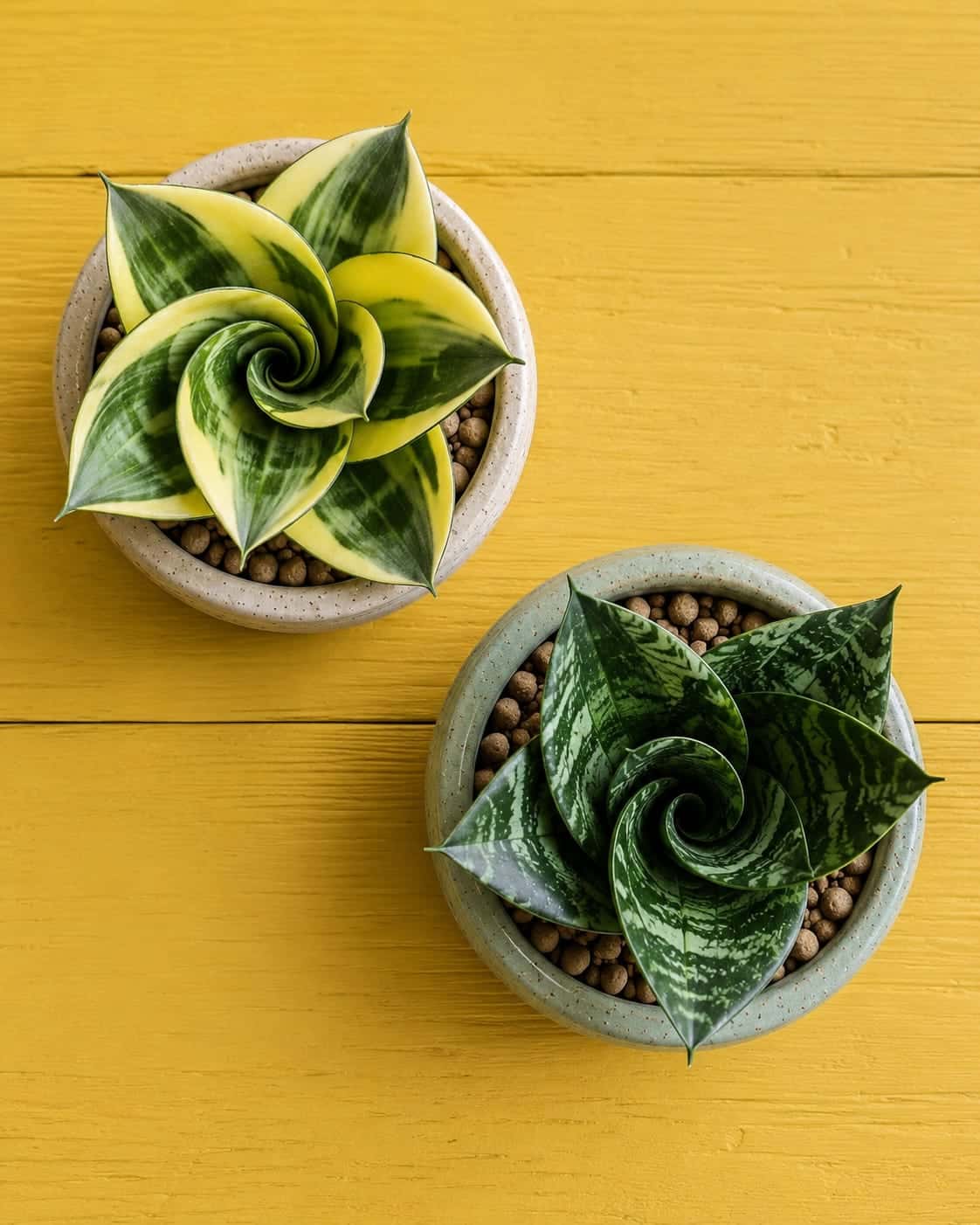
Spiral snake plants are becoming a favorite for luxury indoor decor because their compact rosette shape looks like a living sculpture. Place them in simple ceramic pots, use a thin pebble top dressing, and display them where the spiral can be seen from above. They stay elegant with bright indirect light, fast-draining soil, careful watering, and regular rotation. The secret is to keep the leaves firm, the crown dry, and the display clean and uncluttered.
Frequently Asked Questions
What is a spiral snake plant?
A spiral snake plant is a compact rosette-form snake plant whose leaves grow in a circular pattern. It may be sold as bird’s nest snake plant, dwarf snake plant, Golden Hahnii, or Twisted Sister depending on the variety.
Are spiral snake plants real?
Yes. Many compact snake plant varieties naturally grow in rosette shapes. Some look especially spiral-like when viewed from above.
Do spiral snake plants need direct sunlight?
No. Bright indirect light is best. Gentle morning sun can work, but harsh afternoon sun may scorch the leaves.
How often should I water a spiral snake plant?
Water only when the soil is dry. In many homes, this may be every 2 to 4 weeks, and less often in winter.
Why is my spiral snake plant losing its shape?
It may need more light, regular rotation, or better watering. Low light can cause stretching, and overwatering can make leaves soften.
Can I mist a spiral snake plant?
Misting is not necessary and can leave water in the rosette. Wipe the leaves with a damp cloth instead.
What soil is best?
Use a fast-draining cactus or succulent mix with added perlite, pumice, or orchid bark.
Do they need fertilizer?
Only lightly. Feed with a diluted houseplant or cactus fertilizer during spring and summer.
Can I keep spiral snake plants in small pots?
Yes. They often look best in snug pots. Just make sure the pot has drainage holes.
Are they good for beginners?
Yes. They are beginner-friendly as long as you avoid overwatering and give them enough light.
Final Thoughts
Spiral snake plants are proof that a houseplant does not have to be large to feel luxurious. Their beauty comes from shape, pattern, and simplicity. From above, each plant looks like a carefully arranged green sculpture. The leaves fold into a natural spiral, the markings add texture, and the compact size makes the plant easy to display almost anywhere.
Smart homeowners are choosing spiral snake plants because they bring a designer look without demanding designer-level care. They are elegant enough for a coffee table, tidy enough for a desk, calm enough for a bedroom, and sculptural enough for a styled shelf. When grouped together in simple pots, they can look like a curated collection from a boutique plant shop.
The care is simple but important. Give them bright indirect light. Use fast-draining soil. Choose pots with drainage. Water only when the soil is dry. Keep water out of the center rosette. Rotate the pot so the spiral stays balanced. Wipe the leaves when they collect dust. Avoid overfeeding and oversizing the pot.
The luxury look comes from restraint. Do not crowd them with too many accessories. Do not bury them in heavy soil. Do not overwater them because they look small. Let the shape speak for itself. A spiral snake plant is already decorative by nature.
With the right care and a thoughtful display, these small sculptural plants can make any indoor space feel more polished, more intentional, and more alive. Whether you place one on a nightstand or arrange several together on a bright table, spiral snake plants are an easy way to bring elegance, structure, and natural beauty into your home.