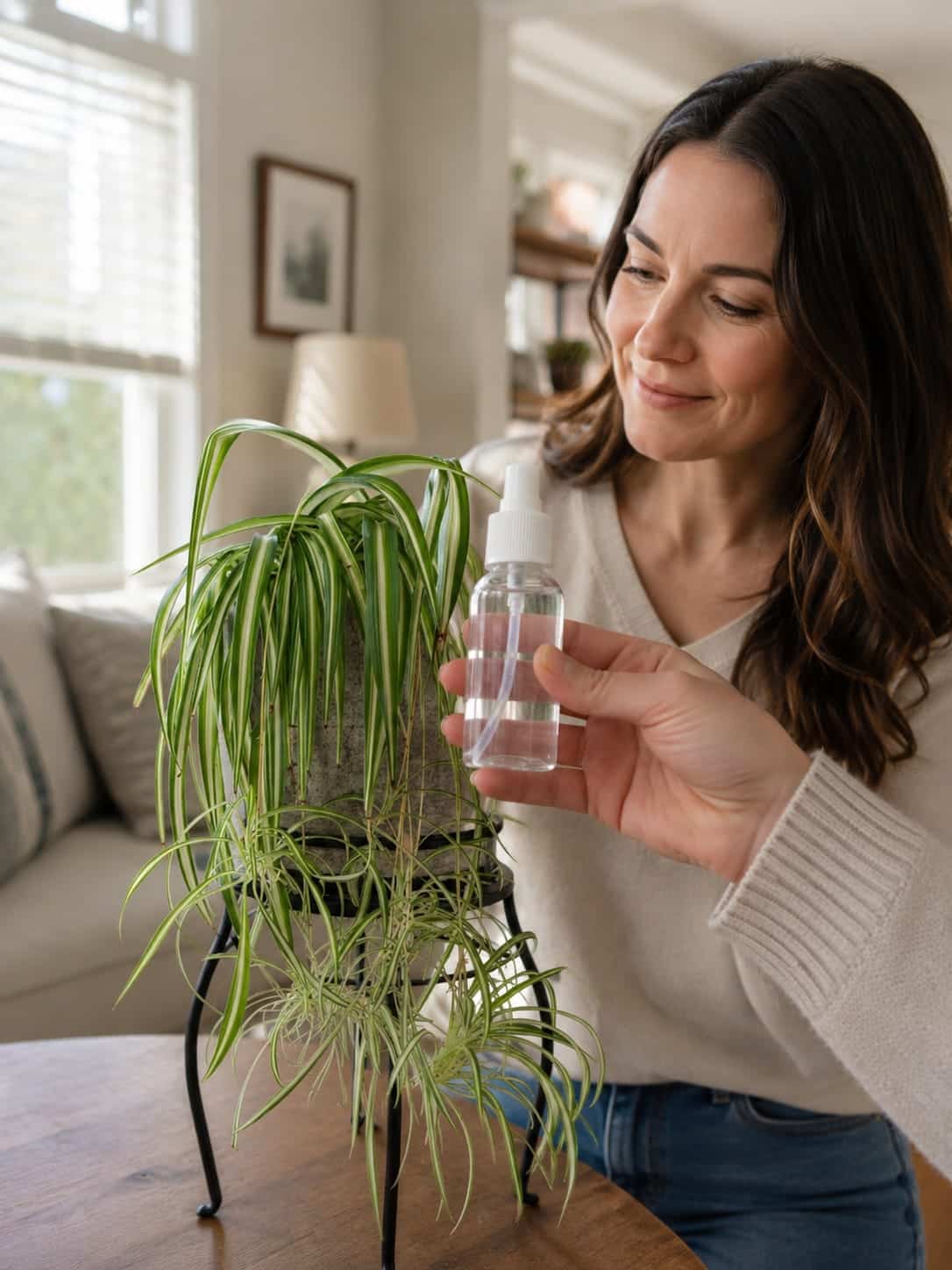
How Often Should You Spray Spider Plants?
The right frequency depends on your home. In a dry apartment with heating or air conditioning, a light mist once or twice a week can help the plant look fresh. In a humid room, spraying once every two weeks may be enough. If your plant is near a bathroom window with good humidity, you may barely need to mist at all.
A simple schedule:
- Dry indoor air: 1 to 2 times per week
- Normal indoor air: once every 1 to 2 weeks
- Humid room: only when dusty
- Cold season: mist lightly and only in the morning
Do not mist if the plant is already wet, the room is cold, or there is poor airflow.
Why Filtered or Distilled Water Helps Brown Tips
One of the most common spider plant problems is brown tips. These crispy brown ends can happen for several reasons, but water quality is a common factor. Tap water in some areas contains minerals, chlorine, fluoride, or salts that can build up in the soil. Spider plants can be sensitive to this buildup.
Switching to filtered, distilled, or rainwater can help reduce future brown tips. It will not repair tips that are already brown, but it can help new growth look cleaner.
If your spider plant has brown tips, try this:
- Use filtered or distilled water
- Flush the soil occasionally
- Avoid overfertilizing
- Trim brown tips cleanly
- Keep humidity moderate
- Do not let the plant dry out completely for too long
How to Trim Brown Tips Without Ruining the Look
Brown tips do not turn green again. You can trim them for appearance. Use clean scissors and cut the brown part away following the natural shape of the leaf. Leave a tiny edge of brown rather than cutting into healthy green tissue. If you cut into fresh green tissue, the edge may brown again.
Do not remove every leaf with a small brown tip. Spider plants naturally get some tip browning indoors. Trim only the most noticeable damaged parts.
What the Spray Cannot Fix
A clear liquid spray can make a spider plant look fresher, but it cannot solve deeper care problems.
It cannot fix:
- Root rot
- Severe underwatering
- Severe overwatering
- Very low light
- Old depleted soil
- Pest infestations
- Extreme brown tips from mineral buildup
- A root-bound plant that needs repotting
Use the spray as a finishing touch, not the entire care routine.
How to Keep Spider Plants Fuller Indoors
A spider plant looks full when it has enough light, healthy roots, fresh leaves, and occasional grooming. Spraying helps the leaves look clean, but fullness depends on overall care.
Give Bright Indirect Light
Spider plants tolerate lower light, but they grow fuller in bright indirect light. A plant in a dim corner may become thin and floppy. Variegated spider plants especially need enough light to maintain strong color.
Place your plant near a bright window, but avoid harsh afternoon sun that can scorch the leaves. Morning sun or filtered light is ideal.
Water Consistently
Spider plants like soil that dries slightly between waterings but does not stay dry for too long. They have thick, fleshy roots that store water, but they still appreciate consistent moisture.
Water when the top inch of soil feels dry. Water deeply until excess drains out, then empty the saucer.
Use a Pot With Drainage
Drainage is essential. If water sits at the bottom of the pot, roots may rot. Spider plants like moisture, but not soggy soil.
Feed Lightly During Growth
During spring and summer, feed with a balanced houseplant fertilizer at half strength once a month. Do not overfeed. Too much fertilizer can contribute to brown tips.
Remove Old Leaves
Trim yellow, brown, or broken leaves at the base. This keeps the plant tidy and encourages a cleaner shape.
Rotate the Pot
Rotate the plant every week or two so all sides receive light. This helps the plant grow evenly instead of leaning toward the window.
How to Make Baby Spider Plants Look Fresher
The hanging baby plantlets are one of the most decorative parts of a spider plant. They can become dry or pale if the mother plant is stressed or the air is too dry.
To keep plantlets fresh:
- Mist them lightly with filtered water
- Keep the mother plant evenly watered
- Provide bright indirect light
- Trim dead baby plantlets
- Propagate some babies if the plant is overcrowded
You can leave baby plants attached for decoration, or you can root them in water or soil to make new plants.
How to Propagate Spider Plant Babies
Spider plant propagation is simple. Choose a baby plantlet with small root nubs. You can root it while attached to the mother plant or cut it off first.
Water Propagation
- Cut a healthy baby plantlet from the stem.
- Place the base in a small jar of water.
- Keep the leaves above water.
- Place in bright indirect light.
- Change the water every few days.
- Plant in soil when roots are about 1 to 2 inches long.
Soil Propagation
- Fill a small pot with light potting mix.
- Place the baby plantlet on the soil.
- Pin it gently if needed.
- Keep the soil lightly moist.
- Wait until roots develop.
Soil propagation often creates stronger roots from the beginning.
Best Soil for Spider Plants
Spider plants are not too picky, but they prefer a light, well-draining potting mix. Regular indoor potting mix works well if it does not stay soggy. Add perlite if the mix is dense.
A simple spider plant soil mix:
- 2 parts indoor potting mix
- 1 part perlite
- Optional: a small amount of orchid bark for airflow
This gives the roots enough moisture while preventing waterlogging.
When to Repot a Spider Plant
Spider plants grow thick, fleshy roots that can quickly fill a pot. A root-bound spider plant may still survive, but it may dry out too quickly, stop producing strong leaves, or push itself upward from the pot.
Repot if:
- Roots are circling tightly
- The plant dries out very quickly
- Roots are coming out of drainage holes
- The plant has stopped growing despite good care
- The pot is cracked or crowded
- The soil is old and compacted
Choose a pot only one size larger. Too much extra soil can stay wet too long.
Can You Spray Fertilizer on Spider Plant Leaves?
Foliar feeding is sometimes used for plants, but spider plants generally do not need it. Their narrow leaves can spot or collect residue. Root feeding is safer and more reliable.
If you use any foliar fertilizer, it must be extremely diluted and tested on a small area first. For most homeowners, plain water misting and occasional root fertilizing are better.
What Not to Spray on Spider Plants
This is very important. Many homemade plant sprays online are too strong for delicate indoor leaves.
Avoid spraying spider plants with:
- Vinegar water
- Lemon water
- Baking soda water
- Rubbing alcohol
- Hydrogen peroxide unless properly diluted for a specific issue
- Milk sprays
- Sugar water
- Cooking oil
- Leaf shine products
- Strong dish soap mixtures
These can leave residue, burn leaf tissue, attract pests, or clog the leaf surface.
Can You Use Aloe Water as a Spray?
Yes, but only very diluted. Aloe is popular in plant care because it is gentle when used correctly. However, thick aloe gel can leave sticky residue. Use only a tiny amount of pure aloe juice mixed into water, and do not spray heavily.
Aloe Leaf Freshening Spray
- 1 cup filtered water
- 1/4 teaspoon pure aloe vera juice
Shake well, mist lightly, and wipe leaves if needed. Use once every two weeks at most. If leaves feel sticky afterward, use plain water next time.
Can You Use Neem Oil?
Neem oil should not be used as a regular decorative freshness spray. It is a pest-control product, not a shine mist. If your spider plant has pests, neem may be used carefully according to label instructions, but it can leave residue and should not be applied in strong light.
Use neem only when needed, not as a beauty spray.
Common Spider Plant Problems and What They Mean
Brown Tips
Usually caused by mineral buildup, inconsistent watering, dry air, too much fertilizer, or stress. Use filtered water and avoid overfeeding.
Pale Leaves
Often caused by low light. Move the plant to brighter indirect light.
Drooping Leaves
Can be caused by underwatering, overwatering, root crowding, or low light. Check soil and roots.
No Baby Plants
The plant may be too young, too dark, overfertilized, or not slightly root-bound enough. Bright light helps encourage plantlets.
Yellow Leaves
Can be caused by overwatering, old leaves, poor drainage, or root stress.
How to Use the Spray as Part of a Weekly Routine
A simple weekly spider plant routine can keep the plant looking fresh without overdoing anything.
Once a Week
- Check soil moisture
- Remove yellow or dead leaves
- Rotate the pot
- Inspect baby plantlets
- Mist lightly if leaves are dusty or air is dry
Every Two to Four Weeks
- Wipe leaves gently
- Trim brown tips if needed
- Check roots and pot crowding
- Feed lightly during active growth
Every Few Months
- Flush the soil with plain filtered water if mineral buildup appears
- Propagate excess plantlets
- Refresh top soil if crusty
How to Flush Soil for a Spider Plant
If your spider plant has brown tips and you suspect mineral buildup, flushing the soil can help. This means running water through the pot to wash out excess salts.
- Take the plant to a sink, tub, or outdoor area.
- Use filtered or room-temperature water if possible.
- Pour water slowly through the soil.
- Let it drain out the bottom.
- Repeat once or twice.
- Allow the pot to drain completely.
- Do not leave water sitting in the saucer.
Do this only when the plant actually needs watering. Do not keep the soil constantly wet.
Why Spider Plants Look Best on Plant Stands
The image shows a spider plant displayed on a stand, which is a great choice. Spider plants naturally arch and cascade. A raised pot gives the leaves and baby plantlets room to hang down gracefully.
Plant stands also improve airflow around the pot and make the plant more decorative. This is one reason spider plants are perfect for shelves, hanging baskets, stools, and window stands.
How to Make a Spider Plant Look Fuller Instantly
A spray can freshen the leaves, but grooming makes the biggest visual difference.
To make the plant look fuller:
- Trim brown tips.
- Remove fully yellow leaves.
- Cut off weak or dead plantlets.
- Rotate the pot toward the light.
- Gather trailing baby stems neatly around the stand.
- Wipe dusty leaves.
- Mist lightly with filtered water.
This simple routine can make a tired spider plant look much more polished within minutes.
Does Misting Increase Humidity?
Misting adds temporary moisture to the leaf surface and air immediately around the plant, but it does not raise room humidity for long. If your home is extremely dry, use a pebble tray, group plants together, or run a humidifier instead.
For spider plants, moderate humidity is enough. They do not need tropical greenhouse conditions.
Best Indoor Placement for Spider Plants
Spider plants like bright indirect light. Place them near an east-facing window, a bright north-facing window, or a few feet back from a south or west window. Avoid harsh direct afternoon sun, which can scorch the leaves.
Good places include:
- Living room plant stand
- Bright bathroom shelf
- Kitchen window area
- Bedroom dresser near a window
- Hanging basket near filtered light
- Office shelf with bright indirect light
Avoid dark corners if you want full growth and baby plantlets.
Should You Cut Off Spider Plant Babies?
You can, but you do not have to. Baby plantlets are decorative and make the plant look full. However, if the mother plant is weak, removing some babies can help it conserve energy.
Cut off plantlets if:
- The mother plant looks exhausted
- Too many babies are drying out
- The plant looks messy
- You want to propagate new plants
- The stems are broken or brown
Leave them if the plant is healthy and you enjoy the cascading look.
Quick Recipe Card: Clear Spider Plant Freshness Spray
Best for: dusty leaves, dry indoor air, tired-looking plantlets, and decorative freshening.
Ingredients
- 1 cup filtered, distilled, or rainwater
- Optional: 1/4 teaspoon pure aloe vera juice
Instructions
- Add the water to a clean spray bottle.
- Add aloe only if desired.
- Shake gently.
- Mist lightly over the leaves in the morning.
- Wipe dusty leaves with a soft cloth.
- Let the plant dry in bright indirect light.
- Use once a week or only when needed.
Short Caption for This Trick
To keep a spider plant fuller and fresher indoors, mist it lightly with filtered or distilled water in the morning. For an optional gentle boost, mix 1 cup clean water with 1/4 teaspoon pure aloe vera juice and spray only a fine mist over the leaves. Do not soak the crown, do not use harsh ingredients, and let the plant dry with good airflow. This spray helps remove dust and refresh the foliage, but real fullness comes from bright indirect light, proper watering, clean leaves, and occasional trimming.
Frequently Asked Questions
What is the clear liquid being sprayed on the spider plant?
The safest clear liquid is filtered, distilled, or rainwater. Some gardeners add a tiny amount of aloe vera juice, but plain water is usually enough.
Can I mist my spider plant every day?
Daily misting is usually unnecessary. Once or twice a week is enough in dry air. In humid rooms, mist only when the plant is dusty.
Does misting make spider plants fuller?
Misting helps the plant look fresher, but fullness comes mainly from bright indirect light, healthy roots, proper watering, and trimming old leaves.
Can I use tap water?
You can, but spider plants may develop brown tips from minerals or chemicals in some tap water. Filtered, distilled, or rainwater is better.
Why does my spider plant have brown tips?
Brown tips can be caused by mineral buildup, dry air, inconsistent watering, too much fertilizer, or stress.
Should I spray fertilizer on spider plant leaves?
Usually no. Root feeding with a diluted balanced fertilizer is safer. Spider plant leaves can collect residue from sprays.
Can I spray aloe water on spider plants?
Yes, but use it very diluted. Mix 1/4 teaspoon pure aloe vera juice into 1 cup water and mist lightly.
Can I spray vinegar water on spider plants?
No. Vinegar can burn leaves and damage the plant. Avoid acidic sprays.
Can I spray milk on spider plants?
No. Milk can leave residue, smell sour, and attract pests indoors.
How do I make my spider plant look decorative again?
Trim brown tips, remove yellow leaves, wipe dust, mist lightly, rotate the pot, and place it in bright indirect light.
Final Thoughts
The clear liquid trick for spider plants is simple, but it works best when you keep it gentle. A spider plant does not need a complicated spray to look beautiful. Most of the time, it only needs clean water, clean leaves, enough light, and a steady watering routine.
Spraying filtered or distilled water can help refresh dusty leaves and make the plant look brighter indoors. A tiny amount of aloe vera juice can be added if you want a mild natural leaf freshener, but it should never be strong or sticky. The goal is a light mist, not a heavy coating.
Remember that misting is only cosmetic and supportive. It will not replace watering the roots, feeding during the growing season, repotting when crowded, or giving the plant proper light. If your spider plant is thin, pale, or drooping, look at the basics first. Check the soil. Check the roots. Move it to brighter indirect light. Trim damaged leaves. Use better water if brown tips are a problem.
Spider plants reward simple care. When their leaves are clean, their roots are healthy, and their plantlets have room to cascade, they become one of the most decorative indoor plants you can own. A small spray bottle of clean water can be part of that routine, but the real secret is consistency. Mist lightly, groom gently, and let the plant grow in a bright, comfortable spot. With that kind of care, your spider plant can stay full, fresh, and beautiful season after season.