Best Light for Lush Growth
No mineral spray can replace proper light. Most leafy houseplants need bright indirect light for full growth. Pothos can tolerate lower light, but it grows better with brighter filtered light. Peace lilies may survive in low light, but they bloom better with bright indirect light. Flowering plants usually need even more light to produce strong blooms.
If a plant is pale, stretching, or growing slowly, move it closer to a suitable light source before adding extra supplements. Light provides the energy plants need to use nutrients. Feeding or spraying a plant in very low light can lead to buildup because the plant is not growing fast enough to use what is applied.
Bright indirect light, clean leaves, and balanced moisture often create a bigger improvement than any quick hack. A plant near a bright window with proper care will usually outperform a plant in a dark corner receiving many treatments.
Watering and Root Health
Root health is the foundation of lush leaves. If roots are healthy, the plant can absorb water and nutrients. If roots are damaged, leaves suffer no matter what is sprayed on them. Overwatering is one of the most common causes of weak indoor plants. Soil that stays wet too long can suffocate roots and invite fungus gnats or rot.
Before using Epsom salt, check the soil. If it is wet, sour-smelling, compacted, or covered in gnats, solve those problems first. A mineral spray cannot fix root rot. Repotting into fresh airy soil and adjusting watering may be more important.
Good pots need drainage holes. Decorative pots are beautiful, but trapped water can damage roots. If using a cover pot, remove standing water after watering. Strong roots support green leaves far better than repeated sprays.
How Often to Use This Method
Epsom salt should not be used constantly. For most houseplants, occasional use during active growth is enough if it is used at all. Monthly use may be too frequent for sensitive plants or plants already receiving fertilizer. Many plants may only need it a few times per growing season, and some may never need it.
Observe the plant after each application. If leaves look healthy and no residue or burning appears, the plant tolerated it. If brown tips, spots, curling, or yellowing appear, stop. Plant response matters more than following a viral routine.
Plain water should be used between any treatments. The soil and leaves should not be overloaded with minerals. A clean care rhythm is safer and more sustainable.
Common Mistakes With White-Crystal Sprays
One common mistake is confusing Epsom salt with table salt. Table salt is harmful to plants and should not be used. Another mistake is using scented bath salts. These can contain perfumes, oils, dyes, and additives that are not safe for plants. A third mistake is mixing the solution too strong. Strong mineral sprays can burn leaves.
A fourth mistake is spraying in direct sun. This can cause spotting or scorching. A fifth mistake is applying it to every plant without testing. Different plants respond differently. A sixth mistake is using it to treat every yellow leaf. Yellowing has many causes, and magnesium deficiency is only one possibility.
A seventh mistake is using Epsom salt instead of balanced fertilizer. Plants need a complete nutrient profile. Magnesium alone is not enough. An eighth mistake is repeating the spray even after damage appears. If the plant reacts badly, stop immediately.
Signs the Spray Is Too Strong
If leaves develop pale speckles, brown spots, crispy edges, curling, or a dusty white film after spraying, the solution may be too strong. Rinse the leaves gently with clean water and keep the plant out of direct sun while it recovers. Do not spray again until the plant is stable, and consider not using the method on that plant at all.
If the soil develops crust or the plant shows brown tips after repeated use, mineral buildup may be occurring. Flush the soil with clean water only if the pot drains well, then allow it to dry appropriately. If the soil is old or compacted, repotting may be better.
Damaged leaves may not fully recover, but new growth can be healthy if the care routine is corrected. The goal is to protect future growth, not force damaged leaves to look perfect.
Indoor Decor and Styling Benefits
Plants with clean, vibrant leaves bring life to indoor spaces. A full pothos on a shelf, a peace lily in a white pot, or flowering plants grouped near a bright window can make a room feel fresh and cared for. In modern apartment decor, commercial interior landscaping, luxury home staging, and premium plant displays, leaf quality matters. Glossy, clean, green foliage looks more expensive than dusty or spotted foliage.
A mineral spray should never reduce the beauty of the display. If it leaves marks, smells odd, or causes leaf damage, it is not worth using. The best plant styling comes from healthy growth, clean containers, good placement, and a simple maintenance routine.
White ceramic pots, terracotta containers, woven baskets, and neutral planters can all make green foliage stand out. The plant should be positioned where it receives appropriate light and can be maintained easily. Beautiful plant decor depends on care that is practical, not just attractive.
Outdoor and Balcony Use
Outdoor container plants may tolerate occasional Epsom salt applications better than some indoor plants because rain and watering can flush minerals more easily. However, the same caution still applies. Do not apply strong solutions in hot sun. Do not spray open flowers heavily. Do not use on stressed plants during heat waves.
Balcony plants often face wind, sun, and quick drying. Before adding any supplement, make sure the plant is not simply thirsty or heat-stressed. A plant struggling from dry soil needs water, not minerals. A plant burned by sun needs better placement, not more spray.
Outdoor use should still be moderate. Even in gardens, too much magnesium can affect nutrient balance. Soil care should be based on plant needs, not repeated viral tricks.
Professional Plant-Care Note
In professional indoor plant care, the best results come from diagnosis and balance. A plant-care specialist does not add supplements randomly. They look at light, watering, soil, pot size, pests, root condition, and growth season. Epsom salt may be useful in specific cases, but it is not a universal treatment.
For commercial interiors, offices, hotels, salons, and staged homes, visible residue and plant stress are unacceptable. Plants should look naturally healthy, clean, and polished. If a supplement is used, it should be mild and invisible. The display should not smell, stain surfaces, or create leaf spotting.
A premium plant display depends on consistency. Clean leaves, proper light, correct watering, and measured feeding create better long-term results than dramatic sprays. The most elegant plants are the ones cared for quietly and correctly.
Final Thoughts
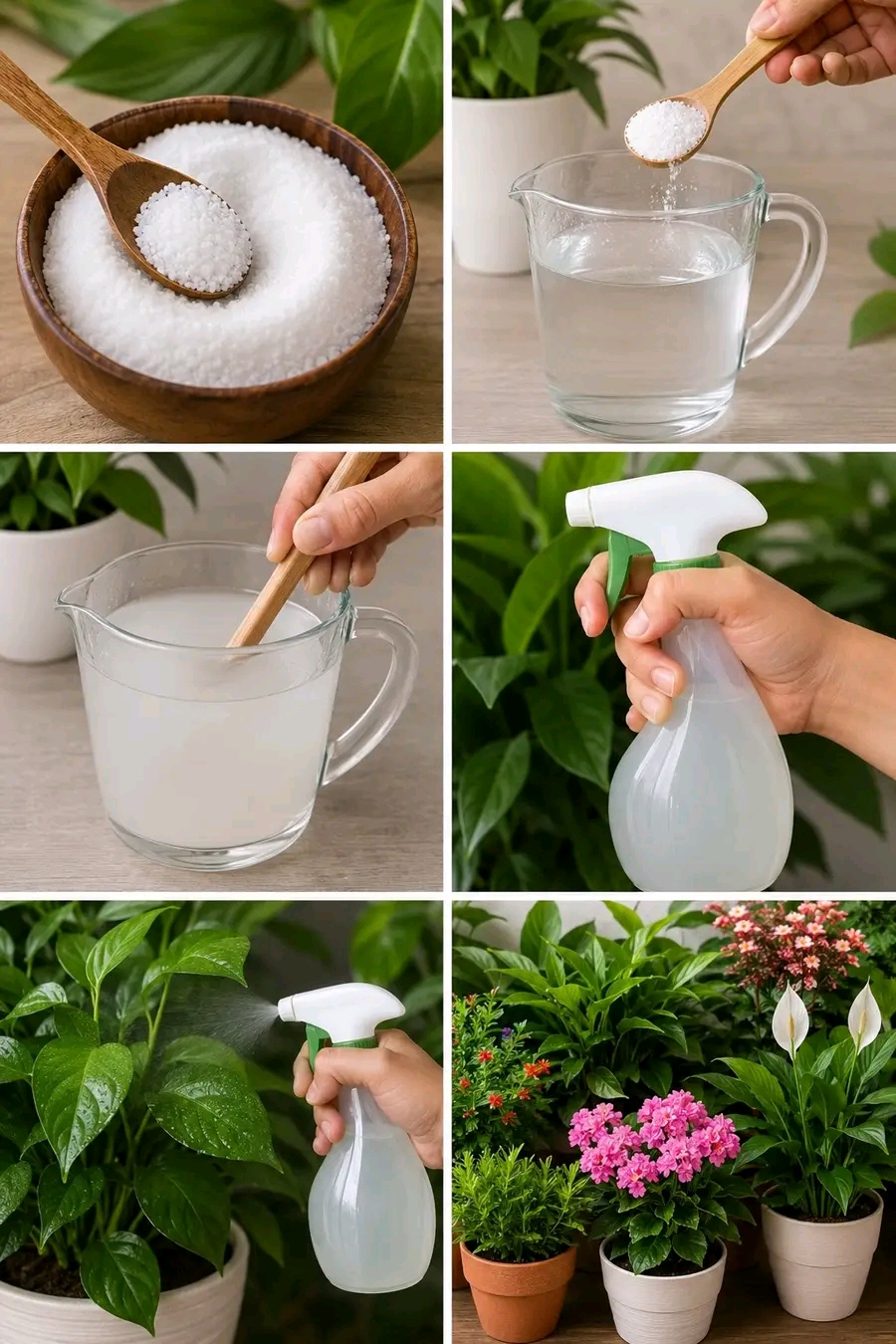
A light spray made from white crystals and water can be useful only when the crystals are correctly identified as plain unscented Epsom salt or another plant-safe product. If it is Epsom salt, it may provide magnesium and sulfur in small amounts, but it is not a complete fertilizer and it is not a miracle cure. It should be diluted well, tested on a small area first, applied away from direct sun, and used only occasionally.
The real foundation of lush leaves, vibrant growth, and beautiful indoor plant displays is bright appropriate light, healthy roots, airy soil, drainage holes, correct watering, clean foliage, and balanced feeding. If a plant is yellowing, drooping, or failing to bloom, diagnose the cause before adding supplements. Many problems come from overwatering, low light, poor soil, or root stress, not magnesium deficiency.
With careful use, a mild Epsom salt spray may become one small part of a thoughtful plant-care routine. Used too strongly or too often, it can create leaf burn, mineral buildup, and brown tips. Healthy roots, clean leaves, patient maintenance, and simple balanced care will always create a stronger result than relying on any single shortcut.