Peace lilies are among the most elegant indoor plants you can grow. Their deep green leaves look polished and tropical, their white blooms rise beautifully above the foliage, and the whole plant can make a room feel calmer, fresher, and more alive. A healthy peace lily looks expensive even when it is easy to find in a garden center. It works in living rooms, bedrooms, offices, kitchens, hallways, and shaded patios. When it is happy, it rewards you with glossy leaves and graceful white spathes that look almost like flowers.
But peace lilies can also be dramatic. One day they look full and shiny, and the next day the leaves droop like wet fabric. Brown tips appear. The soil smells stale. The plant stops blooming. The leaves lose their deep green color. Many people begin searching for simple home tricks that can bring the plant back without buying another product.
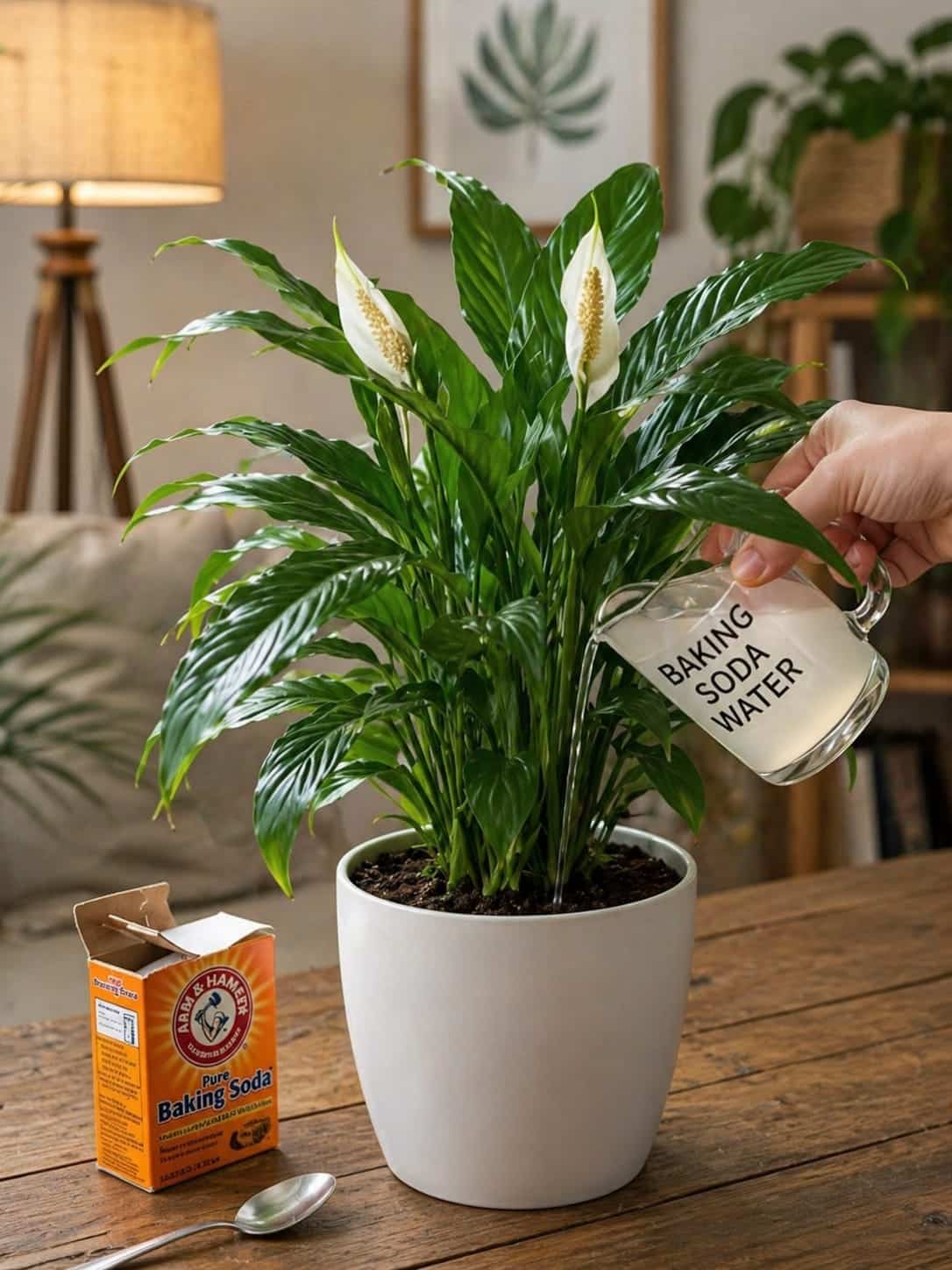
One trick that has recently caught attention is the baking soda water method. In the image, a milky white liquid labeled “baking soda water” is being poured into the soil around a lush peace lily. The plant looks healthy, shiny, and full of white blooms, making the method seem like a secret household formula for strong growth.
So what exactly is baking soda water for peace lilies?
Baking soda water is a very diluted mixture of baking soda and water. Some plant owners use it as a mild soil-freshening rinse or as a light surface treatment when soil smells stale, when the top layer looks slightly musty, or when they want to gently adjust a problem area. Because baking soda is commonly used around the home for cleaning and deodorizing, many people imagine it can also freshen plant soil.
However, peace lilies are living plants with sensitive roots. Baking soda is not fertilizer. It does not feed peace lilies. It does not force blooms. It does not fix root rot. It does not replace light, humidity, or proper watering. In fact, too much baking soda can stress the plant because it contains sodium and can change the soil environment. The trick must be used carefully, lightly, and rarely.
The safest version of this trick is not pouring a strong white solution into the pot every week. The safer version is a very weak baking soda water rinse used only for a specific reason, and only when the plant is already due for watering. For regular peace lily care, plain water and proper plant food are better.
In this complete guide, you will learn what the baking soda water peace lily trick is, how people use it, how to prepare a safer diluted version, when it may help, when it can harm, and what your peace lily truly needs for glossy leaves and repeat blooms.
What Is the Baking Soda Water Peace Lily Trick?
The baking soda water peace lily trick is a homemade plant-care method where a small amount of baking soda is mixed into water and poured onto the soil or used as a very light surface treatment. The mixture usually looks cloudy or pale white, which makes it appear like a special plant tonic.
The idea behind the trick is that baking soda may help freshen stale soil, discourage mild surface mold, and create a cleaner-feeling potting surface. Some people also use diluted baking soda sprays in gardening for certain fungal-looking issues, so the idea has spread into houseplant care.
For peace lilies, the method must be treated with caution. Peace lilies prefer a slightly moist, well-draining, organic potting mix. They do not like harsh buildup in the soil. A strong baking soda solution can disturb the root zone, especially if used repeatedly.
The trick is best understood as a short-term soil freshening method, not a growth booster. It should not be used on a schedule. It should not be used every time you water. It should not be used on a plant that is already struggling from root rot or overwatering.
A peace lily grows best from correct care: bright indirect light, evenly moist but not soggy soil, good drainage, humidity, warmth, and gentle feeding during active growth. Baking soda water is only a small optional trick, and many healthy peace lilies never need it at all.
Why People Try Baking Soda Water on Peace Lilies
People try baking soda water because baking soda has a strong household reputation. It is used to absorb odors, freshen refrigerators, clean surfaces, and neutralize smells. When a plant pot smells musty or the top of the soil looks unpleasant, baking soda seems like an easy fix.
Peace lilies also make people react quickly because they are expressive. If the plant droops, yellows, or stops blooming, it can look as if it needs immediate rescue. A white liquid poured into the pot looks dramatic and reassuring, almost like medicine for the roots.
Another reason this trick is popular is that it feels simple. Most homes already have baking soda. You do not need to visit a garden center or buy a special soil treatment. You can mix it with water and try it immediately.
But simple ingredients still need careful use. Baking soda is not naturally part of a peace lily’s ideal growing environment. Too much can create problems. A tiny diluted amount may be tolerated occasionally, but a strong mixture can make the soil less friendly to roots.
The best way to use this trick is with restraint. If your peace lily is already healthy, you probably do not need it. If your peace lily is struggling, diagnose the real cause before adding anything to the soil.
Can Baking Soda Water Make Peace Lilies Grow Faster?
No, baking soda water does not make peace lilies grow faster in a true feeding sense. Baking soda is not a plant fertilizer. It does not provide the balanced nutrients that peace lilies need for new leaves and flowers.
Peace lilies grow faster when they have enough light, healthy roots, warmth, humidity, and gentle nutrition. A plant in a dark corner may stay alive, but it may not grow much or bloom often. A plant sitting in soggy soil may droop even if you add baking soda water. A plant with old depleted soil may need repotting or fertilizer, not a baking soda rinse.
If your goal is more growth, focus first on bright indirect light. Peace lilies are often called low-light plants, but that means they tolerate lower light, not that they thrive in darkness. For more leaves and blooms, they need a bright room with indirect light.
Next, focus on watering. Peace lilies like soil that stays lightly moist, but they do not like standing water. Good drainage is essential.
Finally, feed lightly during spring and summer with a balanced houseplant fertilizer. Baking soda water does not replace this.
Can Baking Soda Water Help Peace Lily Blooms?
Baking soda water does not directly make peace lilies bloom. Peace lily blooms depend mostly on light, plant maturity, root health, consistent moisture, and gentle feeding. If a peace lily never blooms, the most common reason is not enough light.
The white part people call the flower is actually a spathe, a modified leaf that surrounds the central spadix. A peace lily produces these when it has enough energy and is growing in suitable conditions.
If your plant has glossy leaves but no blooms, move it to brighter indirect light. Avoid harsh direct sun, but give it a bright location. Feed lightly during active growth. Remove old faded blooms by cutting the stem near the base.
Baking soda water may make the soil feel fresher if used very occasionally, but it does not trigger flowering. Too much baking soda may even stress the plant and reduce its ability to bloom.
What Baking Soda Water Can Actually Do
Baking soda water may have limited uses in peace lily care. It may help freshen a slightly stale-smelling soil surface. It may help discourage mild surface mold when used carefully. It may be used as a very diluted wipe or spray in certain situations where leaves have minor fungal-looking residue, though this must be tested first.
But these uses are small and specific. Baking soda water is not a cure-all. It should not be poured into every houseplant pot. It should not be used as regular watering. It should not be used when the plant is already stressed from wet soil.
The best use is as a temporary helper while you correct the real issue. For example, if the soil surface is musty, remove the top layer, improve airflow, reduce overwatering, and then use a very weak baking soda water rinse only if needed. The baking soda is not the main fix. Better moisture control is the main fix.
If the plant has root rot, yellow leaves, or drooping while the soil is wet, baking soda water is not the answer. The roots need attention.
What Baking Soda Water Cannot Fix
Baking soda water cannot fix root rot. Root rot happens below the soil when roots sit in wet, low-oxygen conditions. The plant may droop even though the soil is wet because damaged roots cannot absorb water. Adding baking soda water only adds more liquid and can make the problem worse.
Baking soda water cannot fix underwatering. If the plant is drooping because the soil is dry, it needs proper watering with plain water. A peace lily can recover quickly after watering if thirst is the issue.
Baking soda water cannot fix low light. A peace lily in a dark corner may survive, but it may grow slowly and rarely bloom. It needs more brightness, not baking soda.
Baking soda water cannot fix fertilizer deficiency. If the plant needs nutrients, use a balanced fertilizer during active growth.
Baking soda water cannot fix a pot without drainage. If water has nowhere to escape, the roots are always at risk. Drainage must be corrected first.
Is Baking Soda Water Safe for Peace Lilies?
Baking soda water can be safe only when it is extremely diluted and used rarely. The risk comes from using too much or using it too often. Baking soda contains sodium, and sodium buildup is not good for plant roots. It can also make the soil more alkaline, which may not suit peace lilies if repeated regularly.
Peace lilies prefer a balanced, slightly moist, organic potting environment. They are not plants that need baking soda added frequently. If the soil and watering routine are already good, baking soda water is unnecessary.
If you want to try it, use a weak mixture and apply only to the soil when the plant already needs watering. Do not pour strong baking soda water into the pot. Do not use it weekly. Do not use it on a plant with wet soil. Do not splash it heavily on the leaves or flowers.
The safest rule is simple: less is better. A weak solution used once in a while is far safer than a thick white mixture poured regularly.
The Safest Baking Soda Water Recipe for Peace Lilies
If you want to try the baking soda water trick, keep it very weak. The mixture should be almost clear, not thick or chalky. The image may show a cloudy liquid, but a strong white solution is not ideal for peace lily roots.
Ingredients
- 1/8 teaspoon baking soda
- 4 cups room-temperature water
- A clean pitcher or jar
- A spoon for mixing
Instructions
- Add 1/8 teaspoon baking soda to 4 cups of water.
- Stir until fully dissolved.
- Check that the peace lily soil is ready for watering.
- Pour a small amount around the outer soil surface.
- Avoid pouring directly into the center of the plant.
- Let excess liquid drain from the pot.
- Empty the saucer immediately.
This mixture should be used rarely. Once every two to three months is more than enough if there is a specific reason. Many peace lilies should not receive it at all unless there is a surface issue.
How to Apply Baking Soda Water Correctly
Before applying baking soda water, check the soil. Push your finger about one inch into the potting mix. If the top inch is dry and the pot feels ready for watering, you may apply a small amount. If the soil feels wet, do not use it.
Pour slowly around the soil, not over the leaves. Avoid the crown where stems emerge from the soil. Peace lilies have many tight stems at the base, and trapped moisture can cause problems if airflow is poor.
Water lightly rather than flooding the pot. If you normally water thoroughly, you can use mostly plain water and only a small amount of baking soda water on the surface. The goal is not to saturate the entire root ball with sodium-containing water.
After watering, let the pot drain fully. Empty the saucer. A peace lily should not sit in standing liquid, whether that liquid is plain water, fertilizer water, or baking soda water.
How Often Should You Use Baking Soda Water?
Baking soda water should not be a regular routine. Use it only when there is a reason, such as a slightly musty soil surface or mild surface mold after you have removed the affected top layer.
Do not use it weekly. Do not use it every month unless you have a specific recurring issue and you are also fixing the underlying cause. For most peace lilies, once every two to three months at most is enough, and even that may be unnecessary.
Plain water should be used most of the time. During spring and summer, if your plant is actively growing, use a balanced houseplant fertilizer diluted to half strength every four to six weeks instead of relying on baking soda water.
If your plant reacts badly, stop immediately and return to simple care.
When You Should Avoid Baking Soda Water
Avoid baking soda water if your peace lily is drooping and the soil is wet. This is a sign that the roots may be stressed. Adding more liquid can make the problem worse.
Avoid it if the pot has no drainage holes. Any additive becomes riskier when it cannot drain away.
Avoid it if the plant has brown tips from fertilizer burn or mineral buildup. Baking soda may add more residue rather than help.
Avoid it if the soil already has a white crust. That crust may be mineral or salt buildup, and baking soda can worsen buildup.
Avoid it on newly repotted plants. Fresh roots need gentle care and plain water while they adjust.
Avoid it during heavy blooming unless there is a clear reason. Blooms and buds are best protected from unnecessary treatments.
Can Baking Soda Water Help With Soil Mold?
Baking soda water may help with very mild surface mold, but it should not be the first or only solution. Surface mold usually appears because the top of the soil stays moist, airflow is low, or organic matter is breaking down.
First, remove the visible mold. Use a spoon to scrape off the top layer of soil. Replace it with fresh dry potting mix. Improve airflow around the plant. Make sure the pot has drainage. Let the top inch of soil dry before watering again.
After doing those steps, a very weak baking soda water rinse may be used if the surface still smells musty. But if the soil continues staying wet, mold may return.
The real fix is moisture management. Baking soda is only a small helper.
Can Baking Soda Water Help With Fungus Gnats?
Baking soda water is not the best fungus gnat treatment. Fungus gnats are usually caused by consistently damp soil. Their larvae live in moist organic potting mix. If the pot stays wet, gnats can keep returning.
To reduce fungus gnats, let the top layer dry more between waterings. Use sticky traps for adult gnats. Avoid leaving dead leaves on the soil. Improve drainage. If the infestation is severe, consider replacing the top soil or repotting.
Pouring baking soda water into damp soil may actually make gnat conditions worse because it adds more moisture. If fungus gnats are present, focus on drying the top layer and correcting watering habits.
Continue to Page 2
Continue to page 2 for more details about this article and the key points many readers miss on the first page.