Christmas cactus plants are loved for their cascading stems, bright seasonal flowers, and ability to turn an ordinary room into a cozy indoor garden display. When healthy, a Christmas cactus can bloom beautifully for years, producing waves of pink, red, orange, white, or salmon-colored flowers during the cooler months. It is one of the most popular flowering houseplants for windowsills, living rooms, plant shelves, and holiday home decor.
But when a Christmas cactus starts to wilt, the change can be worrying. The stems lose their firmness, the leaves look wrinkled or limp, the flowers droop, and the whole plant can appear tired even while it is covered in buds. Many plant owners immediately reach for the watering can or fertilizer bottle, thinking the plant must be thirsty or hungry. Sometimes that is true. But often, a wilting Christmas cactus is not asking for heavy watering. It may be asking for better humidity, softer light, improved root conditions, and a gentler recovery routine.
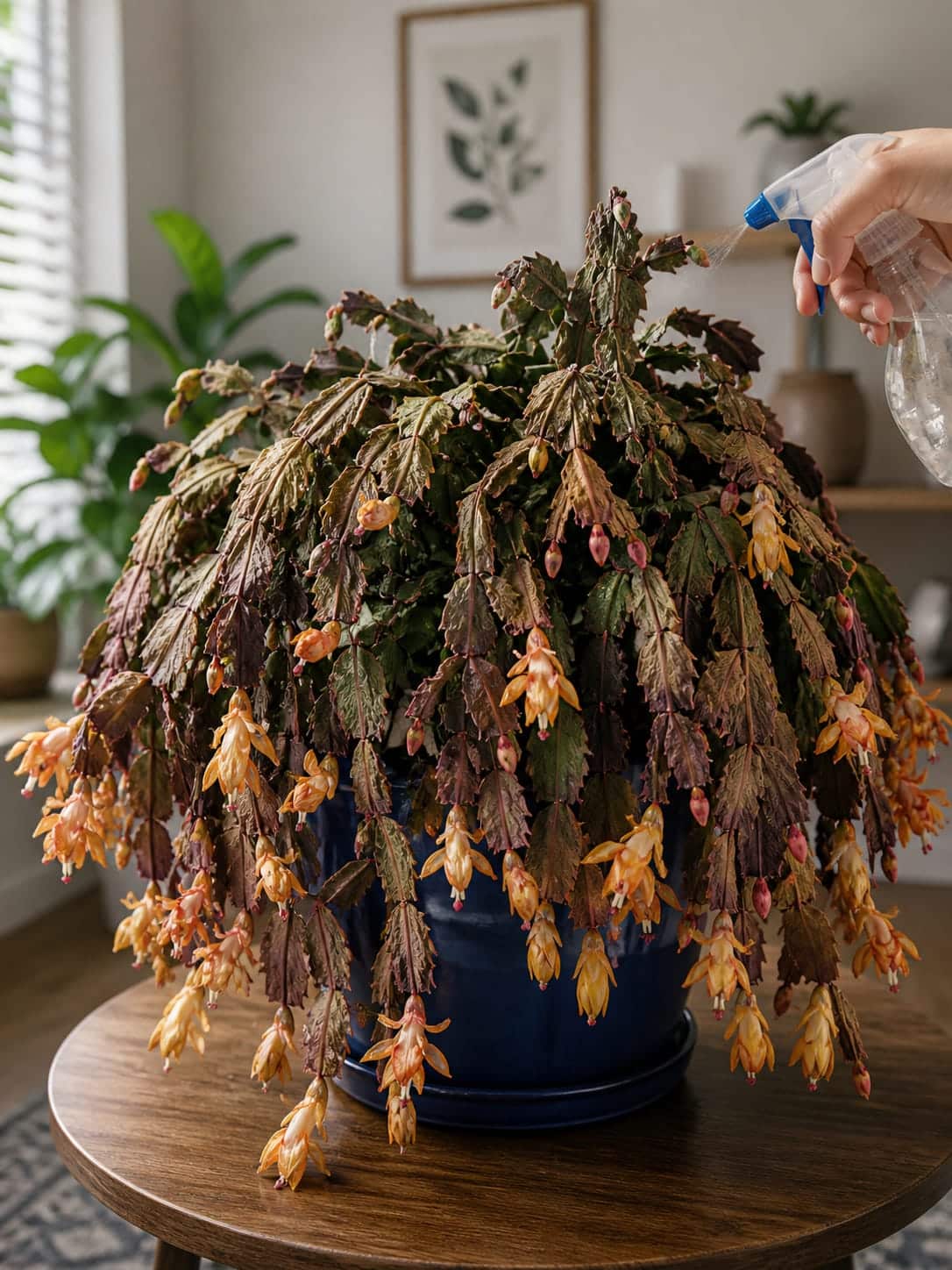
The image shows a large holiday cactus with limp, darkened, wrinkled stems and many fading orange flowers. A hand is lightly misting the plant with a spray bottle. This suggests a simple rescue trick: using a gentle humidity mist to refresh the plant and reduce stress. For a Christmas cactus, this can help only when done correctly. The mist should be fine, light, and used with proper airflow. It should never leave the plant soaked or dripping for hours.
The safe version of this trick is a gentle filtered-water misting routine combined with root-zone correction. Misting alone will not save a plant with rotten roots, compacted soil, or a pot that stays wet. But when the cactus is suffering from dry indoor air, heat stress, or sudden environmental change, a careful misting routine can support recovery and protect the remaining buds.
In this guide, you will learn how to use the mist rescue trick safely, how to tell whether your Christmas cactus is underwatered or overwatered, how to fix the soil, how often to spray, when not to mist, and how to bring a tired holiday cactus back to healthy growth and future blooms.
What Plant Is in the Image?
The plant in the image appears to be a holiday cactus, commonly called a Christmas cactus or Thanksgiving cactus. These plants are often grouped together because they look similar and are cared for in similar ways. They belong to the Schlumbergera group and are tropical forest cacti, not desert cacti.
This is important because a Christmas cactus does not behave like a typical cactus. It does not want extremely dry desert conditions all year. It naturally grows in humid forest environments where its roots receive moisture, oxygen, and organic matter while still draining quickly.
A healthy Christmas cactus has segmented green stems that feel firm but slightly flexible. When it is stressed, those segments can become limp, wrinkled, dull, reddish, purple, or brown. Buds may drop before opening, and flowers may wilt early.
The plant in the image is still flowering, which means it has energy left, but the foliage looks stressed. This plant needs careful diagnosis before any strong treatment.
What Is the Mist Rescue Trick?
The mist rescue trick is a gentle method of increasing humidity around a stressed Christmas cactus. Instead of soaking the soil or spraying fertilizer, you use clean water in a fine mist bottle to lightly refresh the foliage and surrounding air.
This trick can be helpful when the plant is stressed by:
- Dry indoor air
- Heating vents
- Low humidity
- Hot sunlight through a window
- Sudden movement from one room to another
- Bud stress during flowering
- Dry air from air conditioning
However, misting is only one part of the rescue. If the roots are rotten, the soil is soggy, or the pot has no drainage, misting will not solve the real problem. A wilting Christmas cactus needs both leaf-level support and root-level care.
Why Christmas Cactus Plants Wilt
A Christmas cactus can wilt for several reasons. The confusing part is that the plant may look almost the same whether it is too dry or too wet. Limp stems can mean the plant is thirsty, but they can also mean the roots are damaged and cannot absorb water.
Common causes of wilting include:
- Underwatering
- Overwatering
- Root rot
- Old compacted potting mix
- Too much direct sunlight
- Very dry indoor air
- Heat from radiators or vents
- Cold drafts
- Sudden temperature changes
- Overfeeding
- Natural aging of flowers
- Stress during blooming
Before applying any rescue trick, check the soil. The soil will tell you whether the plant needs moisture, drying time, or repotting.
Step One: Check the Soil Before Misting or Watering
Push your finger about one inch into the soil. If the pot is large, check deeper with a wooden skewer or moisture meter. Do not rely only on the surface because the top may look dry while the center remains wet.
If the Soil Is Very Dry
If the soil is dry all the way through and the pot feels light, the plant may be dehydrated. In this case, misting can help the foliage temporarily, but the roots also need a proper watering.
Water the soil gently until water drains from the bottom, then empty the saucer. Do not leave the pot sitting in water.
If the Soil Is Wet
If the soil is wet, heavy, sour-smelling, or muddy, do not water. Do not keep misting heavily either. The plant may have root rot or suffocated roots.
In this case, check the roots and consider repotting into fresh, airy soil.
If the Soil Is Slightly Moist
If the soil is lightly moist but the plant is still limp, the problem may be humidity, heat stress, poor roots, or environmental shock. This is where gentle misting can help, as long as the plant has airflow and is not staying wet.
How to Make the Gentle Mist Spray
The safest mist spray for a Christmas cactus is simple clean water. You do not need fertilizer, sugar, oil, milk, vinegar, or soap for this trick.
What You Need
- Clean spray bottle
- Filtered water, rainwater, or rested tap water
- Soft cloth or paper towel
- Bright indirect light
- Good airflow
If your tap water is hard or full of minerals, use filtered water. Hard water can leave white spots on the stems and flowers.
How to Mist a Christmas Cactus Safely
Misting should be light. The goal is to refresh the air around the plant, not soak the foliage until it drips.
Safe Misting Steps
- Use room-temperature water.
- Set the spray bottle to a fine mist.
- Spray above and around the plant, not directly into the crown.
- Lightly mist the stems from a distance.
- Avoid soaking flowers and buds.
- Stop before water drips heavily from the plant.
- Make sure the plant dries within one to two hours.
- Keep the plant away from cold drafts after misting.
If water remains sitting between stem segments for a long time, gently shake the plant or blot with a soft cloth. Standing water can encourage fungal problems.
Best Time of Day to Mist
Mist in the morning. Morning misting gives the plant time to dry during the day. Avoid misting late at night because cool damp conditions can increase the risk of fungal disease.
If the room is very dry, you can mist lightly in the morning every few days. But if the room is humid or the plant is already wet, skip it.
How Often Should You Mist a Wilting Christmas Cactus?
For a stressed Christmas cactus, mist lightly two to three times per week for one to two weeks while you correct the main care issue. After the plant stabilizes, reduce misting.
Do not mist heavily every day. Constant wet foliage can cause more problems than it solves.
A better long-term solution is to raise humidity around the plant without keeping the stems wet all the time.
Better Than Constant Misting: The Humidity Tray Method
If your home has dry air, a humidity tray can help more consistently than repeated spraying.
How to Make a Humidity Tray
- Place pebbles in a shallow tray.
- Add water until it sits below the top of the pebbles.
- Place the pot on the pebbles.
- Make sure the pot bottom is not sitting in water.
- Refill the tray as water evaporates.
This raises humidity around the plant while keeping the roots safe from standing water.
When You Should Not Mist
Misting is not always helpful. Avoid misting if:
- The plant has fungal spots
- The room is cold
- The plant stays wet for hours
- The flowers are already rotting
- The soil is soggy
- The plant has root rot
- There is poor airflow
- The cactus is in direct sun
- The plant has pests that thrive in humidity
If the plant is wet and cold, misting can make things worse. Christmas cactus plants like humidity, but they still need airflow.
Should You Spray the Flowers?
Avoid spraying the flowers directly. Flowers are delicate and can spot, collapse, or age faster if they stay wet. Spray around the plant and lightly over the foliage, but do not soak the blooms.
The orange flowers in the image are already fading. Some may naturally drop soon. That is normal. Once flowers are wilted or brown, remove them so the plant can save energy.
Should You Remove Wilted Flowers?
Yes. Spent flowers should be removed gently. Old flowers drain energy and can attract mold if they remain damp.
How to Remove Old Flowers
- Wait until the flower is clearly wilted.
- Hold the stem segment gently.
- Pinch or twist off the spent flower carefully.
- Do not tear the green segment.
- Remove fallen flowers from the soil surface.
Cleaning the plant helps airflow and reduces disease risk.
Why the Leaves Look Brown or Purple
Holiday cactus stems may turn reddish, purple, or bronze when stressed. This can happen from too much light, temperature stress, nutrient stress, or dehydration. In the image, the stems look dark and limp, which suggests the plant has been under stress for some time.
Possible causes include:
- Direct sun exposure
- Dry root ball
- Root damage
- Cold shock
- Exhaustion after heavy blooming
- Low humidity
Once care improves, new growth should look greener and firmer. Old damaged segments may not fully return to their original color.
Continue to Page 2
Continue to page 2 for more details about this article and the key points many readers miss on the first page.