A hanging plant can look beautiful when it is full, green, and flowing over the edge of its basket. But when it dries out, the transformation can be shocking. Soft green vines become crispy. Leaves turn brown. Stems hang like straw. The plant drops foliage onto the floor, and it can look almost impossible to save. If you are searching for the best organic fertilizer for hanging plants or a natural plant rescue remedy, this guide will show you how to use compost tea correctly.
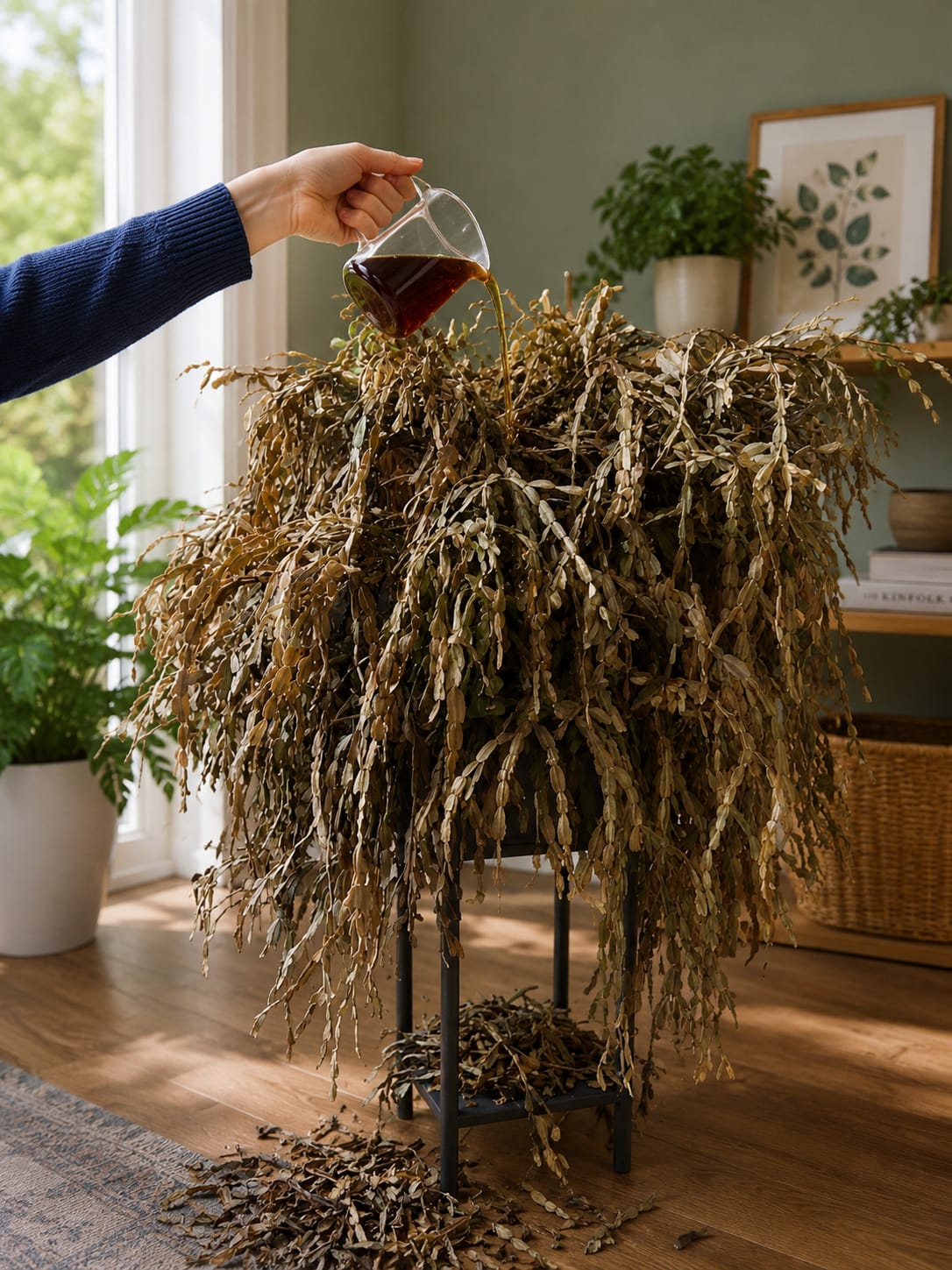
The image shows a severely dried hanging plant with brown, brittle foliage while someone pours a dark liquid over the top. This dark liquid looks like compost tea for indoor plants, worm casting tea, or a diluted organic plant tonic. These homemade organic fertilizers for stressed plants are often used to revive weak soil, support root recovery, and give struggling plants a mild nutrient boost. Many indoor gardeners consider this the best natural plant recovery method when done right.
However, this is very important: a plant this dry and brown should not be fed heavily right away. Fertilizer is not the first step for a severely stressed plant. If the roots are dry, damaged, or dead, strong fertilizer can burn them. If the potting mix has become hydrophobic and refuses to absorb water, dark liquid will simply run off or sit unevenly in the soil. That’s why this emergency plant rescue guide prioritizes water over food.
The safe version of this trick is not to pour strong compost tea onto a dying plant. The safe method is to prune dead growth, rehydrate the root ball slowly, check whether the roots are still alive, then apply a very diluted compost tea only after the plant shows signs of recovery. This step-by-step hanging plant revival method has saved many seemingly dead baskets.
This guide explains how to use the dark liquid rescue trick safely, how to make compost tea for houseplants, how to revive a dried hanging plant, when to avoid fertilizer, and how to prevent the same plant from drying out again. Follow these professional plant care secrets to bring your basket back to life.
What Is Happening to the Plant in the Image?
The plant in the image appears to be a severely dried hanging houseplant. Most of the foliage has turned brown, beige, and crispy. Many leaves have fallen onto the floor. The stems look dry and lifeless, but the root system may still have a chance if some stems are flexible or if the crown is still alive. Understanding why hanging plants dry out so fast is the first step to prevention.
This kind of damage usually comes from severe dehydration, but other problems can create a similar look.
Common causes include:
- Forgotten watering
- Hot direct sun
- Dry indoor air
- Root-bound hanging basket
- Hydrophobic potting mix
- Heat from vents or radiators
- Too much fertilizer
- Root damage
- Spider mites or pests
- Old compacted soil
- Small pot drying too quickly
Before applying any homemade plant food for brown leaves, the first step is diagnosis. A dry plant needs water recovery first. A dead plant cannot be revived with fertilizer. A plant with living roots may recover if treated gently. This plant damage assessment guide will help you decide.
What Is the Dark Liquid Being Poured?
The dark brown liquid in the image is best understood as diluted compost tea or worm casting tea. Compost tea is a liquid made by soaking compost in water. Worm casting tea is made by soaking worm castings in water. Both can create a mild organic plant tonic when prepared correctly. This DIY compost tea recipe for houseplants is a favorite among organic growers.
Gardeners use dark organic liquid fertilizer because it may support:
- Soil microbial activity
- Root-zone recovery
- Gentle nutrient availability
- Better soil structure
- New green growth
- Stress recovery after drought
- Long-term plant health
But for a dried-out plant, timing matters. Compost tea should not be used as the first emergency treatment. The plant must be rehydrated slowly first. This best organic plant tonic for drought stress works only after basic recovery.
The Biggest Mistake: Fertilizing a Severely Dry Plant Too Soon
When a plant looks almost dead, many people reach for fertilizer. This is a common mistake. A weak plant is not always hungry. Often, it is thirsty, root-damaged, overheated, or stressed. Avoiding this critical plant care error can save your plant’s life.
Feeding too soon can cause:
- Root burn
- More leaf drop
- Salt stress
- Sour soil smell
- Fungus gnats
- Mold on the soil surface
- Shock to dry roots
- Failure to recover
Think of it this way: a dehydrated plant needs recovery before food. Water first, prune second, check roots third, feed later. This emergency plant care priority list will guide your actions.
Step One: Check If the Plant Is Still Alive
Before using compost tea, test whether the plant still has life. This plant vitality test for dried plants is simple and effective.
Stem Test
Take one stem and bend it gently.
- If it snaps like dry straw, that section is dead.
- If it bends slightly and feels flexible, it may still be alive.
- If the inside is green when lightly scratched, there is still life.
Crown Test
Look at the base of the plant where stems emerge from the soil.
- Firm crown: possible recovery
- Soft black crown: likely rot
- Dry but firm crown: possible recovery
- Completely hollow stems: unlikely recovery
Root Test
If the plant is extremely dry, gently slide it from the pot and inspect the roots.
- Healthy roots are firm and light-colored.
- Dead roots are brittle, hollow, or powdery.
- Rotten roots are mushy, dark, and smelly.
If no living roots remain, compost tea will not revive the plant. In that case, take any living cuttings if possible.
Step Two: Remove Dead Growth
A plant covered in crispy dead foliage needs cleaning before recovery. Dead leaves block airflow, hold dust, and can invite pests or fungal problems. Proper pruning dead leaves from hanging plants is essential for revival.
How to Prune
- Use clean sharp scissors or pruning shears.
- Cut off fully brown crispy stems.
- Remove dead leaves from the soil surface.
- Keep any stems that are still flexible or green inside.
- Do not remove every stem if you are unsure.
- Clean fallen leaves from the floor and pot stand.
Pruning may look dramatic, but it helps the plant focus energy on surviving tissue instead of carrying dead material. This best pruning method for stressed plants gives your hanging basket a fighting chance.
Step Three: Rehydrate the Soil Slowly
Very dry potting mix can become hydrophobic. That means water runs around the edges instead of soaking into the root ball. If you pour liquid from the top, it may drain straight out without helping the roots. This bottom watering method for dry plants is the most effective technique.
Best Rehydration Method
- Place the pot in a basin or sink.
- Add room-temperature water to the basin.
- Let the pot soak from the bottom for 20 to 30 minutes.
- Check if the top of the soil becomes slightly moist.
- Remove the pot and let it drain completely.
- Do not leave it sitting in water overnight.
This method allows dry soil to absorb water evenly. It is much better than pouring strong fertilizer onto a dry root ball. Use plain water for first plant recovery before any additives.
Step Four: Wait Before Feeding
After rehydration, wait several days. Watch the plant carefully. This plant recovery observation period is crucial for success.
Good signs include:
- Flexible stems remain alive
- Small green buds appear
- Soil dries normally
- No sour smell develops
- No mold forms
- Plant stops dropping leaves excessively
If there are no signs of life after one to two weeks, the plant may be too far gone. If new growth appears, then a mild compost tea can be used.
Safe Compost Tea Recipe for Weak Houseplants
The dark liquid trick should be very diluted for a stressed plant. This gentle compost tea recipe for indoor plants is perfect for recovery.
Ingredients
- 1 tablespoon finished compost or worm castings
- 1 liter clean water
- Jar or bucket
- Fine strainer
Instructions
- Add compost or worm castings to water.
- Stir gently.
- Let it steep for 4 to 12 hours.
- Strain the liquid well.
- Dilute the liquid again with equal parts clean water.
- Use immediately.
The final liquid should look like weak tea, not thick coffee. If it is dark, heavy, or muddy, dilute it more. This homemade worm casting tea for hanging plants is a safe organic option.
Extra-Gentle Version for a Nearly Dead Plant
For a plant like the one in the image, use the weakest possible version. This ultra-mild organic plant tonic minimizes root shock.
- ½ tablespoon worm castings
- 1 liter water
- Steep 4 hours
- Strain
- Dilute with another liter of water
This creates a very mild tonic that is much safer for stressed roots.
How to Apply Compost Tea Safely
Do not pour the entire pitcher onto a weak plant. Apply a small amount around the soil surface only after the plant has been rehydrated with plain water first. Proper compost tea application for weak plants makes all the difference.
Application Steps
- Make sure the plant is not bone dry.
- Make sure the pot drains well.
- Apply a small amount around the outer soil edge.
- Avoid soaking the crown.
- Let excess liquid drain fully.
- Do not fertilize again for several weeks.
For a medium hanging basket, start with ¼ cup of diluted compost tea. For a large basket, use ½ cup. Do not flood the pot. This light feeding method for recovering plants prevents further damage.
How Often Should You Use Compost Tea?
For a recovering plant, use compost tea rarely. Establishing a safe compost tea schedule for houseplants is important.
A safe schedule:
- First use: only after signs of life appear
- Second use: 4 to 6 weeks later if recovery continues
- Healthy plant: once monthly during active growth
- Winter: avoid or use only if plant is actively growing
More is not better. Weak plants recover best with steady care, not constant feeding.
When Not to Use Compost Tea
Compost tea is not safe for every situation. Knowing when to avoid organic fertilizer is as important as knowing how to use it.
Avoid it if:
- The plant has no living roots
- The soil smells sour
- The plant is rotting
- The pot has no drainage holes
- Fungus gnats are already present
- The soil is wet and cold
- The plant is in very low light
- You recently used fertilizer
- The compost is unfinished or smelly
- The plant is completely dead and brittle
Bad compost tea can make a weak plant worse. Always use finished compost or clean worm castings.
Can Dark Liquid Fertilizer Bring Back Brown Leaves?
No. Brown crispy leaves will not turn green again. Once leaves are dry, they are dead. The goal is to help the plant grow new leaves from surviving stems or roots. This realistic plant recovery expectation will save you from disappointment.
Recovery signs may take weeks. Look for:
- Small green shoots near the base
- New flexible stems
- Fresh leaf buds
- Roots becoming firm again
- Reduced leaf drop
Do not judge recovery by dead leaves. Remove them and watch for new growth.
What If the Plant Is Too Far Gone?
Sometimes a dried plant cannot recover. If every stem is brittle and the roots are dead, the best option is to replace it or save cuttings from any living sections. This plant propagation from dying hanging baskets can give you a fresh start.
Cutting Rescue Method
- Find stems that are still flexible.
- Cut below a healthy node.
- Remove dead leaves.
- Place cuttings in water or moist propagation mix.
- Keep in bright indirect light.
- Change water every few days if propagating in water.
If roots form, you can start a new plant from the surviving pieces.
Continue to Page 2
Continue to page 2 for more details about this article and the key points many readers miss on the first page.