Anthuriums are famous for their glossy heart-shaped leaves and bright, long-lasting flowers. When they are healthy, they look almost tropical and luxurious, even in a simple indoor pot. But when an Anthurium starts wilting, yellowing, or dropping leaves, it can quickly look like something is seriously wrong. The leaves may hang down, the flowers may fade, and the plant may seem weak even though you are trying to care for it.
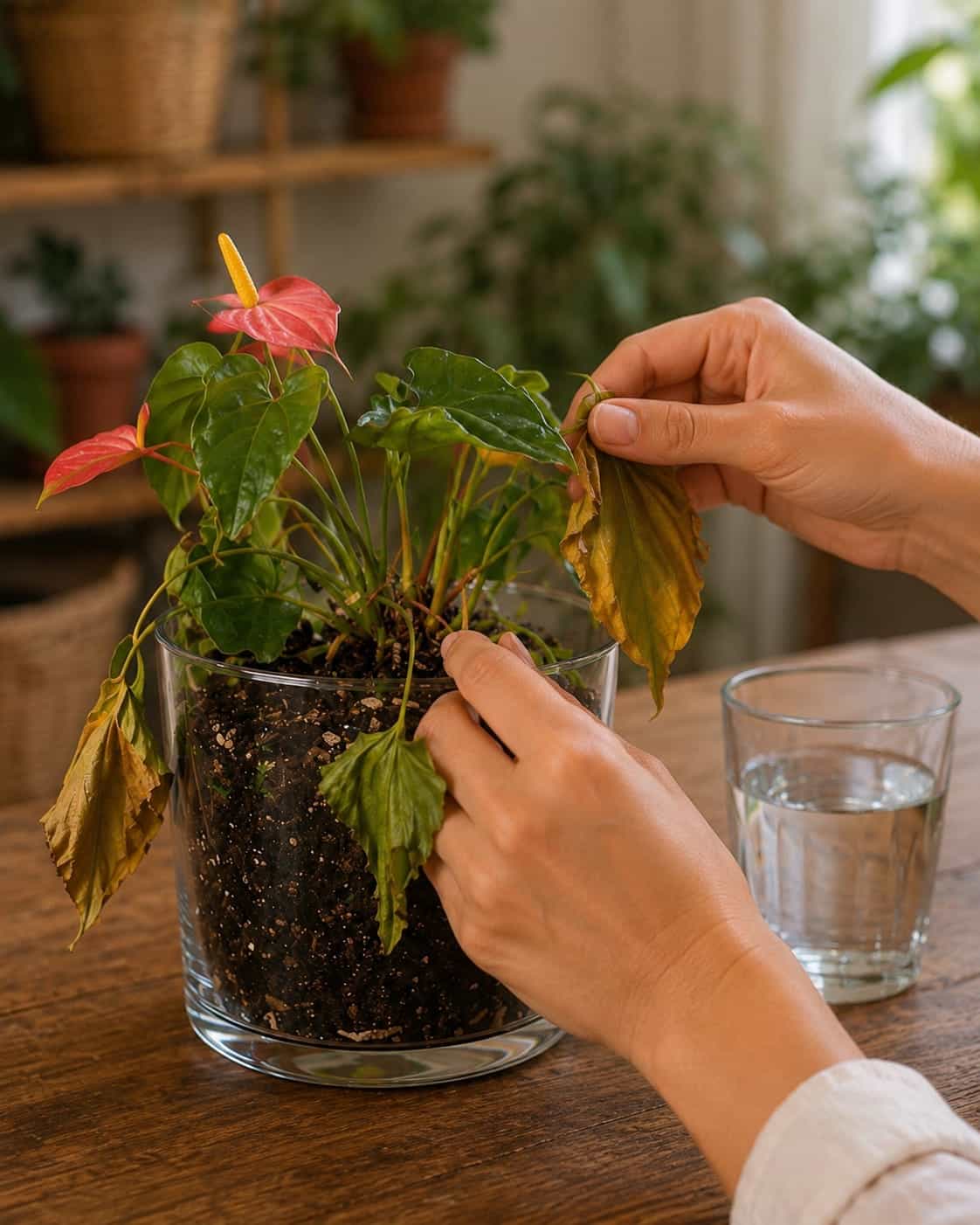
The image shows a struggling Anthurium with drooping and yellowing leaves. A person is placing a small tablet into a glass of water, suggesting a common homemade plant-care idea: using diluted aspirin water as a gentle stress-support treatment. This method is often shared as a simple trick for weak plants, especially plants that appear stressed after overwatering, underwatering, repotting, or environmental shock.
However, it is important to be realistic. Aspirin water is not a miracle cure. It will not instantly revive a dying Anthurium, repair rotten roots, fix poor drainage, or force new flowers overnight. If the plant is wilting because the roots are damaged, the real solution is root care, better soil, and corrected watering. Aspirin water may be used only as a mild occasional support for a plant that still has healthy roots and a chance to recover.
The real secret to saving a wilted Anthurium is diagnosis. Before adding anything to the pot, you need to know why the plant is wilting. Anthuriums can droop from thirst, but they can also droop from too much water. They can yellow from old leaves, but they can also yellow from root rot, cold stress, low light, or compacted soil. If you guess wrong, you may make the problem worse.
This guide explains how to inspect a wilted Anthurium, when aspirin water may be useful, how to prepare it safely, and what care steps matter most if you want the plant to recover with stronger roots, healthier leaves, and future blooms.
Why Anthurium Leaves Wilt
Wilting is a symptom, not a diagnosis. When an Anthurium wilts, it is telling you that water movement inside the plant is not working properly. This can happen for several different reasons.
The simplest reason is underwatering. If the soil becomes too dry for too long, the roots cannot supply enough moisture to the leaves. The leaves droop, curl slightly, and may feel thin or limp. In this case, watering correctly can help the plant recover.
But wilting can also happen from overwatering. This surprises many plant owners. When soil stays wet for too long, roots lose oxygen and begin to rot. Rotten roots cannot absorb water, even though the pot is wet. The plant then wilts because the roots are damaged, not because the soil is dry. If you add more water, the problem becomes worse.
Anthuriums can also wilt after repotting, moving to a new location, exposure to cold drafts, sudden heat, too much direct sun, or pest damage. This is why the first step is always to check the plant carefully before adding any homemade treatment.
What the Image Suggests
The image shows an Anthurium growing in a clear container. Some leaves are still green, but others are yellow, brown, limp, or hanging downward. The plant is not completely dead, but it is clearly stressed. The clear pot shows a large amount of dark potting mix, which may be holding moisture. A glass of water and a small tablet suggest an aspirin-water routine.
This is a good topic for a careful recovery article because the plant still appears to have living tissue. There are green leaves and at least one visible flower, which means the plant may recover if the main problem is corrected. But the yellowing and drooping leaves suggest that care conditions need attention.
The safest message is not “drop a tablet in water and the Anthurium comes back to life.” A better message is: “If your Anthurium is stressed but still alive, a very diluted aspirin-water treatment may be used occasionally, but only after checking the roots, soil moisture, drainage, and light.”
That approach is more trustworthy, more realistic, and safer for the plant.
What Is Aspirin Water for Plants?
Aspirin contains acetylsalicylic acid, a synthetic compound related to salicylic acid. Salicylic acid is involved in plant stress responses, which is one reason many gardeners discuss aspirin water as a homemade plant tonic. Some people use diluted aspirin water when a plant is stressed, recently repotted, or recovering from environmental shock.
For houseplants, however, aspirin water should be used carefully and sparingly. A tablet dissolved in a small glass of water can be too strong, depending on the tablet size and the amount of water. Strong solutions may irritate roots, disturb soil biology, or add unnecessary chemicals to the pot.
Aspirin water is not fertilizer. It does not provide balanced nutrients. It does not replace nitrogen, phosphorus, potassium, magnesium, calcium, or trace elements. It does not fix drainage. It does not repair dead roots. It should be treated only as an occasional stress-support rinse, not as a regular feeding method.
If you use it, the mixture must be very diluted. For Anthurium, gentle is always safer.
Can Aspirin Water Save a Wilted Anthurium?
Aspirin water may help support a stressed Anthurium in some situations, but it cannot save every wilted plant. The result depends on why the plant is wilting.
If the Anthurium is mildly stressed after being moved, repotted, or exposed to a temporary change in conditions, a weak aspirin-water treatment may be used as part of a recovery routine. It may support the plant while you correct the environment.
If the plant is wilting because the soil is bone dry and the roots are healthy, plain water is usually enough. Aspirin is not necessary.
If the plant is wilting because of root rot, aspirin water will not solve the problem. Rotten roots must be trimmed, and the plant must be repotted into fresh, airy soil. Adding aspirin water to a pot with rotting roots can make the situation worse if it adds more moisture to already wet soil.
If the plant is cold-damaged, sunburned, or pest-infested, aspirin water will not correct the main issue. The cause must be handled directly.
So the honest answer is: aspirin water may support recovery only when the plant still has healthy roots and the main care problem is being corrected. It is not a rescue miracle.
First Step: Check the Soil Moisture
Before preparing aspirin water, check the soil. Push your finger into the top layer of the potting mix. If the top inch feels dry but the lower soil is slightly moist, the plant may need careful watering. If the soil is dry all the way down and the pot feels light, underwatering may be the cause of wilting.
If the soil feels wet, heavy, or soggy, do not add more water. A wet pot with a wilting Anthurium often points to root stress. In that case, more liquid, even aspirin water, can worsen the problem.
Also smell the soil. Healthy soil should smell earthy and fresh. Sour, rotten, or swampy smells are warning signs. They may indicate root rot or anaerobic soil conditions.
If the soil is wet and smells bad, skip the aspirin treatment and inspect the roots instead.
Second Step: Check the Roots
Anthurium roots should be firm, pale, cream-colored, tan, or light brown depending on the soil and age. Healthy roots may not always look white, but they should not be mushy or foul-smelling.
Rotten roots are usually soft, dark, slimy, or hollow. They may break apart easily when touched. If many roots are rotten, the plant cannot absorb water properly. This is why the leaves wilt even when the pot is wet.
If your Anthurium is in a clear container, look through the sides. If you see very wet soil, dark mushy roots, or water collecting near the bottom, root inspection is needed. If the pot has no drainage holes, the risk of root rot is much higher.
To inspect fully, gently remove the plant from the pot. Shake away some soil and look at the root system. Trim rotten roots with clean scissors. Keep firm healthy roots. Repot into fresh, airy soil if needed.
⚠️ Important: If more than half the roots are rotten, repotting and root trimming are more urgent than any homemade treatment. Aspirin water will not fix root rot.
When to Use Aspirin Water
Aspirin water is best reserved for a plant that is stressed but not rotting. For example, you may use it when the Anthurium has been recently repotted, moved to a new location, or mildly shocked by inconsistent watering, but still has firm roots.
You may also use it after correcting the main problem. For example, if you discovered that the plant was underwatered, you can first rehydrate it with plain water. Later, once it stabilizes, a very weak aspirin-water treatment may be used once as a gentle support.
If you repotted the plant after trimming rotten roots, wait before using aspirin water. Freshly cut roots are sensitive. Give the plant time to settle in fresh soil. Plain water and stable conditions are safer during the first recovery period.
The plant should be alive, stable, and not sitting in soggy soil before aspirin water is considered.
When Not to Use Aspirin Water
- If the soil is already wet – Anthuriums dislike soggy roots, and extra liquid can worsen root stress.
- If the pot has no drainage – A no-drainage pot traps water at the bottom; adding more liquid increases rot risk.
- If most roots are rotten – Root rot needs trimming and fresh soil, not a tablet.
- Do not use aspirin water weekly – It is not a regular fertilizer or watering routine.
- Never use flavored or coated aspirin – Only plain aspirin (acetylsalicylic acid) should be considered, and even then extremely diluted.
- Do not use on a plant collapsing from severe disease – Diagnosis and proper care are more important.
How to Make a Safe Aspirin-Water Mixture
The safest approach is to make the mixture weak. A common gentle method is to dissolve one regular aspirin tablet in a large amount of water, not a small glass. For houseplants, a safer beginner dilution is one plain aspirin tablet in one gallon of water. If you only need a small amount, make the gallon mixture first, then use only what you need.
Do not dissolve a full tablet in one small glass and pour it into the pot. That can be too concentrated for sensitive roots.
Use room-temperature water. Cold water can shock roots. Stir until the tablet is fully dissolved. If pieces remain, let it sit and stir again.
Use the mixture fresh. Do not store it for long periods. Label it clearly and keep it away from children and pets.
For a stressed Anthurium, less is better. A weak solution is safer than a strong one.
Step-by-Step Aspirin-Water Routine for Anthurium
Step 1: Confirm the Plant Is Not Sitting in Wet Soil
Check the potting mix before applying anything. If the soil is damp or soggy, wait. Aspirin water should only be used when the plant is already due for watering.
Step 2: Prepare a Weak Solution
Dissolve one plain aspirin tablet in one gallon of water. Stir well. Do not use a strong mixture.
Step 3: Apply a Small Amount to the Soil
Pour the solution around the soil surface, not on the leaves or flowers. Use only enough to lightly water the plant. Do not flood the pot.
Step 4: Let the Pot Drain
If the pot has drainage holes, allow excess liquid to drain out fully. Empty any saucer. The Anthurium should not sit in aspirin water.
Step 5: Watch the Plant for Two Weeks
Do not repeat the treatment quickly. Observe the leaves, soil smell, and new growth. If the plant stabilizes, continue with normal care. If it declines, inspect roots and soil again.
Continue to Page 2
Continue to page 2 for more details about this article and the key points many readers miss on the first page.