How Often Should You Use Aspirin Water?
Aspirin water should be rare. Once as a stress-support treatment is enough in most cases. If you choose to repeat it, wait at least six to eight weeks and only use it when the plant is healthy enough and due for watering.
Do not make it part of every watering. Anthuriums need consistent care, not constant treatments. Overusing aspirin water can disturb the root environment and distract you from the real care needs.
If your Anthurium is growing well, you probably do not need aspirin water at all. Healthy plants usually prefer stable light, moisture, humidity, and nutrition.
The Real Recovery Plan for a Wilted Anthurium
If your Anthurium is wilted, the real recovery plan begins with moisture balance. First determine whether the plant is too dry or too wet. This one decision changes everything.
If the soil is dry and the leaves are drooping, water thoroughly with plain room-temperature water. Let the pot drain completely. The plant may begin to perk up within hours or by the next day if dehydration was the issue.
If the soil is wet and the leaves are drooping, remove the plant from the pot and inspect the roots. Trim rotten roots and repot into fresh airy soil. Do not water heavily immediately after repotting. Let the plant settle.
If the plant has yellow and brown leaves, remove only the leaves that are fully dead or badly damaged. Do not remove every imperfect leaf. The plant still needs green tissue to make energy.
Place the Anthurium in bright indirect light and keep it warm. Avoid cold drafts, direct harsh sun, and soggy soil.
Best Soil for Anthurium Recovery
Anthuriums need an airy potting mix. Dense soil holds too much moisture and can suffocate roots. A good mix may include indoor potting soil, orchid bark, perlite, coco chips, and a small amount of compost or worm castings.
The goal is a mix that holds some moisture but still drains well. Anthuriums are tropical plants, but they do not like muddy conditions. Their roots need oxygen.
If your plant is in a clear container without drainage, repotting may be necessary. A beautiful container is not worth losing the plant. Drainage holes are essential for long-term health.
After repotting, use a pot only slightly larger than the root ball. Oversized pots hold too much wet soil and increase the risk of rot.
How to Water Anthurium Correctly
Anthuriums like evenly moist soil, but not soggy soil. Water when the top layer begins to dry. The exact timing depends on light, temperature, humidity, pot size, and soil mix.
When you water, water thoroughly and let excess drain. Do not give tiny sips every day. Small frequent watering can keep the surface damp while the roots remain unhealthy.
Do not let the plant sit in a saucer of water. Standing water reduces oxygen around the roots and can lead to rot.
If you are unsure whether to water, wait a little longer and check again. Anthuriums recover more easily from slight dryness than from root rot.
Light for a Wilted Anthurium
A recovering Anthurium needs bright indirect light. Too little light slows recovery because the plant cannot produce enough energy. Too much direct sun can burn stressed leaves and increase water loss.
Place the plant near a bright window with filtered light. A sheer curtain can help soften strong sun. Morning light is usually safer than harsh afternoon sun.
If the plant was in a dark corner, move it gradually to brighter light. Sudden changes can stress it further. If leaves develop dry scorch marks, the light may be too intense.
Good light supports new roots, new leaves, and future flowers. Aspirin water cannot replace light.
Humidity and Temperature
Anthuriums prefer warm, stable conditions. Cold drafts can cause drooping, yellowing, and slowed growth. Keep the plant away from open cold windows, air conditioning vents, and sudden temperature swings.
Moderate humidity helps Anthurium leaves stay fresh. Dry air can contribute to crispy edges and stress. You can increase humidity by grouping plants together, using a pebble tray, or placing a humidifier nearby.
Do not increase humidity by overwatering the soil. Humid air and wet soil are not the same. The plant can enjoy humidity while still needing a well-drained root zone.
What to Do With Yellow Leaves
Yellow leaves will not turn green again. Once a leaf has yellowed significantly, the goal is to prevent more yellowing and support new healthy growth.
If a leaf is fully yellow or brown, remove it with clean scissors near the base. If a leaf is only slightly damaged but still mostly green, you can leave it. The plant may still use it for energy.
Do not remove too many leaves at once from a weak plant. Green leaves help the plant recover. A stressed Anthurium needs energy, and energy comes from photosynthesis.
After removing damaged leaves, focus on correcting the cause: moisture, roots, light, or temperature.
Can Aspirin Water Make Anthurium Bloom?
Aspirin water does not directly make Anthurium bloom. Flowers come from healthy roots, enough light, balanced nutrition, warmth, and time. If the plant is stressed, it should not be forced to bloom.
Anthurium blooms are actually colorful spathes with a central spadix. They require energy to produce. A plant with damaged roots will usually focus on survival before flowering.
Once the plant recovers, you can encourage future blooms with bright indirect light, gentle fertilizer during active growth, and stable care.
Do not judge recovery by immediate flowers. Judge it by new roots, firmer leaves, and fresh growth.
Feeding a Recovering Anthurium
Do not fertilize heavily when the plant is wilted. If roots are damaged, fertilizer can burn them. Wait until the plant stabilizes and shows signs of new growth.
Once the Anthurium is recovering, use a balanced houseplant fertilizer at half strength or less during active growth. Feed lightly and infrequently. Too much fertilizer can cause brown tips, salt buildup, and root stress.
Aspirin water is not fertilizer. It should not replace a balanced feeding routine when the plant is healthy enough to need nutrients.
For a recovering plant, simple care is best: proper soil, careful watering, bright indirect light, warmth, and patience.
Signs Your Anthurium Is Recovering
The first sign of recovery is stability. The plant stops getting worse. Leaves may not perk up immediately, but no new leaves are yellowing quickly. The soil smells fresh. The stems remain firm.
Next, you may notice a firmer texture in the leaves. New leaves may begin to emerge from the center. New roots may grow if the plant was repotted.
Old damaged leaves may remain unattractive. That is normal. Recovery is seen in new growth, not in old leaves becoming perfect again.
If the plant produces a new flower later, that means it has regained enough strength. But flowers should come after recovery, not before.
Warning Signs After Aspirin Water
If the plant droops more after aspirin water and the soil is wet, stop all treatments and inspect the roots. The plant may be overwatered or root-damaged.
If the soil develops a strange smell, flush with plain water if the pot drains well, then let it dry appropriately. If the smell continues, repot.
If leaf edges burn or the plant looks worse, the mixture may have been too strong. Avoid using aspirin again.
If fungus gnats appear, the soil may be staying too wet. Reduce watering, improve drainage, and avoid extra organic or homemade liquids.
🌿 Pro tip: Always prioritize root health over any homemade treatment. A plant with healthy roots can recover naturally with good care.
What If the Plant Is in a Glass Pot?
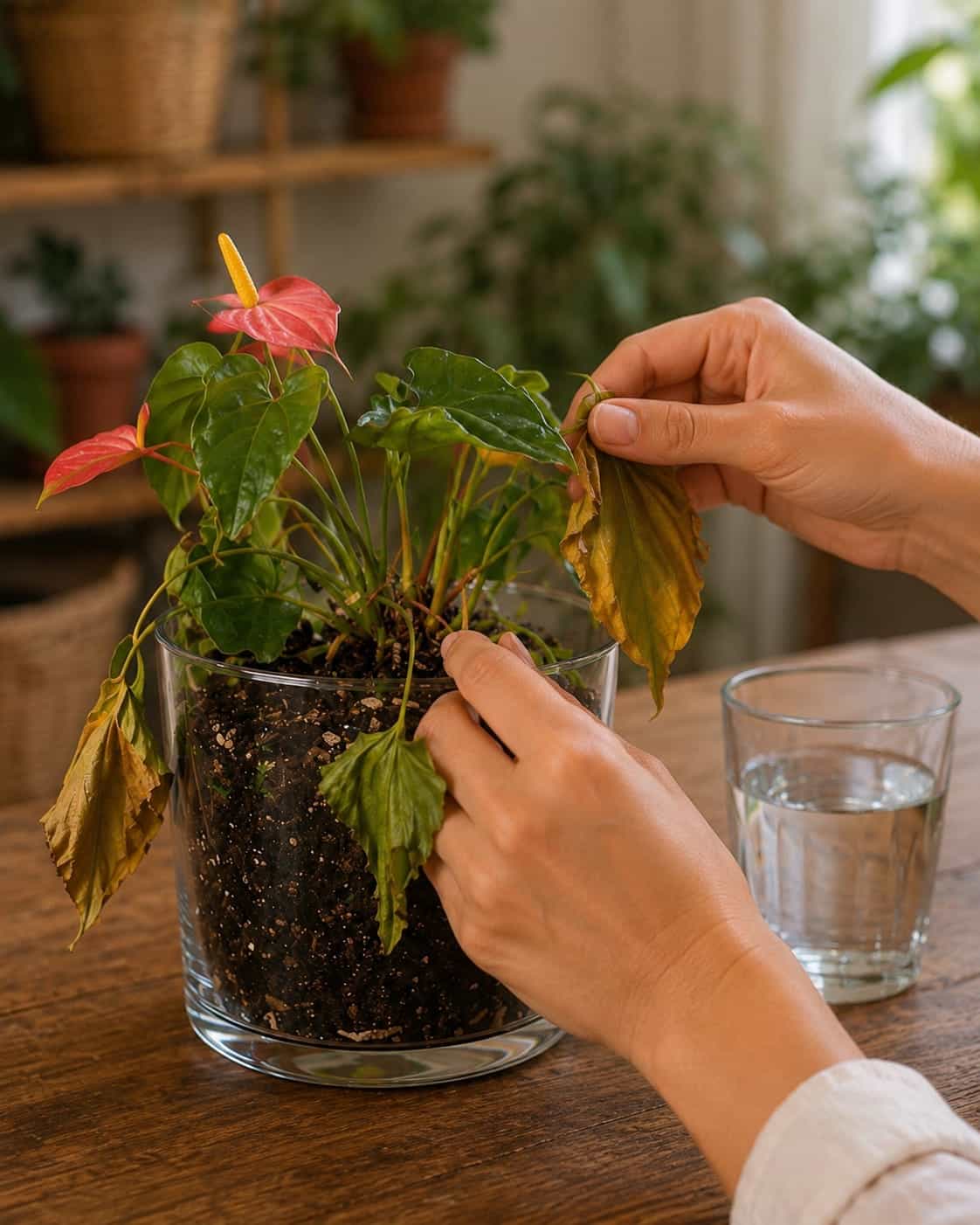
The image appears to show a clear glass or plastic container. Clear pots can be useful because they allow you to see moisture and roots, but they must have drainage. A clear container without drainage can trap water at the bottom and create root rot.
If the container has no drainage holes, consider repotting the Anthurium into a nursery pot with holes, then placing that pot inside the decorative container. This gives you beauty and function at the same time.
After watering, remove the inner pot and let it drain before returning it to the decorative container. Never let water collect at the bottom.
For Anthuriums, drainage is not optional. It is one of the most important parts of recovery.
Common Mistakes to Avoid
- Using aspirin water before checking the soil – if the soil is wet, do not add more liquid.
- Making the aspirin solution too strong – a full tablet in a small glass is too concentrated.
- Expecting yellow leaves to turn green – they will not. Focus on new growth.
- Using aspirin water as fertilizer – it is not plant food.
- Ignoring root rot – rotten roots must be trimmed and the plant repotted.
- Keeping Anthurium in a pot with no drainage – this is one of the fastest ways to lose the plant.
- Placing a wilted plant in direct sun – stressed leaves can burn quickly.
A Simple 14-Day Recovery Plan
Day 1: Check soil moisture. If dry, water with plain water first. If wet, inspect roots. Remove dead leaves and trim rotten roots if necessary.
First few days: Place plant in bright indirect light, keep temperatures stable. Do not fertilize. Do not keep adding treatments.
After one week: Check if plant is stabilizing. If soil dries normally and leaves are not worsening, continue careful watering.
If stable and due for watering: You may use a very weak aspirin-water solution once. If still wet or root-damaged, skip aspirin water.
By day 14: Look for signs of stability: no sour smell, no rapid yellowing, firmer leaves, fresh growth beginning. Full recovery may take longer, but stability is the first goal.
Frequently Asked Questions
Can aspirin water save a wilted Anthurium?
It may support a mildly stressed plant, but it cannot save an Anthurium with severe root rot or poor drainage. Always check the roots and soil first.
How much aspirin should I use for Anthurium?
Use a very weak dilution, such as one plain aspirin tablet dissolved in one gallon of water. Do not use a full tablet in a small glass and pour it into the pot.
How often can I use aspirin water?
Use it rarely, usually once as a stress-support treatment. If repeated, wait six to eight weeks and only use it when the plant is healthy enough and due for watering.
Can aspirin water make Anthurium bloom?
No. Anthurium blooms depend on light, healthy roots, warmth, humidity, and balanced feeding. Aspirin water does not force flowers.
Should I use aspirin water if the soil is wet?
No. If the soil is wet and the plant is wilting, inspect the roots. Adding more liquid can worsen root rot.
Can I spray aspirin water on Anthurium leaves?
It is better to avoid spraying. Apply a weak solution to the soil only, and only when the plant needs watering.
Why are my Anthurium leaves yellow?
Yellow leaves can come from overwatering, underwatering, old age, low light, cold stress, root problems, or nutrient issues. Check roots and soil before treating.
What should I do if my Anthurium has root rot?
Remove the plant from the pot, trim rotten roots with clean scissors, repot into fresh airy soil, and water carefully. Do not rely on aspirin water to fix rot.
🌿 Remember: Aspirin water is a gentle occasional support, not a miracle cure. Bright indirect light, airy soil, careful watering, warmth, and patience are the real keys to reviving a wilted Anthurium. Use the aspirin routine only after correcting the main care problem.