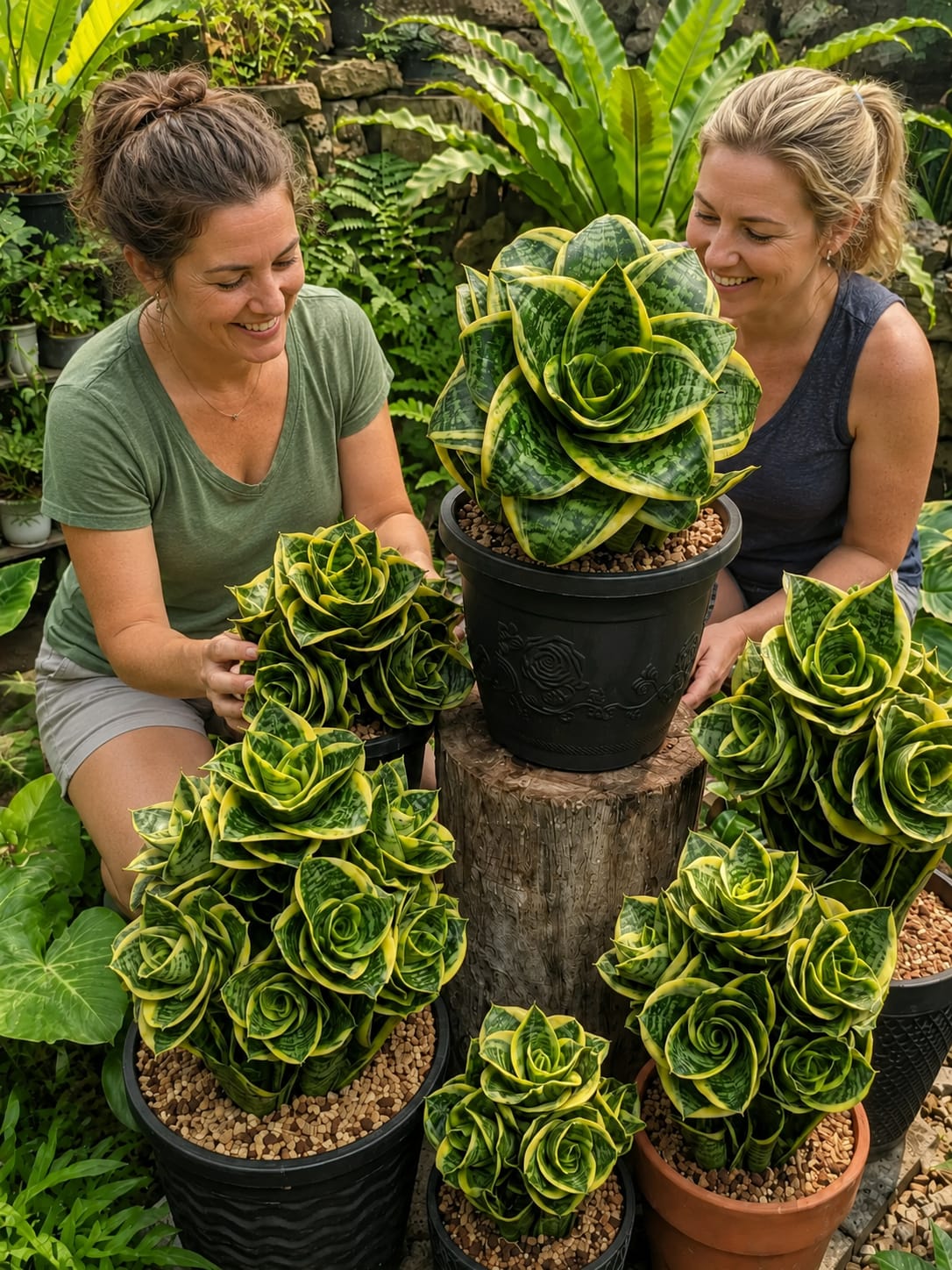
Rose-shaped snake plants are one of the most eye-catching varieties you can grow at home. Unlike the tall, sword-like snake plants many people know, these compact varieties grow in tight rosettes that look almost like green roses. Their leaves curl inward, overlap beautifully, and create a sculptural shape that feels both modern and natural. With deep green markings, yellow edges, and a tidy rounded form, they can become a striking centerpiece on a table, plant stand, patio corner, balcony shelf, or bright indoor windowsill.
These plants are often sold as compact Sansevieria or Dracaena varieties, and they are loved because they combine the toughness of a traditional snake plant with the beauty of a decorative succulent. They are drought-tolerant, slow-growing, easy to maintain, and perfect for anyone who wants a plant that looks unusual without needing complicated care.
The most important thing to understand is that rose-shaped snake plants are still succulents. Their thick leaves store water, and their roots prefer dry, airy conditions. They do not like soggy soil, heavy watering, or oversized pots. When you give them bright light, fast-draining soil, careful watering, and a snug container, they can stay compact, colorful, and healthy for years.
What Is a Rose-Shaped Snake Plant?
A rose-shaped snake plant is a compact snake plant variety that grows in a spiral or rosette form. The leaves are shorter, broader, and more curved than the leaves of tall snake plant varieties. Instead of growing straight upward in long blades, the leaves overlap in layers, creating a rose-like pattern from the center.
Many people love these plants because they look like a mix between a snake plant and a succulent. They have the bold patterning of snake plants, but their shape feels softer and more ornamental. This makes them ideal for decor displays where you want something architectural but not too tall.
They are excellent in small pots, grouped arrangements, tabletop planters, balcony collections, and modern plant corners. Their form naturally looks designed, even with very little pruning or shaping.
Why These Snake Plants Stay Compact
Rose-shaped snake plants usually grow slowly and stay more compact than traditional upright snake plants. Their leaves form close layers around the center, and new growth often emerges as small pups near the base. Over time, a single rosette can become a cluster of rosettes, creating a fuller pot.
The compact shape is part of their natural growth habit, but care conditions also matter. Too little light may cause weak or stretched growth. Too much water may cause soft leaves and root rot. A balanced routine helps the rosette stay firm, symmetrical, and attractive.
If the plant begins to lose its tight shape, check the light first. Bright indirect light helps maintain stronger, more compact growth.
Best Light for Rose-Shaped Snake Plants
Light is one of the most important factors for keeping this plant beautiful. Rose-shaped snake plants can tolerate lower light, but they look best in bright indirect light. Good light helps the leaves stay firm, colorful, and well-patterned.
Place the plant near a bright window where it receives filtered sunlight. Morning sun can be helpful, especially in cooler seasons. Harsh afternoon sun may burn the leaves if the plant is not used to it, especially through hot glass.
If the plant is indoors, an east-facing window is often excellent. A south or west window can also work if the light is filtered with a sheer curtain or if the plant is placed slightly away from the glass.
Can Rose-Shaped Snake Plants Grow Outdoors?
Yes, they can grow outdoors in warm climates or during mild seasons. They look beautiful on patios, balconies, garden tables, and shaded outdoor plant shelves. However, they should be protected from heavy rain, frost, and harsh direct sun.
Outdoors, place them in bright shade or morning sun. Avoid keeping them in a spot where rainwater collects in the pot. Too much outdoor moisture can quickly damage the roots.
If temperatures drop, move the plant indoors. Snake plants are not frost-hardy and can suffer cold damage when exposed to low temperatures.
The Best Soil Mix
Rose-shaped snake plants need fast-draining soil. This is one of the biggest secrets to success. Regular indoor potting mix is often too heavy on its own because it holds moisture for too long.
A good soil mix may include:
- Cactus or succulent soil
- Perlite
- Pumice
- Coarse sand
- Small bark chips
- A small amount of regular potting mix
The soil should feel loose and gritty. When you water, the water should drain through easily. If the soil stays wet for many days, it is too dense and may cause root problems.
Why Drainage Is Essential
Drainage is not optional for snake plants. These plants are highly sensitive to soggy soil. A pot without drainage holes can trap water at the bottom, even if the top of the soil looks dry.
Always use a pot with drainage holes. If you love a decorative pot without holes, keep the snake plant in a plastic nursery pot with drainage and place that inside the decorative container. After watering, remove any extra water from the outer pot.
Healthy snake plant roots need oxygen. Constantly wet soil pushes oxygen out and creates conditions for rot.
Choosing the Right Pot
Rose-shaped snake plants look beautiful in many types of pots, but the pot size matters. These plants prefer a slightly snug container. A pot that is too large holds extra soil, and extra soil holds extra water. This can increase the risk of root rot.
Choose a pot only slightly larger than the root ball. Terracotta pots are excellent because they allow moisture to evaporate faster. Ceramic pots also work well if they have drainage holes.
For a decorative look, use low round planters, matte black pots, terracotta bowls, stone-textured containers, or simple white ceramic pots. The plant’s rose shape looks especially beautiful when the pot does not compete with it.
How to Water Rose-Shaped Snake Plants
Watering is where many people make mistakes. Rose-shaped snake plants should be watered only when the soil has dried well. Do not water on a fixed schedule without checking the soil first.
Push your finger into the soil or use a wooden stick. If the soil still feels damp below the surface, wait. If it feels dry and the pot is light, water thoroughly.
When watering, pour slowly around the soil until water drains from the bottom. Then empty the saucer. Do not leave the pot sitting in water.
How Often Should You Water?
The watering schedule depends on light, temperature, pot size, soil type, and season. In bright warm conditions, the plant may need water every 2 to 3 weeks. In cooler or darker rooms, it may need water only once a month or even less.
During winter, reduce watering. The plant grows more slowly and the soil stays wet longer. Overwatering in winter is one of the easiest ways to damage a snake plant.
Always check the soil before watering. The plant will forgive dryness much better than constant wetness.
Signs Your Plant Needs Water
A thirsty rose-shaped snake plant may show slightly wrinkled leaves, softer leaf texture, or a pot that feels very light. The soil will be dry throughout.
After watering, the leaves should gradually firm up. Do not water again immediately. Let the soil dry before the next watering.
Minor dryness is normal and safer than overwatering.
Signs of Overwatering
Overwatering is the most common problem. Watch for these signs:
- Soft or mushy leaves
- Yellowing leaves
- Leaves collapsing at the base
- Black spots near the crown
- Bad smell from the soil
- Soil staying wet too long
- Roots turning dark and mushy
If these symptoms appear, stop watering and inspect the roots. Remove damaged parts and repot into dry, fast-draining soil if needed.
How to Keep the Rose Shape Beautiful
The natural rosette shape is one of the main attractions of this plant. To keep it beautiful, rotate the pot every few weeks so all sides receive light evenly. This prevents the plant from leaning toward the window.
Keep the plant in bright light, avoid overwatering, and do not overfeed. Strong, compact growth comes from steady care, not from forcing the plant.
If old outer leaves become damaged, remove them carefully with clean scissors. Do not cut healthy central leaves unless necessary.
Should You Tie or Shape the Leaves?
Usually, no. Rose-shaped snake plants naturally form their pattern. Tying or forcing the leaves can damage them. If the plant is healthy and receiving enough light, it should hold its shape on its own.
If leaves are spreading too loosely, check light and watering. Weak growth often comes from low light or too much moisture.
Let the plant grow naturally. Its sculptural form is part of its charm.
Feeding Rose-Shaped Snake Plants
These plants do not need heavy fertilizer. During spring and summer, you can feed lightly with a diluted cactus or succulent fertilizer once every 6 to 8 weeks.
Use half strength or less. Too much fertilizer can burn roots or create weak growth. During winter, stop feeding because the plant is usually resting.
Underfeeding is safer than overfeeding with snake plants.
Can You Use Natural Fertilizers?
Natural fertilizers can be used, but only gently. A tiny amount of worm casting tea, diluted compost tea, or very light organic liquid fertilizer may be used during active growth.
Avoid thick homemade mixtures, milk, sugar, coffee sludge, or food scraps in the soil. These can attract pests, smell bad, or hold too much moisture.
For succulents, simple care is best. Bright light and correct watering matter more than kitchen tricks.
How to Propagate Rose-Shaped Snake Plants
The best way to propagate rose-shaped snake plants is by division. Since the plant grows in rosettes and produces pups, you can separate young offsets from the mother plant once they have their own roots.
Remove the plant from the pot, gently loosen the soil, and look for pups connected by rhizomes. Use clean scissors or a sharp knife to separate a pup with roots attached. Plant it in a small pot with dry succulent mix.
Wait a few days before watering if roots were cut or disturbed. This helps prevent rot.
Can You Propagate from Leaf Cuttings?
Snake plants can be propagated from leaf cuttings, but compact variegated varieties may not always grow true to type. Yellow-edged or patterned leaves may produce pups that look different from the parent.
If you want to preserve the rose-shaped form and color pattern, division is better. Leaf cuttings are fun for experimentation, but division gives more reliable results.
Use healthy leaves only, let the cut ends callus, and plant in fast-draining soil if you try leaf propagation.
Repotting Rose-Shaped Snake Plants
These plants do not need frequent repotting. Repot only when the plant becomes crowded, roots fill the pot, or pups need separation.
The best time to repot is spring or summer. Choose a pot only one size larger. Use fresh fast-draining soil and avoid watering immediately if roots were disturbed.
After repotting, keep the plant in bright indirect light and water carefully.
Cleaning the Leaves
The leaves can collect dust, especially indoors. Dust dulls the color and reduces light absorption.
Wipe leaves gently with a soft damp cloth. Support each leaf while cleaning so it does not bend or break. Avoid oily leaf-shine products because they can clog the leaf surface and attract dust.
Clean leaves make the plant look more vibrant and polished.
Common Pests
Snake plants are generally pest-resistant, but they can occasionally get mealybugs, spider mites, or scale. Check between the leaves and near the base where pests can hide.
If pests appear, isolate the plant and wipe affected areas with a cotton swab dipped in diluted alcohol or use insecticidal soap according to label directions.
Keeping the plant clean and not overwatered reduces pest problems.
Brown Tips and Dry Edges
Brown tips can happen from underwatering, dry air, inconsistent watering, fertilizer burn, or physical damage. Once a tip turns brown, it will not become green again.
You can trim dry tips with clean scissors if you want a neater look. Cut carefully along the natural leaf shape.
To prevent more brown tips, keep watering consistent, avoid overfeeding, and protect the plant from harsh direct sun or cold drafts.
Continue to Page 2
Continue to page 2 for more details about this article and the key points many readers miss on the first page.