Wandering Jew plant, also called Tradescantia, inch plant, spiderwort, or wandering dude, is one of the easiest and fastest houseplants to propagate at home. Its trailing stems, striped leaves, purple undersides, silver markings, and soft cascading growth make it perfect for hanging baskets, windowsills, plant shelves, bright kitchens, bedrooms, and indoor plant corners. When healthy, it grows quickly and fills a pot with beautiful vines that spill over the edge like a living curtain.
This plant is loved because it gives fast results. A small cutting can become a full pot in a short time if it receives bright indirect light, light soil, steady moisture, and regular trimming. Unlike slow-growing houseplants, Tradescantia responds quickly to propagation. Cut a few stems, place them in water or soil, and soon you can have new roots, fresh leaves, and a fuller plant.
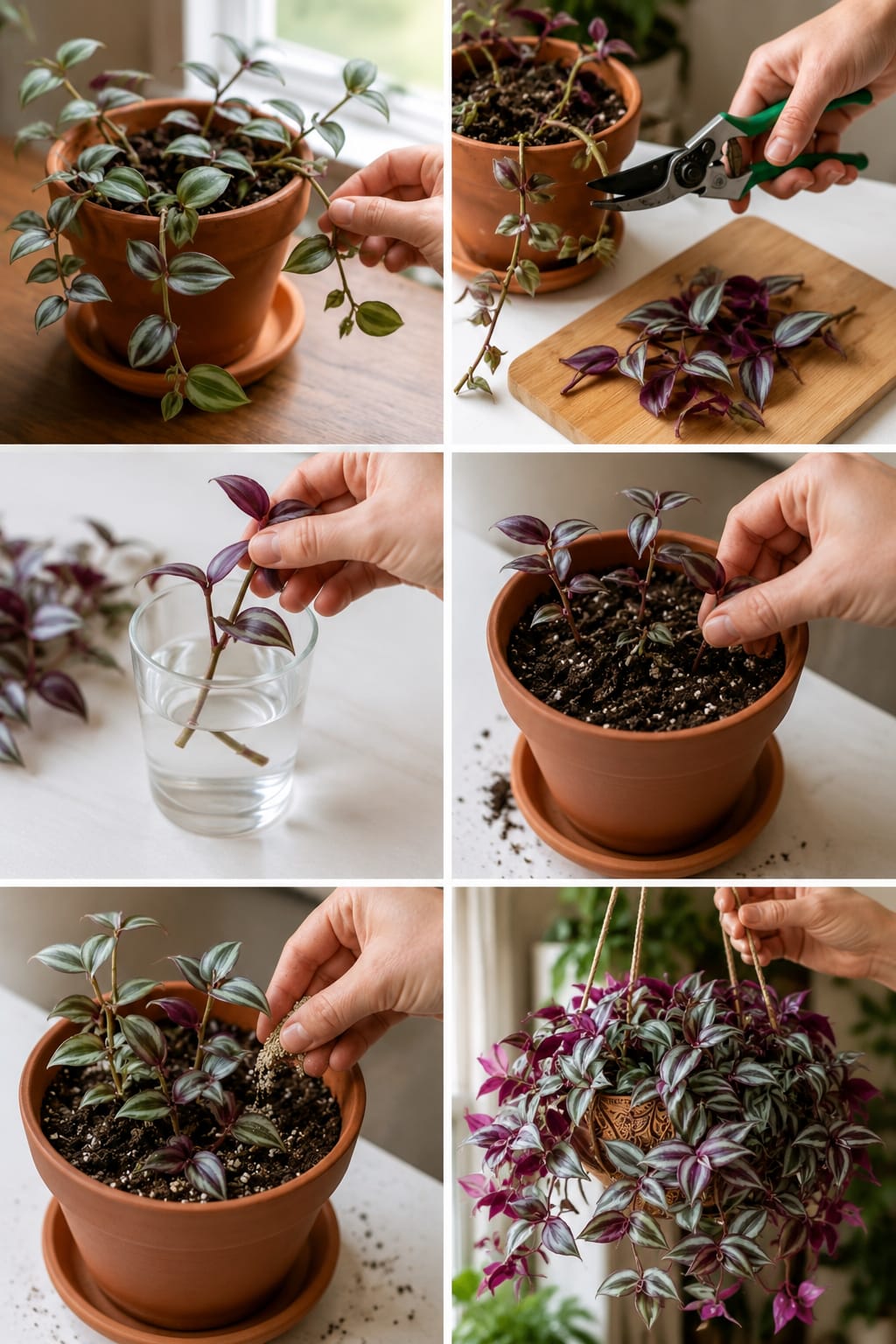
The image shows a simple step-by-step propagation routine. A trailing Tradescantia plant is trimmed with clean pruners. Fresh cuttings are placed in water to root. Then rooted or fresh cuttings are planted into soil. A little fresh mix is added around them, and the plant eventually becomes a full hanging basket with purple and silver leaves. This is one of the best methods for keeping a Tradescantia plant bushy instead of long, thin, and tired.
This full guide explains how to propagate Wandering Jew plant from stem cuttings, how to root cuttings in water, how to plant them in soil, how to make the plant fuller, how to prevent leggy growth, how to water correctly, how to choose the best light, how to avoid root rot, and how to style Tradescantia beautifully indoors. The goal is simple: turn a few cuttings into a full, healthy, colorful plant.
What Is a Wandering Jew Plant?
Wandering Jew is a common name used for several Tradescantia plants. These plants are known for trailing stems and colorful leaves. Some varieties have green and silver stripes. Others have purple leaves, pink tones, or deep burgundy undersides. They grow quickly and are often used in hanging baskets because their stems naturally trail downward.
Tradescantia is easy to grow, but it can become leggy if it is not pruned. The older stems may lose leaves near the base, while the tips keep growing longer. This is normal. Propagation is the best way to refresh the plant. By cutting healthy stems and replanting them, you can make the pot look full again.
Why Propagation Works So Well
Tradescantia roots very easily from stem nodes. Nodes are the small joints on the stem where leaves grow. When a node touches water or moist soil, it can produce roots. This is why the plant is so easy to multiply.
You do not need complicated equipment. You only need clean scissors, a few healthy stems, water or soil, and a pot. In many cases, roots appear within one to two weeks. With good care, the cuttings continue growing and quickly fill the container.
Best Time to Propagate Tradescantia
The best time to propagate Wandering Jew plant is spring or summer. This is when the plant is actively growing and can produce roots quickly. You can also propagate in early fall if your home is warm and bright.
Winter propagation is possible, but growth may be slower because light levels are lower. If you propagate in winter, keep the cuttings near a bright window or under a grow light.
What You Need
- Healthy Tradescantia plant
- Clean scissors or pruning shears
- Small glass of water
- Small pot with drainage holes
- Fresh light potting mix
- Perlite, optional
- Spray bottle, optional
- Hanging basket, optional
- Bright indirect light
Clean tools are important. Dirty scissors can spread disease from one plant to another. Wipe the blades before cutting.
Choosing the Best Cuttings
Choose stems that look healthy, firm, and colorful. Avoid stems that are mushy, black, diseased, or badly dried out. The best cuttings are usually 3 to 6 inches long and have several nodes.
A cutting with two or three nodes is enough. Remove the lower leaves so the nodes can sit in water or soil. Leaves that sit underwater can rot, so keep the lower part clean.
Step 1: Trim the Long Stems
Start by looking at your plant. Find long trailing stems that make the plant look thin or uneven. Use clean scissors to cut just below a node. This encourages the mother plant to branch and grow fuller.
Do not be afraid to trim Tradescantia. Pruning is one of the best ways to keep it attractive. The more you trim, the more you can replant cuttings into the pot.
Step 2: Prepare the Cuttings
After cutting, remove the lower leaves from each stem. Keep the top leaves because they help the cutting continue photosynthesis. Make sure at least one or two bare nodes will be placed in water or soil.
If the cutting is very long, divide it into smaller pieces. Each piece should have at least one healthy node. Shorter cuttings often root better and create a fuller plant.
Step 3: Root the Cuttings in Water
Place the cuttings in a glass of clean water. Make sure the nodes are underwater, but keep the leaves above the water. Place the glass in bright indirect light.
Change the water every few days to keep it fresh. Within one to two weeks, small white roots may begin to appear. Wait until the roots are about 1 to 2 inches long before planting them in soil.
Step 4: Plant the Cuttings in Soil
Fill a small pot with fresh light potting mix. Make small holes with your finger or a pencil. Place the rooted cuttings into the holes and gently press soil around the stems.
Plant several cuttings in the same pot for a fuller look. One cutting alone may look thin. A group of cuttings creates a lush pot faster.
Step 5: Water Lightly
After planting, water lightly until the soil is evenly moist. Do not flood the pot. Tradescantia likes moisture, but it does not like soggy soil.
Let excess water drain completely. Empty the saucer after watering. Keep the soil lightly moist for the first couple of weeks while the cuttings adjust.
Step 6: Place in Bright Indirect Light
Tradescantia needs bright indirect light to keep its color strong. Too little light makes the plant leggy and dull. Too much direct sun can burn the leaves.
A bright windowsill with filtered light is ideal. Morning sun can work well, but harsh afternoon sun should be avoided.
Water Propagation vs Soil Propagation
Water propagation is easy because you can see the roots growing. It is fun and visual, especially for beginners. Soil propagation is also easy and avoids the transition from water roots to soil roots.
Both methods work. If you want fast visible results, use water. If you want a stronger direct start, place cuttings straight into moist soil.
Direct Soil Propagation Method
- Cut healthy stems below a node.
- Remove lower leaves.
- Prepare a pot with moist light soil.
- Insert nodes into the soil.
- Press gently around the stems.
- Place in bright indirect light.
- Keep soil lightly moist until new growth appears.
Soil propagation often gives fuller pots quickly because you can place many cuttings directly into one container.
Best Soil for Tradescantia
Tradescantia likes light, well-draining soil that holds some moisture. Regular indoor potting mix can work, but adding perlite improves drainage and helps prevent root rot.
Simple Soil Mix
- 2 parts indoor potting mix
- 1 part perlite
- 1 part coco coir or peat moss
The soil should stay slightly moist but not heavy. If it feels muddy or compacted, add more perlite.
Best Pot for Wandering Jew Plant
Use a pot with drainage holes. This is very important. Tradescantia grows fast and likes moisture, but standing water can rot the roots.
Terracotta pots dry faster and can help prevent overwatering. Plastic pots hold moisture longer. Hanging baskets are great because the stems can trail naturally.
How to Make the Plant Fuller
The secret to a full Tradescantia is regular trimming and replanting. When stems get long, cut them. Then place those cuttings back into the same pot. Over time, the plant becomes thick and bushy.
Fullness Tips
- Plant several cuttings together.
- Pinch growing tips often.
- Trim long bare stems.
- Replant cuttings into empty spots.
- Rotate the pot for even growth.
- Give bright indirect light.
Do not wait until the plant is extremely leggy. Small regular trims keep it beautiful.
How Often to Water Tradescantia
Water when the top inch of soil feels dry. Tradescantia likes more moisture than succulents, but less than a plant sitting in water. The soil should be lightly moist, not soggy.
In bright warm conditions, you may water once or twice a week. In cooler or darker conditions, water less often. Always check the soil before watering.
Signs the Plant Needs Water
- Leaves feel thin or soft.
- Soil is dry on top.
- Stems droop slightly.
- Leaf edges look crispy.
- The pot feels light.
Signs of Overwatering
- Leaves turn yellow.
- Stems become mushy.
- Soil smells sour.
- Fungus gnats appear.
- Roots become brown and soft.
- Leaves fall easily.
If stems become mushy, cut healthy tips immediately and propagate them. This can save the plant before rot spreads.
Best Light for Tradescantia
Bright indirect light keeps Tradescantia colorful and compact. Low light makes the stems stretch and the colors fade. Variegated varieties need more light to keep their stripes strong.
Place the plant near an east-facing window or a bright filtered window. Avoid harsh afternoon sun unless the plant is gradually adjusted.
Why Tradescantia Gets Leggy
Leggy growth happens when stems stretch toward light or when old stems lose leaves. This is common. Tradescantia naturally trails and grows fast, so older sections may become bare.
The fix is simple: prune and replant. Cut the healthy tips and place them back into the pot. This refreshes the plant and keeps it full.
How to Prune Correctly
Use clean scissors and cut just above or below a node. Remove weak, dry, or bare stems. Healthy tips can be rooted in water or soil.
Pruning also encourages the mother plant to branch. This creates a thicker shape over time.
Feeding Tradescantia
Tradescantia grows quickly and benefits from light feeding during spring and summer. Use a balanced houseplant fertilizer diluted to half strength once every 4 to 6 weeks.
Do not overfertilize. Too much fertilizer can burn roots and cause weak growth. Avoid feeding in winter when growth slows.
Humidity and Temperature
Tradescantia likes normal indoor humidity but grows better with moderate humidity. Dry air can cause crispy edges. Keep it away from heaters, cold drafts, and air conditioners.
Warm indoor temperatures are best. Avoid cold windows in winter because cold damage can make leaves limp or discolored.
Common Problems
Faded Leaves
Faded leaves usually mean not enough light. Move the plant to brighter indirect light.
Crispy Edges
Crispy edges can come from underwatering, dry air, or too much direct sun.
Mushy Stems
Mushy stems usually mean overwatering or poor drainage. Cut healthy pieces and propagate them.
Bare Stems
Bare stems are common with age. Prune and replant cuttings.
Yellow Leaves
Yellow leaves may come from overwatering, low light, or old growth.
How to Refresh an Old Tradescantia
If your plant looks messy, thin, or bare, you can restart it. Cut several healthy tips. Root them in water or plant them directly into fresh soil. Remove the tired old stems if they are unattractive.
Within a few weeks, the new cuttings can create a fresh full pot. This is often easier than trying to fix old bare vines.
How to Create a Hanging Basket
To create a full hanging basket, plant many cuttings around the pot. Place some in the center and some near the edges. As they grow, pinch the tips often.
Hang the basket in bright indirect light. Rotate it weekly so all sides grow evenly. Trim long vines and replant them back into the top of the basket to keep it dense.
Indoor Styling Ideas
Use a terracotta pot for warm natural decor.
Use a white ceramic pot for modern styling.
Place on a shelf so vines can trail down.
Hang near a bright window with filtered light.
Group with ferns and pothos for a lush look.
Place in a kitchen window for fresh color.
Use a macrame hanger for boho decor.
Style with wooden furniture for cozy contrast.
Continue to Page 2
Continue to page 2 for more details about this article and the key points many readers miss on the first page.