Pink Princess Philodendron is one of the most eye-catching houseplants you can grow indoors. Its dark, glossy leaves are painted with pink splashes, soft blush patches, burgundy tones, and deep green-black color. Every leaf can look different, which makes the plant feel rare and special. Some leaves may have small pink speckles, while others may show bold half-moon variegation. This unpredictable beauty is the main reason so many plant lovers want to grow more Pink Princess Philodendrons from cuttings.
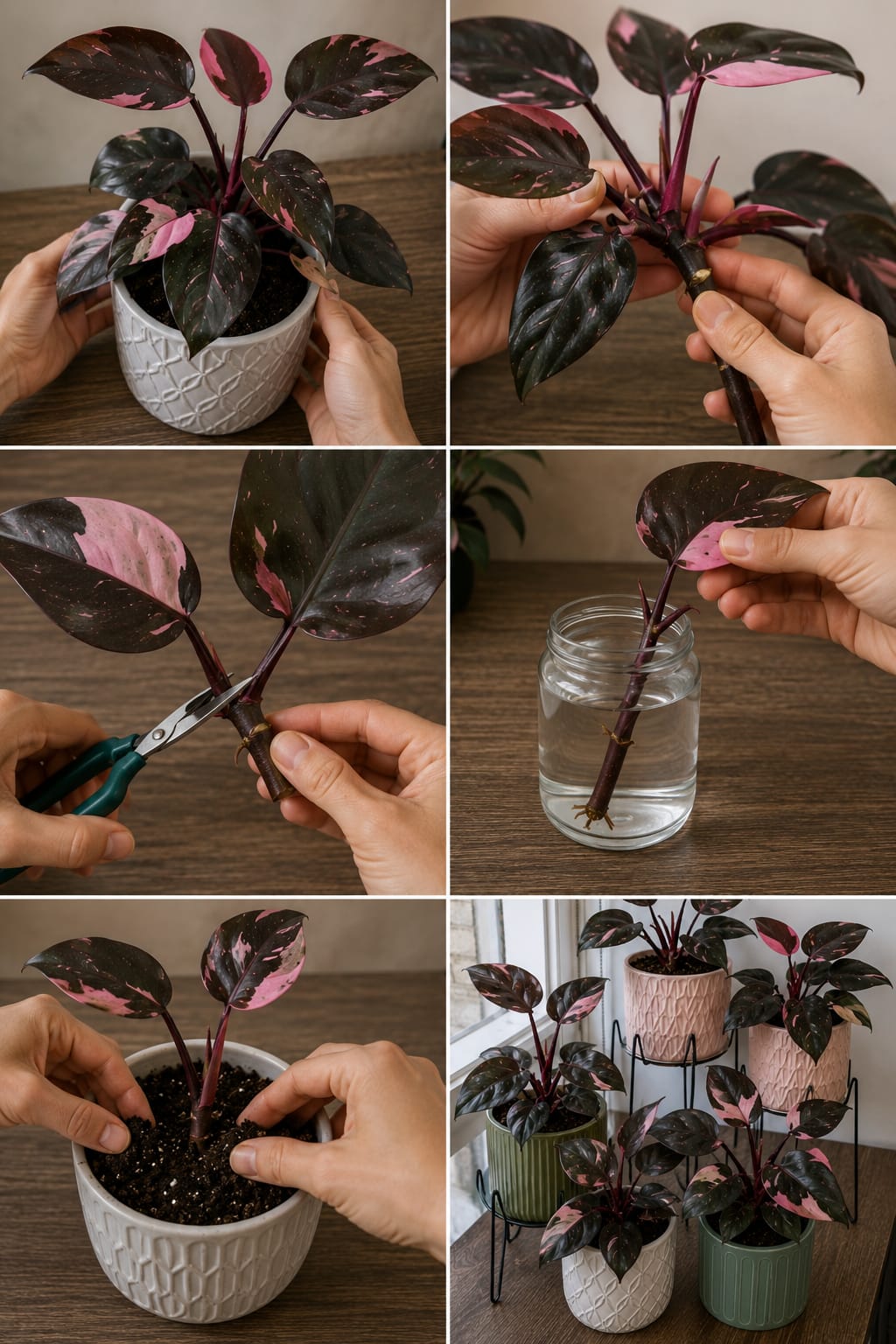
The image shows a clear propagation process for a pink-variegated philodendron. A healthy mother plant is shown first, then a stem section is selected. The cutting is trimmed below a node, placed in water, rooted, and finally planted in soil. The final image shows several young plants growing in decorative pots near a window. This is the classic method for multiplying a Pink Princess Philodendron, and it works well when the cutting has the right structure and is given the right care.
Propagation looks simple, but it must be done correctly. Pink Princess Philodendron cannot grow from a single leaf with no node. A leaf may stay alive in water for a while, but it will not create a new plant unless a node is attached. The node is the small joint on the stem where roots and new growth can form. This is the most important detail in the whole process. If you cut only a pretty leaf, you may have a nice temporary display, but you will not grow a real new plant.
This guide explains how to propagate Pink Princess Philodendron safely from stem cuttings, how to choose the right cutting, how to root it in water, how to move it into soil, how to keep the pink variegation strong, and how to avoid common problems like rot, weak growth, fading color, and failed cuttings. The goal is to help you grow healthy new plants without damaging the mother plant or losing the beautiful pink pattern that makes this plant so loved.
Understanding Pink Princess Philodendron
Pink Princess Philodendron is a tropical climbing aroid with heart-shaped leaves and striking pink variegation. It grows from a stem with nodes, aerial roots, and new leaves that unfurl one at a time. In the right conditions, it can grow upright with support or trail slightly if not supported. The dark leaves and pink markings give it a dramatic look that fits beautifully in modern indoor spaces.
The pink color is caused by variegation, which means parts of the leaf have less chlorophyll. Chlorophyll is what helps leaves make energy from light. The green and dark parts of the leaf feed the plant. The pink parts are beautiful, but they do not photosynthesize as strongly. This is why a plant with too much pink can become weak, while a plant with too little pink can become less decorative. The best Pink Princess has a balance of dark healthy leaf tissue and bright pink variegation.
When propagating this plant, you are not just trying to make roots. You are also trying to preserve the growth point that carries the variegation pattern. A cutting from a highly variegated section may produce beautiful leaves, but it also needs enough green tissue to stay strong. A cutting from a very dark, low-variegation stem may root well but may produce mostly dark leaves. This is why choosing the right cutting matters.
Why Propagate Pink Princess Philodendron?
Many plant lovers propagate Pink Princess Philodendron because it is expensive, beautiful, and rewarding. A single healthy mother plant can eventually produce several cuttings, which can become new plants for your home. Propagation also helps control the shape of a tall or leggy plant. If your plant has grown long stems with large gaps between leaves, cutting and rooting sections can make it fuller over time.
Propagation is also useful when a plant has lost shape or when you want to encourage branching. Cutting a stem can wake up new growth points on the mother plant. This can create a fuller plant if the mother plant is healthy and growing in good light. However, pruning should not be done randomly. Every cut affects the plant. A weak or stressed Pink Princess should be improved before cuttings are taken.
The best time to propagate is during active growth, usually spring or summer. During this period, the plant has more energy, roots form faster, and cuttings recover better. Propagation can still work indoors at other times if warmth and light are good, but results may be slower.
Choosing the Right Cutting
The best cutting has at least one node, one healthy leaf, and a firm stem. The node may look like a small bump, ring, joint, or swelling on the stem. Sometimes there is an aerial root near the node. Aerial roots are helpful because they can transition into water or soil roots more easily. A cutting with a node and aerial root usually roots faster than a cutting with no visible root nub.
The leaf should be healthy and not heavily damaged. It can have pink variegation, but it should also have enough dark or green tissue. A cutting with an almost fully pink leaf may look stunning, but it may be weaker because it has less chlorophyll. A cutting with balanced variegation is usually safer. The stem should feel firm, not soft, wrinkled, or mushy.
Do not take a cutting from a plant that is already struggling with root rot, pests, severe yellowing, or dehydration. Propagation is a stress event. A strong mother plant can handle it. A weak mother plant may decline further. If your plant is unhealthy, fix light, watering, soil, and pests first before cutting.
Why the Node Is Essential
A Pink Princess Philodendron cutting must include a node because the node contains the growth tissue that can produce new roots and new shoots. Without it, the cutting cannot become a complete plant. A leaf with a petiole can sit in water and may stay fresh for weeks, but it will not create a new stem if no node is attached.
In the image, the cutting is taken from the stem, not just the leaf. This is correct. The stem section includes the area where roots can grow. When placed in water, small roots begin to develop from the node area. Later, when the cutting is planted into soil, that rooted node becomes the foundation of the new plant.
This is one of the most common mistakes beginners make with philodendrons. They see a beautiful leaf and place it in water, expecting a new plant. The leaf may look alive, but it is not truly propagating. Always check for a node before rooting.
Preparing Clean Tools
Before cutting, clean your scissors, pruning shears, or knife. Dirty tools can spread bacteria, fungus, or disease into the stem. A clean cut helps the plant heal faster and reduces the risk of rot. You can wipe the blade with rubbing alcohol and let it dry before making the cut.
Sharp tools are better than dull tools. A dull blade crushes the stem, which makes healing slower and creates more damaged tissue. A clean angled cut below the node is usually best. Leave a little stem below the node so the node is not damaged. Do not cut directly through the node.
After cutting, some growers let the cutting sit for a short time so the cut end can dry slightly. This can reduce rot risk, especially if the stem is thick. Do not leave it drying for too long, because the cutting still needs moisture. A short rest is enough.
Rooting in Water
Water propagation is popular because it is easy to observe. You can see roots forming, which makes the process exciting. Place the cutting in a clean glass jar with room-temperature water. The node should be underwater, but the leaf should stay above the water. If a leaf sits in water, it can rot.
Use clean water and change it regularly. Fresh water keeps oxygen available and reduces bacteria buildup. If the water becomes cloudy, change it immediately. A clear jar lets you see root growth, but it can also allow algae if placed in strong light. Keep the jar in bright indirect light, not direct sun.
Roots may appear in a few weeks, but timing can vary. Warmth, light, cutting health, and season all affect speed. Some cuttings root quickly, while others take longer. Patience is important. Do not keep pulling the cutting out or touching new roots. Young roots are delicate and can break easily.
When Water Roots Are Ready for Soil
A cutting is usually ready for soil when it has several roots that are a few inches long. Very tiny roots may struggle when moved to potting mix. Waiting until the root system is stronger improves success. However, leaving a cutting in water for too long can make the transition harder because water roots are different from soil roots.
The best time to move the cutting is when roots are developed but still young and flexible. Prepare the pot before removing the cutting from water. Use a small pot, not a huge one. A small cutting in a large pot can stay wet too long, which increases the risk of rot. The pot must have drainage holes.
After planting, keep the soil lightly moist for the first few weeks while the roots adjust. Do not soak it. Water roots need time to adapt to soil. Bright indirect light and stable warmth help the cutting settle.
Rooting Directly in Soil
Pink Princess Philodendron can also root directly in soil. This method avoids the transition from water roots to soil roots. It can be very successful if the soil is airy and moisture is controlled. The challenge is that you cannot see the roots forming, so it requires patience and careful watering.
To root in soil, place the node into a light, airy mix and keep it slightly moist. The mix should not be wet or compact. High humidity can help, but the cutting still needs airflow. If the soil stays too wet, the stem can rot before roots form.
Soil propagation is often better for growers who are comfortable reading plant moisture. Water propagation is better for beginners who want to see root progress. Both methods can work.
Best Soil Mix for Pink Princess Philodendron
Pink Princess Philodendron grows best in an airy aroid mix. A heavy soil can suffocate roots and cause rot. The mix should hold some moisture but drain quickly. A good mix often includes indoor potting soil, orchid bark, perlite, coco chips, and a small amount of charcoal. The bark creates air pockets. The perlite improves drainage. The potting soil holds enough moisture for roots.
If you use only dense potting soil, the cutting may stay too wet. If you use only bark, it may dry too quickly for a young cutting. Balance is the goal. The soil should feel loose in your hand and should not turn into mud after watering.
When planting the rooted cutting, gently place the roots into the soil and cover them lightly. Do not bury the stem too deeply. The node should be secure, but the petiole and leaf base should not be buried in wet soil. Firm the mix lightly around the cutting without compacting it hard.
Light for Strong Pink Variegation
Light is one of the most important factors for Pink Princess Philodendron. The plant needs bright indirect light to maintain strong growth and attractive variegation. Too little light can cause slow growth, small leaves, and reduced pink coloring. Too much direct sun can burn the leaves, especially the pink sections, because variegated tissue is more delicate.
A bright window with filtered light is ideal. Morning sun can be gentle, but harsh afternoon sun should be avoided unless filtered. If your home is dark, a grow light can help. The goal is steady brightness without heat stress.
If new leaves are coming out mostly dark, the plant may need more light or the growth point may be reverting. If new leaves are mostly pink or white, the plant may look beautiful but can become weak. The best plant has balanced leaves with both dark green and pink areas.
How to Keep the Pink Color
Keeping the pink color is about balance. Bright indirect light supports variegation, but genetics also matter. The cutting must come from a stem with pink variegation in the growth point. If a stem has reverted to mostly dark leaves, future growth may continue that way. If a stem produces too much pink and not enough green, the plant may weaken.
Pruning can sometimes help manage variegation. If a plant produces several all-dark leaves, cutting back to a more variegated node may encourage pink growth again. If a plant produces almost fully pink leaves repeatedly, it may need more green tissue to survive. A fully pink leaf is beautiful, but it does not feed the plant well.
Do not rely on fertilizer to create pink color. Fertilizer supports growth, but it does not paint the leaves pink. Light, genetics, and the active growth point are more important.
Watering After Planting
After moving a rooted cutting into soil, watering must be careful. The soil should stay lightly moist while the roots adjust, but it should never become soggy. A small cutting cannot use water as quickly as a mature plant. If the pot is too large or the mix is too dense, the roots can rot.
Check the soil with your finger before watering. When the top layer begins to dry, water lightly. As the plant becomes established, you can allow the top inch or two to dry before watering again. Philodendrons like moisture more than snake plants, but they still need oxygen around their roots.
If leaves droop slightly after planting, the cutting may be adjusting. If the stem becomes soft or the soil smells bad, rot may be starting. In that case, remove the cutting, trim damaged tissue, and restart in fresh medium.
Humidity and Warmth
Pink Princess Philodendron appreciates moderate to high humidity. Young cuttings root and adjust better when the air is not too dry. Dry air can cause curled leaves, crispy edges, and slow unfurling. A humidifier, plant grouping, or propagation box can help, but airflow is also important. High humidity with no airflow can encourage fungal problems.
Warmth is also important. This plant grows best in normal warm indoor temperatures. Cold rooms slow rooting and can increase rot risk. Keep cuttings away from cold windows, drafts, and air conditioners. A stable warm spot with bright indirect light is ideal.
Using a Support Pole
Pink Princess Philodendron is a climbing plant. As it grows, it benefits from support. A moss pole, coco pole, bamboo stake, or trellis can help the plant grow larger leaves and a stronger shape. In the early cutting stage, support may not be needed, but once the plant begins growing taller, a pole can improve its appearance.
Aerial roots may attach to a moist moss pole, giving the plant extra support. If the pole is dry, the roots may not attach as strongly, but it can still guide the stem upward. Tie the stem gently with soft plant ties. Do not tie petioles tightly, and do not squeeze the stem.
Supporting the plant can also help show off the variegated leaves. When the stem grows upright, leaves have more space and light exposure. This can make the plant look fuller and more organized.
Continue to Page 2
Continue to page 2 for more details about this article and the key points many readers miss on the first page.