Snake plants are some of the most reliable and beautiful houseplants you can grow indoors. Their upright sword-shaped leaves, deep green patterns, yellow margins, and strong architectural shape make them perfect for modern homes, bright shelves, cozy corners, offices, bedrooms, and living rooms. Many people love snake plants because they are easy to care for, slow growing, and tolerant of missed watering. They can survive in conditions that would stress many other indoor plants, which is why they are often recommended for beginners.
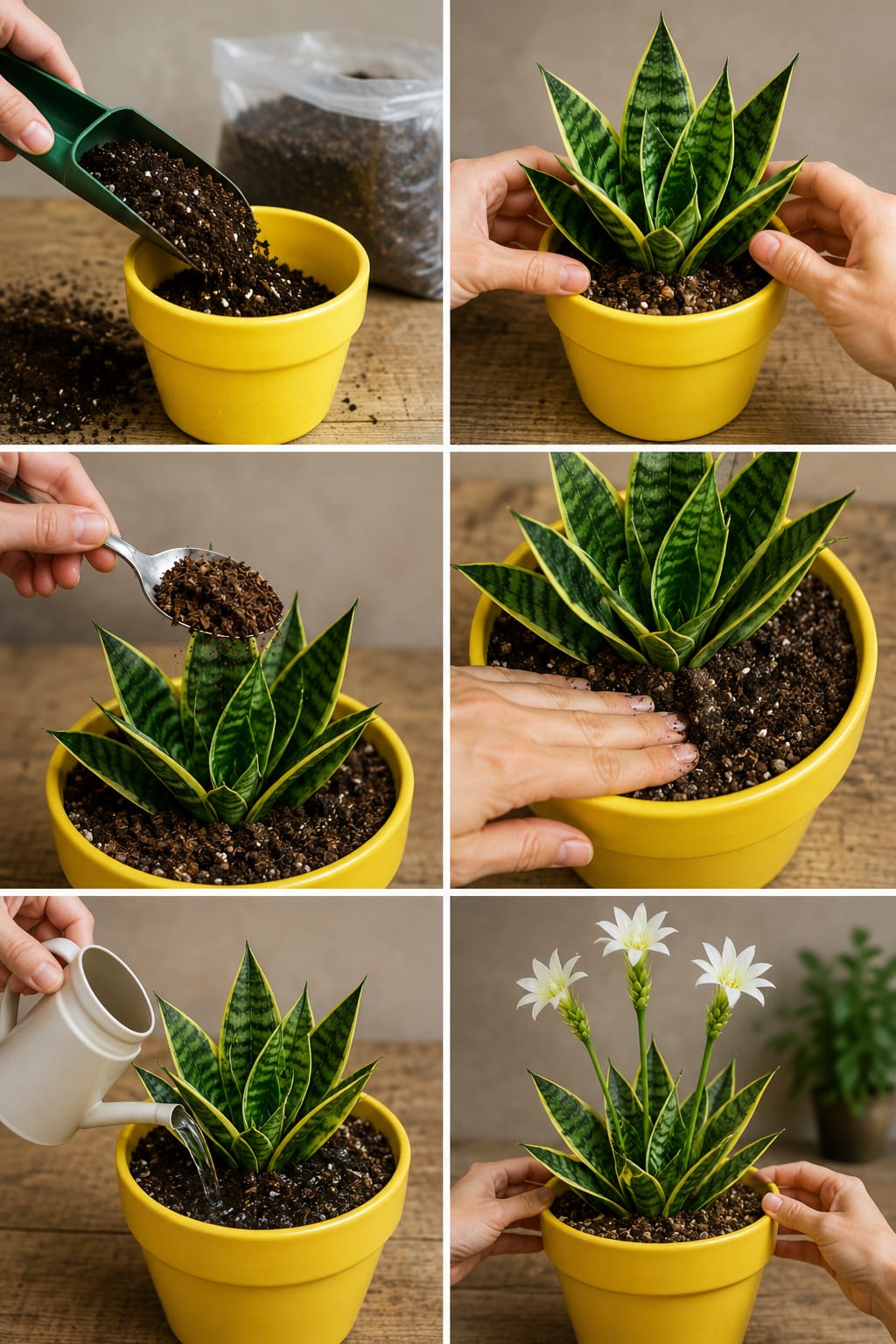
The image shows a beautiful step-by-step care process for a compact snake plant growing in a bright yellow pot. Fresh soil is added, the plant is placed carefully in the container, a brown organic-looking material is sprinkled around the soil, the surface is gently pressed, the plant is watered, and the final result shows a healthy snake plant with tall white flowers. This type of image suggests that good potting, gentle feeding, careful watering, and patience can help a snake plant grow strong and possibly bloom.
Snake plant flowers are rare indoors, which makes them exciting. A blooming snake plant can surprise even experienced plant owners. The flowers usually grow on tall stalks that rise from the center or between the leaves. They may be white, cream, pale green, or lightly fragrant. Some blooms open at night and release a sweet scent. But it is important to understand that blooms do not appear because of one single trick. A snake plant flowers when it is mature, healthy, slightly snug in its pot, receiving enough light, and growing under stable conditions.
This guide explains how to pot a snake plant correctly, how to choose the right soil, how to water it safely, how to use gentle feeding without damaging the roots, and how to create the best conditions for rare blooms. The goal is not to force the plant with harsh treatments. The goal is to build strong roots, healthy leaves, and a stable growing environment so the plant can thrive naturally.
Understanding the Snake Plant
Snake plants are often known by the old botanical name Sansevieria, although many are now classified under Dracaena. They are succulent-like plants that store moisture in their thick leaves and underground rhizomes. This storage ability makes them very drought tolerant. It also means they are sensitive to too much water. A snake plant can survive dry soil much better than soggy soil.
The leaves grow upright from the soil and can be tall, short, wide, narrow, striped, variegated, or compact depending on the variety. The plant in the image appears to be a compact variegated snake plant with green banded leaves and bright yellow edges. This type of snake plant looks bold in a colorful pot because the yellow margins match the yellow container beautifully.
Under the soil, snake plants grow from rhizomes. These rhizomes store energy and send up new shoots called pups. Over time, a single plant can become fuller as more pups appear around the base. Healthy rhizomes are firm and pale. Rotten rhizomes become soft, dark, and mushy. Most snake plant problems begin below the soil, which is why potting mix and watering habits are so important.
Why the Potting Process Matters
Many people think snake plants can grow in any soil and any pot because they are tough. While they are forgiving, they still grow best when their roots have the right environment. A snake plant in heavy wet soil may survive for a while, but it can eventually rot. A snake plant in a pot without drainage may look fine at first, then suddenly collapse when the roots are damaged. A snake plant buried too deeply can rot at the crown.
The potting process shown in the image is important because it starts with the root zone. A healthy potted snake plant needs a container with drainage, a loose soil mix, careful placement, and gentle watering. The plant should sit firmly in the pot without being buried too deep. The soil should support the roots but still allow air and water to move through.
When a snake plant is potted correctly, the leaves stand more strongly, the roots breathe better, and new growth has a better chance of appearing. Good potting also reduces the chance of root rot, fungus gnats, and yellowing leaves. This is why a simple repotting routine can sometimes make a tired snake plant look much better over time.
Choosing the Right Pot
The yellow pot in the image is visually attractive, but appearance is not the only thing that matters. The most important feature of any snake plant pot is drainage. The pot should have holes at the bottom so extra water can escape. If water cannot drain, the lower soil becomes wet and stale. The roots may begin to rot even if the top of the soil looks dry.
A snake plant does not need a very large pot. In fact, a pot that is too large can create problems because extra soil stays wet for too long. Snake plants prefer to be slightly snug. This does not mean the roots should be crushed or neglected, but it does mean the pot should be only a little larger than the root ball. A slightly snug pot also supports upright growth and may help mature plants bloom under the right conditions.
Terracotta pots are useful because they allow moisture to evaporate through the sides. Plastic and ceramic pots can also work if they drain well and the soil is airy. Decorative pots are fine, but if they have no drainage holes, it is safer to keep the snake plant in a draining nursery pot inside the decorative container. After watering, the inner pot should be allowed to drain fully before being returned.
Best Soil for Snake Plants
Snake plants need soil that drains quickly and does not stay wet around the roots. A regular indoor potting mix may hold too much moisture if used alone. A better option is a cactus or succulent mix, or a houseplant mix improved with perlite, pumice, coarse sand, orchid bark, or small lava rock. The goal is to create air spaces in the soil so the roots can breathe.
The soil in the image looks loose and textured, which is ideal. You can see small white pieces that may be perlite, a common ingredient used to improve drainage. A good snake plant soil should not become muddy when watered. It should absorb water, drain excess moisture, and dry within a reasonable time.
If your soil stays wet for more than a week, something is wrong. The pot may be too large, the room may be too dark, the soil may be too dense, or the pot may not drain. Wet soil is the biggest danger for snake plants. Improving the soil is often more helpful than adding fertilizer or homemade plant boosters.
Planting the Snake Plant Correctly
When placing a snake plant into a pot, the crown should remain above the soil line. The crown is the area where the leaves emerge from the base. If this area is buried too deeply, moisture can sit against it and cause rot. The roots should be covered, but the leaf bases should not be packed under wet soil.
The image shows hands gently placing the snake plant into the yellow pot and adjusting the soil around it. This is the right approach. Snake plant roots should be handled carefully, especially if the plant was recently divided. Firm the soil enough to hold the plant upright, but do not press so hard that the soil becomes compacted. Compacted soil blocks airflow and holds water too long.
After planting, the plant should feel stable. If it wobbles, add a little more dry soil around the base and press lightly. If the plant is top-heavy, a heavier pot may help. Tall snake plants can tip over in lightweight containers, especially when the soil is dry.
Using Organic Material on the Soil
The image shows a spoon adding a brown, crumbly material to the soil surface. This could represent compost, worm castings, dried tea compost, fine bark, or another organic amendment. A small amount of gentle organic material can support soil health, but it must be used carefully with snake plants.
Snake plants do not need rich, heavy feeding. Too much organic matter can hold moisture and make the soil stay wet. This is risky for a plant that prefers dry cycles. If you use worm castings or compost, keep the layer thin and mix it lightly into the top soil rather than piling it thickly around the crown. A heavy wet layer can invite fungus gnats and mold.
Worm castings are usually gentler than many fertilizers and can be useful in small amounts. Compost can also work if it is fully finished, clean, and not smelly. Never add fresh kitchen scraps, wet food waste, coffee sludge, or fermenting organic mixtures directly to an indoor snake plant pot. Indoor pots are small environments, and strong organic materials can quickly create odor and pest problems.
Watering After Potting
The image shows the snake plant being watered after the soil is arranged. Watering after potting can help settle the soil around the roots, but it must be done carefully. If the plant has healthy roots and the soil is dry, a light watering is fine. If the plant was divided, cut, or has damaged roots, it is often safer to wait a few days before watering so any wounds can dry slightly.
Snake plants should be watered deeply but infrequently. When it is time to water, pour water into the soil until some drains from the bottom. Then allow the pot to drain completely. After that, wait until the soil is fully dry before watering again. This dry period is not neglect. It is part of the plant’s natural rhythm.
Watering too often is far more dangerous than watering too little. A thirsty snake plant may wrinkle slightly or grow slowly, but an overwatered snake plant can rot quickly. If you are unsure whether to water, wait a little longer. Snake plants prefer caution.
How Often Should You Water?
There is no perfect calendar for watering because every home is different. A snake plant in bright light and warm air may dry faster than one in a dark cool room. A terracotta pot dries faster than a glazed ceramic pot. A small pot dries faster than a large pot. A gritty soil mix dries faster than a dense mix.
The best way to water is to check the soil. Push your finger into the soil or use a wooden stick. If moisture remains deeper in the pot, wait. If the soil is dry throughout most of the pot, water. In summer, this may happen every two or three weeks for some plants. In winter, it may take much longer. Some snake plants in low light need water only once a month or less during cool seasons.
Never water just because the top looks dry. The lower soil may still be wet. This is especially true in large pots. If the pot feels heavy, it probably still contains moisture. Learning the weight of the pot is one of the easiest ways to avoid overwatering.
Light for Strong Leaves and Possible Blooms
Snake plants are famous for tolerating low light, but low light is not ideal for blooming. A snake plant can survive in a dim corner, but it may grow slowly and never flower. For strong growth and rare blooms, bright indirect light is much better.
Place the plant near a bright window where it receives plenty of soft light. Morning sun is usually safe. Gentle direct sun can be helpful if the plant is introduced gradually. Harsh afternoon sun may burn the leaves, especially on variegated plants with yellow margins. If the leaves develop pale brown patches, the sun may be too strong. If the plant becomes weak, stretched, or dull, it may need more light.
A bright east-facing window is often excellent. A south or west window can work if filtered by a curtain or if the plant is placed back from the glass. In dark homes, a grow light can help. Light is one of the biggest factors in whether a mature snake plant has enough energy to bloom.
Why Snake Plants Bloom
Snake plant blooms are uncommon indoors, but they are not impossible. A mature plant may bloom when it has stored enough energy and is growing under the right conditions. Bright light, a slightly snug pot, dry watering cycles, and stable care can all increase the chance. Some plants bloom after mild stress, such as being root-bound or experiencing a dry period, but severe stress is not healthy and should not be used as a trick.
The flowers usually grow on tall stalks and may appear white, cream, or pale green. They can be fragrant, especially in the evening. The blooms shown in the image look bright and lily-like, but real snake plant flowers are usually narrower and more delicate. Still, the image captures the idea of a healthy blooming plant.
It is important not to force blooming with heavy fertilizer. Too much fertilizer can burn roots and make the plant weaker. A snake plant that never blooms can still be perfectly healthy. Blooms are a special bonus, not the only goal.
Feeding Snake Plants Safely
Snake plants are light feeders. They do not need much fertilizer. During spring and summer, a diluted balanced houseplant fertilizer can be used occasionally. Half strength or quarter strength is often enough. Feeding too often can create salt buildup in the soil, which may cause brown tips, yellowing, or root damage.
If you use organic amendments like worm castings, use a small amount. A thin layer mixed into the top soil during active growth is safer than a heavy layer. Do not fertilize during winter if the plant is not actively growing. Do not fertilize a newly repotted plant right away. Do not fertilize a plant with root rot or wet soil.
The best feeding routine is gentle and seasonal. Snake plants grow slowly, so they use nutrients slowly. More fertilizer does not create instant flowers. Good light and healthy roots matter more.
Can Coffee, Tea, or Banana Water Help?
Many people use homemade liquids or kitchen scraps on houseplants, but snake plants are not the best plants for wet homemade experiments. Coffee can be too acidic or may encourage mold if used often. Banana peel water can ferment and attract gnats. Tea water can contain compounds that are not necessary for the plant. Sugary or decomposing liquids can make indoor soil sour.
If you want to use a homemade method, choose something mild and clean, such as a very small amount of worm castings in the soil. Avoid pouring unknown liquids into the pot. The safest routine is clean water, airy soil, bright light, and occasional diluted fertilizer.
A snake plant does not need complicated recipes. It grows best when its roots are allowed to dry and breathe. Anything that keeps the soil wet or sticky can create more harm than good.
Common Snake Plant Problems
Yellow leaves are often caused by overwatering. If a leaf turns yellow from the base and feels soft, check the roots immediately. The soil may be staying too wet. A healthy snake plant leaf should feel firm. Softness near the base is a warning sign.
Brown tips can come from inconsistent watering, mineral buildup, fertilizer burn, low humidity, or physical damage. A small brown tip is not usually serious. It will not turn green again, but the plant can continue growing. If many tips brown after feeding, reduce fertilizer and flush the soil with plain water if needed.
Wrinkled leaves often mean the plant has been too dry for a long time, but they can also happen when roots are damaged and cannot absorb water. Always check the soil and roots before assuming the plant needs more water.
Root Rot and How to Prevent It
Root rot is the most serious snake plant problem. It happens when roots and rhizomes stay wet without enough oxygen. The plant may yellow, soften, lean, or collapse. Sometimes the problem is hidden until it becomes severe. When you remove the plant from the pot, rotten roots may be dark, mushy, and smelly.
Prevention is easier than rescue. Use a draining pot. Use airy soil. Water only when dry. Keep the plant in enough light. Avoid thick organic layers. Do not let the pot sit in water. These simple habits protect the rhizomes.
If root rot happens, remove the plant from the pot and cut away all soft rotten parts with clean tools. Keep only firm healthy tissue. Let cuts dry briefly, then repot into dry gritty soil. Water very lightly after the plant has had time to recover. Do not feed during recovery.
Encouraging New Pups
Snake plants produce pups from underground rhizomes. These pups appear beside the mother plant and slowly create a fuller pot. Good light is one of the best ways to encourage pups. A plant in a dark room may survive but produce little new growth. A plant in bright indirect light has more energy to push new shoots.
A slightly snug pot can also support pup production, but the plant should not be severely cramped. If the pot is so crowded that roots have no room and water cannot move through the soil, division may be needed. Dividing a snake plant allows you to create more plants while giving each section space to grow.
When dividing, make sure each section has healthy roots and rhizome attached. Let any cut areas dry before repotting. Use fresh dry soil and avoid overwatering newly divided plants.
Cleaning Snake Plant Leaves
Snake plant leaves collect dust, especially indoors. Dust can make the plant look dull and can reduce light absorption. Wipe the leaves with a soft damp cloth. Support each leaf gently while cleaning. Do not bend the leaves too far because mature leaves can crack.
Avoid oily leaf shine sprays. They may make leaves look glossy for a short time, but they can attract dust and interfere with the leaf surface. Plain water is usually enough. If pests are present, clean the leaves carefully and use a safe treatment designed for houseplants.
Continue to Page 2
Continue to page 2 for more details about this article and the key points many readers miss on the first page.