
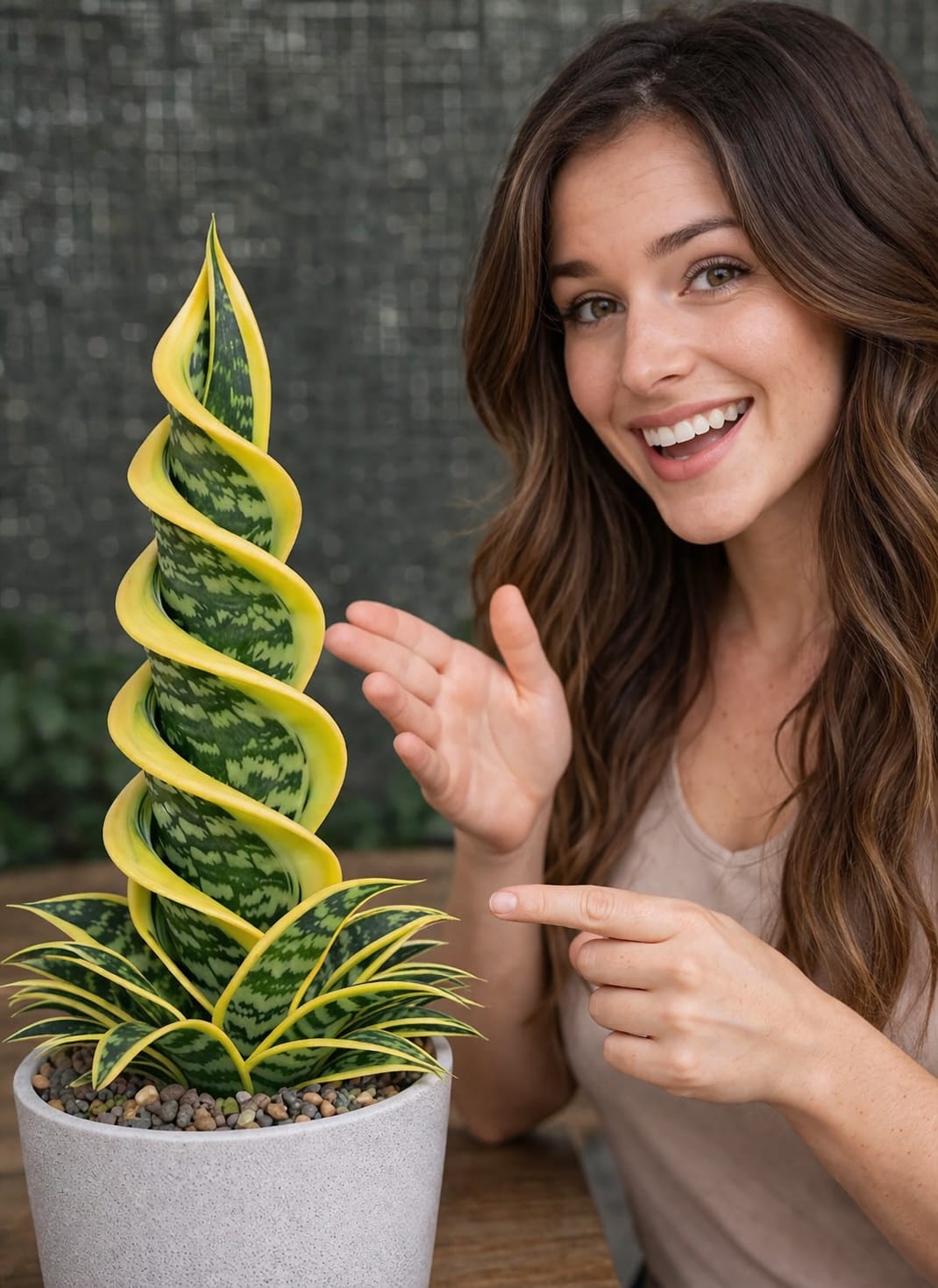
That stunning spiral snake plant isn’t a rare species – it’s carefully trained. Learn the simple technique to shape your Sansevieria into a beautiful spiral, plus care tips to keep it healthy.
Let’s be honest: you’ve seen the photos. A perfectly twisted snake plant, its leaves curling into a graceful, natural‑looking spiral. It looks almost magical – like the plant decided to grow that way all on its own. And the captions often make it seem like a rare, exotic variety that only expert growers can find.
👉 But here’s the truth: snake plants don’t naturally grow in spirals.
That stunning look is actually created using a simple, manual technique that most people don’t know about. And once you understand how it’s done, you might be surprised at how achievable it is – even at home.
In this guide, I’ll reveal the secret behind spiral snake plants, walk you through the step‑by‑step process to shape your own, and explain what you need to know about keeping your plant healthy while training it. No magic, no rare genetics – just a little patience and the right technique.
Let’s untwist the mystery.
The Truth Behind Spiral Snake Plants – It’s Not a Natural Variety
Snake plants (Sansevieria, now reclassified as Dracaena) are known for their stiff, upright, sword‑shaped leaves. In nature, they grow straight and tall – sometimes reaching several feet. They don’t curl, twist, or spiral on their own.
So how do those perfect spiral plants appear on social media and in nurseries?
The secret is manual training. Growers carefully guide the young, flexible leaves around a cylindrical form and let the plant grow into that shape over time. It’s not a different species or a genetic mutation. It’s simply a technique – and anyone can learn it.
Some sellers might call these plants “spiral Sansevieria” or “twisted snake plant” and charge a premium. But now you know: you can create the same effect at home with a regular snake plant and a little patience.
Why Do People Love the Spiral Look? (And Why It’s So Popular)
The spiral snake plant has become a social media sensation for several reasons:
Reason Why It Appeals
Unique and decorative It stands out from ordinary houseplants
Looks like a designer plant The spiral feels intentional and artistic
Great for modern interiors Complements minimalist, boho, and contemporary styles
Conversation starter Guests always ask, “How did you do that?”
But the popularity has also led to misinformation. Many people believe the spiral is natural or that it’s a special hybrid. Understanding the truth helps you appreciate the skill involved – and avoid overpaying for a “rare” plant that’s actually just a trained common variety.
The Secret: Controlled Shaping – How It’s Done
The spiral effect is created by manipulating the plant while it’s young and flexible. Here’s the basic principle:
- Young leaves are pliable. Snake plant pups (new growth) have softer, more flexible leaves than mature plants. This is the ideal stage to begin training.
- A cylindrical guide is used. A bottle, tube, or even a rolled‑up piece of cardboard acts as a form around which the leaves are wrapped.
- Gentle tension is applied. Soft ties or clips hold the leaves in place without cutting into the tissue.
- Time and patience. The plant is left in this position for weeks or months until the leaves “set” into the new shape.
This is similar to how bonsai growers shape trees or how topiary is created. The plant doesn’t “want” to grow in a spiral – it’s being guided. But with proper care, the plant remains healthy and the shape becomes permanent.
Step‑by‑Step: How to Make Your Own Spiral Snake Plant at Home
Ready to try it yourself? Follow these steps carefully.
🪴 Step 1: Choose the Right Plant
· Select a young snake plant – Look for a healthy specimen with relatively new, smaller leaves. Pups (offsets) are ideal because their leaves are most flexible.
· Avoid mature plants – Older leaves are stiff and brittle; they will snap if you try to bend them.
· Best variety: Sansevieria trifasciata ‘Laurentii’ or ‘Hahnii’ (bird’s nest) are common and work well.
🧴 Step 2: Gather Your Materials
Item Purpose
Cylindrical form (bottle, PVC pipe, or cardboard tube) Central guide for the spiral
Soft plant ties or velcro tape Securing leaves without damage
Scissors Cutting ties if needed
Pot with well‑draining soil Healthy root environment
🌀 Step 3: Prepare the Central Guide
Place a cylindrical object in the center of the pot, right next to the main stem of the plant. The guide should be tall enough to support the leaves – about 6–12 inches, depending on your plant size. You can use:
· A clean glass bottle
· A PVC pipe wrapped in soft cloth
· A sturdy cardboard tube (from paper towels or wrapping paper)
👐 Step 4: Gently Wrap the Leaves
Working slowly and carefully:
- Take one leaf at a time.
- Gently curve it around the central guide. Do not force it – if you feel resistance or see the leaf starting to crack, stop.
- Use a soft tie to loosely secure the leaf against the guide. The tie should be snug enough to hold the shape but loose enough to allow the leaf to expand as it grows.
- Repeat with additional leaves, layering them in the direction of the spiral (clockwise or counter‑clockwise).
Important: Do not wrap the leaves too tightly. The plant needs room to grow. Tight bindings can cut into the leaf tissue, causing damage or death of the leaf.
⏳ Step 5: Wait and Monitor
Place the plant in a location with bright, indirect light. Snake plants tolerate low light, but they grow faster and bend more easily with adequate light.
· Water normally – only when the soil is completely dry.
· Check ties weekly – as the plant grows, the ties may become tight. Loosen or replace them as needed.
· Rotate the plant – to encourage even growth on all sides.
The shaping process takes 4–8 weeks for noticeable results, and 3–6 months for the spiral to become permanent. Be patient – this is not an overnight transformation.
🎉 Step 6: Remove the Guide (Optional)
Once the leaves hold their shape without the guide, you can remove the central form. Gently untie the leaves and see if they maintain the spiral. If they spring back, re‑wrap and wait longer. Eventually, the shape will “set,” and you can display your spiral snake plant without any supports.
Important Things to Know Before You Start
❌ It’s Not Natural Growth
The spiral is manually trained, not a genetic trait. If you stop maintaining the shape, the plant may slowly straighten over time – especially if it’s still young. Older, established spirals tend to hold their shape better.
❌ It Can Stress the Plant
Bending leaves – even gently – puts stress on the plant. Signs of stress include:
· Yellowing or browning leaf tips
· Cracked or snapped leaves
· Slowed growth
If you notice these signs, give the plant a break. Remove the ties and let it rest for a few weeks before trying again.
❌ It Requires Patience
You won’t have a perfect spiral in a week. This is a long‑term project. Enjoy the process of watching your plant transform.
🌿 Tips for Best Results
Tip Why It Helps
Work slowly Prevents leaf breakage
Keep the plant healthy Healthy leaves are more flexible
Use bright, indirect light Promotes steady growth
Avoid overwatering Root rot kills snake plants quickly
Fertilize lightly Use a balanced fertilizer once in spring/summer
Can You Buy Spiral Snake Plants? (And Should You?)
Yes, many nurseries and online shops sell pre‑shaped spiral snake plants. They are often labeled as “twisted snake plant” or “spiral Sansevieria.” Prices can range from $20 to $50 or more – significantly higher than a regular snake plant.
Should you buy one? That depends on your patience and budget. If you want an instant statement piece and don’t mind paying a premium, buying a pre‑trained plant is fine. But now that you know the secret, you can save money by training your own.
What to look for when buying:
· Even, consistent spiral (not lopsided)
· No signs of tie damage (scars, indentations)
· Healthy green leaves (no yellowing or brown spots)
· No pests (check undersides of leaves)
Common Mistakes to Avoid
Mistake Why It’s Harmful Correct Approach
Using tight ties Cuts into leaves, causes scars Use loose, soft ties; check weekly
Bending mature leaves They snap easily Only train young, flexible leaves
Training in low light Slows growth, less flexibility Provide bright indirect light
Overwatering during training Stressed plants are more prone to rot Water only when soil is dry
Expecting instant results Leads to frustration Be patient – it takes months
How to Care for Your Spiral Snake Plant (After Shaping)
Once your snake plant has achieved the spiral shape, it still needs regular care to stay healthy and hold its form.
💡 Light
· Best: Bright, indirect sunlight (east or west window).
· Tolerates: Low light, but growth will slow and the spiral may loosen over time.
· Avoid: Direct afternoon sun – it scorches leaves.
💧 Water
· Frequency: Only when the soil is completely dry. In bright light, every 2–3 weeks; in low light, every 4–6 weeks.
· Method: Water thoroughly until it drains out the bottom. Empty the saucer.
· Winter: Reduce watering further.
🌱 Soil and Pot
· Soil: Well‑draining cactus/succulent mix. Or use 2 parts potting soil + 1 part perlite.
· Pot: Must have drainage holes. Terracotta pots help wick away excess moisture.
🌡 Temperature and Humidity
· Ideal: 65–85°F (18–29°C).
· Avoid: Temperatures below 50°F (10°C) – cold damage causes leaf softening.
· Humidity: Average indoor humidity is fine; they are not fussy.
🌿 Fertilizer
· Frequency: Once every 4–6 weeks during spring and summer.
· Type: Balanced liquid houseplant fertilizer (like 10-10-10) at half strength.
· Avoid: Fertilizing in fall and winter.
✂️ Maintenance
· Dust leaves: Wipe with a damp cloth monthly to keep them clean and able to photosynthesize.
· Check ties (if still using): Loosen as needed.
· Remove damaged leaves: Cut at the base with clean scissors.
Frequently Asked Questions (FAQs)
Q: Is the spiral snake plant a real species?
No. There is no naturally spiral snake plant species. The spiral is a trained shape. The plant itself is a common Sansevieria (snake plant).
Q: Will my spiral snake plant straighten out over time?
It can – especially if it’s young or if it reverts to faster, upright growth. Mature spirals that have been shaped for many months tend to hold their form. If you notice straightening, you can re‑wrap the leaves with a guide for a few weeks.
Q: Can I make a spiral with a mature snake plant?
It’s very difficult. Mature leaves are stiff and brittle; they are likely to snap. Start with a young plant or a new pup for best results.
Q: How long does it take to see a spiral?
You’ll notice gentle curves within 4–8 weeks. A full, tight spiral can take 3–6 months or longer. The key is patience.
Q: Can I use this technique on other houseplants?
Some plants with flexible leaves (like certain succulents or spider plants) can be trained, but snake plants are among the most common. Research each plant’s flexibility before trying.
Q: My leaves are cracking – what should I do?
Stop training immediately. Remove the ties and let the plant recover for several weeks. Cracks will not heal, but the leaf may still survive. In the future, bend more slowly and only train very young leaves.
Q: Can I propagate a spiral snake plant and get more spirals?
Propagation (by leaf cuttings or division) produces new plants that are not pre‑shaped. You would need to train each new plant separately. However, if you divide a spiral plant, the offset may already have some curvature if it grew while the mother was trained.
Final Thoughts – You Can Create Your Own Spiral Snake Plant
That eye‑catching spiral snake plant isn’t a rare species or a magical mutation. It’s simply the result of careful, patient training. And now you know the secret.
With a young snake plant, a cylindrical guide, soft ties, and a few months of gentle care, you can transform an ordinary houseplant into a stunning, one‑of‑a‑kind statement piece. It’s a rewarding project for any plant lover – and a great way to impress your friends.
Just remember: go slowly, keep the plant healthy, and don’t force the leaves. The best spirals come from patience, not pressure.
Now it’s your turn! Have you ever tried shaping a snake plant? Would you attempt a spiral? Drop a comment below – I’d love to hear your experience.
And if you found this guide helpful, share it with a fellow plant enthusiast who’s been fooled by “rare spiral snake plant” listings. Pin it for later, and subscribe to our newsletter for more plant care secrets and DIY projects.
Stay twisted, stay patient, and keep growing. 🌿✨
More Recipes You Might Like
-
How the Spiral Snake Plant Look Is Really Made (Most People Get This Wrong)
That stunning spiral snake plant isn’t a rare species – it’s carefully trained. Learn the simple technique to shape your Sansevieria into a beautiful spiral, plus care tips to keep it healthy. Let’s be honest: you’ve seen the photos. A perfectly twisted snake plant, its leaves curling into a graceful, natural‑looking spiral. It looks almost…
-

Slow Cooker 2 Ingredient Creamy Potatoes – The Easiest, Dreamiest Side Dish You’ll Ever Make
Yes – just potatoes and heavy cream. This slow cooker 2‑ingredient creamy potatoes recipe is the ultimate no‑fuss side dish. Set it and forget it for the creamiest, most delicious potatoes ever. Let’s be honest: side dishes are often an afterthought. You spend time on the main course – maybe a roast chicken, a pot…
-
Florist’s Secret Plan How to Make a Christmas Cactus Bloom All Year Round
Want your Christmas cactus to bloom again and again? Learn the florist’s secrets – light control, temperature triggers, proper watering, and feeding. Get multiple blooms per year with this complete guide. Let’s be honest: the Christmas cactus (Schlumbergera) is one of the most stunning indoor plants you can own. When it blooms – covered in…