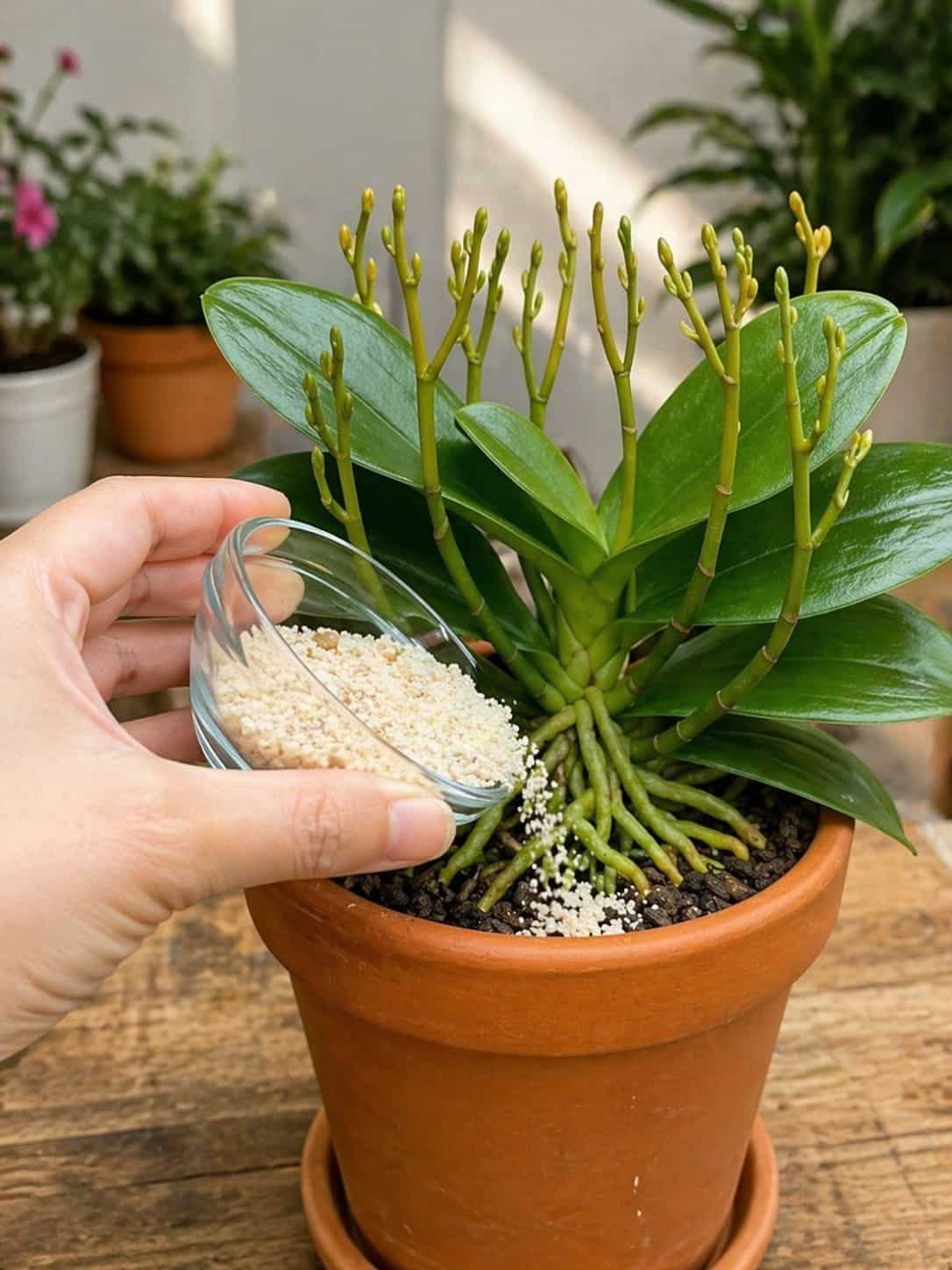
What Not to Do (Common Mistakes)
Avoid these common errors when using rice water for orchids.
Sprinkling Dry Rice into the Pot
Never put dry rice grains into an orchid pot. They will absorb moisture, swell, rot, and attract pests.
Using Spoiled or Fermented Rice Water
Fermented rice water has a sour smell and can harm orchid roots. Only use fresh rice water made within 24 hours. If it smells bad, discard it.
Leaving Standing Water Around Roots
Rice water, like any water, must drain completely. Orchids cannot sit in water. Empty the saucer after watering.
Pouring Anything into the Crown
The crown (where leaves meet) must stay dry. Water or rice water trapped there causes crown rot, which is often fatal.
Using Rice Water as the Only Nutrient Source Forever
Rice water is very low in nutrients. Over time, your orchid will become deficient. Use a proper orchid fertilizer for complete nutrition.
Assuming It Will Fix Rot or Poor Light
If your orchid has root rot, mushy leaves, or is in a dark corner, rice water will not solve the problem. Fix the underlying issues first.
Rice Water vs. Other Homemade Orchid Tonics
Tonic Potential Benefit Risk Best For
Rice water (diluted) Trace minerals, mild tonic Low if used correctly Healthy orchids as a supplement
Banana peel water Potassium Can ferment, attract pests Occasional use, strain well
Cinnamon water Antifungal Can dry roots Only on cut wounds
Milk Calcium, proteins Sours, attracts pests Not recommended for orchids
Epsom salt Magnesium Salt buildup Only if deficiency is confirmed
Among these, diluted rice water is one of the safest when used correctly. It is mild, unlikely to burn roots, and easy to prepare.
A Simple Orchid Care Routine (With or Without Rice Water)
Here is a weekly and seasonal plan that keeps orchids healthy without guesswork.
Weekly
· Check bark moisture. Water if nearly dry.
· Inspect roots through clear pot.
· Wipe leaves with a damp cloth.
Monthly
· Flush the pot with plain water to remove mineral buildup.
· Inspect for pests (mealybugs, scale, spider mites).
Spring & Summer (Active Growth)
· Bright indirect light (10–12 hours).
· Water every 7–10 days (when bark is nearly dry).
· Feed with quarter‑strength orchid fertilizer every other week.
· Optional: Use diluted rice water once every 2–4 weeks instead of one fertilizer feeding.
Fall & Winter (Rest Period)
· Still bright light, but days are shorter — consider a grow light.
· Water less often (every 10–14 days).
· Stop fertilizing.
· Stop rice water.
Annually
· Repot with fresh orchid bark.
· Trim dead roots.
· Choose a pot only 1–2 inches larger.
Frequently Asked Questions (Rice Water for Orchids)
Can I use rice water on all types of orchids?
Yes, with caution. Phalaenopsis, Dendrobiums, Cattleyas, and Oncidiums can tolerate diluted rice water. Avoid using it on orchids in sphagnum moss, which holds more moisture and may develop mold.
How do I know if I am using too much rice water?
Signs of overuse: white mold on the bark surface, a sour smell from the pot, fungus gnats, or leaves turning yellow. If you see these, stop rice water and flush the pot with plain water.
Can I use brown rice instead of white?
Yes. Brown rice water contains slightly more nutrients because the bran layer remains. Dilute it the same way. It may be cloudier — that is fine.
Will rice water make my orchid bloom?
Not directly. Blooming requires proper light, temperature changes (for some orchids), and a healthy root system. Rice water may support overall health, which can lead to better blooming over time, but it is not a bloom trigger.
Can I store rice water in the refrigerator?
You can store it for up to 24 hours. After that, it begins to ferment and should be discarded. Fresh is always best.
Is rice water safe for orchid seedlings?
Very diluted rice water (1 part rice water to 2 parts fresh water) can be used sparingly on established seedlings. For very young seedlings in high‑humidity environments, plain water is safer to prevent mold.
What about using pasta water?
No. Pasta water often contains salt, which is harmful to orchids. Only use unsalted rice water.
Can I combine rice water with other homemade tonics?
It is best to use one supplement at a time. Combining banana water, rice water, and eggshell water can create imbalances and increase the risk of rot. Stick to one mild tonic at a time.
The Bottom Line: Rice Water as a Small Helper, Not a Miracle
Rice can be part of a simple orchid care routine — but only when used the right way. The safest method is a light, diluted rice‑water rinse used occasionally as a mild homemade boost. It may help support healthy roots and gentle growth, but it works best alongside proper orchid care, not instead of it.
If you want healthy orchids, remember this: it is not really about the rice. It is about what the roots experience every day. Good light, airy bark, careful watering, and gentle feeding are what truly grow a strong orchid. Rice water can be a small bonus — but healthy roots are always the real secret.
So go ahead. Rinse that rice. Save the cloudy water. Dilute it well. Use it once a month on a healthy orchid in fresh bark. And watch for those little green root tips that tell you your orchid is thriving.
No magic. Just smart, steady care.
Have you tried using rice water on your orchids? Share your experience in the comments below. And if you found this guide helpful, save it for later or send it to a friend who wants a simple, natural way to support their orchids.
This article is for informational purposes only. Growing conditions vary. Always observe your orchid and adjust care as needed. When in doubt, use plain water and focus on light, bark, and watering.