Watering After Repotting
Water carefully after repotting. If the orchid still has several healthy roots, you can water lightly and let the pot drain completely. If many roots were removed, wait a short time before heavy watering and keep the environment humid but airy.
When watering, use room-temperature water. Let the water run through the bark and drain fully. Do not leave the orchid sitting in a saucer of water.
Keep the crown dry. Water trapped in the crown can cause crown rot. If water gets between the leaves, blot it with a tissue.
After repotting, do not water on a strict calendar. Watch the roots and bark. Water when the bark is nearly dry and roots are silver-gray.
Should You Fertilize a Yellowing Orchid?
Do not fertilize a severely stressed orchid immediately. If roots are damaged, fertilizer can burn them. A plant with poor roots cannot use nutrients well.
Wait until the orchid shows signs of new root growth before feeding. When new roots appear, use a diluted orchid fertilizer at a weak strength. Many growers use one-quarter to one-half strength during active growth.
Baking soda is not fertilizer. It does not provide nutrition. If your orchid needs food later, use a proper orchid fertilizer, not kitchen powder.
The first goal is root recovery. Feeding comes after the plant is stable.
How to Handle Yellow Leaves
Yellow leaves will not turn green again. Once a leaf is fully yellow, it is usually on its way out. You can let it dry and fall naturally, or remove it if it is completely dead and loose.
Do not pull hard on a yellow leaf that is still attached. You may damage the crown. If you need to remove it, use clean scissors.
If only one lower leaf is yellowing and the rest of the plant is healthy, this may be natural aging. If multiple leaves are yellowing quickly, inspect the roots and growing conditions.
The goal is not to reverse old yellow leaves. The goal is to prevent new damage and encourage future healthy growth.
How to Tell If the Orchid Is Recovering
A recovering orchid may not look beautiful immediately. Old yellow leaves may continue to decline. Wrinkled leaves may stay wrinkled for a while. This does not always mean the plant is failing.
The best sign of recovery is new root growth. Look for fresh green root tips emerging from the base. New roots mean the orchid is rebuilding its ability to absorb water.
Another good sign is a firm crown. If the crown stays firm and green, the plant has a chance. A new leaf emerging from the center is also a strong recovery sign.
Flowers should not be expected right away. A yellowing orchid needs roots and leaves before it can bloom again.
Light for a Recovering Orchid
Place the recovering orchid in bright indirect light. Too little light slows recovery. Too much direct sun can burn stressed leaves and dry the plant faster than damaged roots can keep up.
A bright window with filtered light is often ideal. East-facing windows can work well. South or west windows may need a sheer curtain.
Leaves should be medium green when the plant is healthy. Very dark green leaves may mean too little light. Yellowish or scorched patches may mean too much direct sun.
Light is more important than any powder treatment. Without enough light, the orchid cannot produce energy for new roots.
Humidity and Airflow
A stressed orchid benefits from moderate humidity, especially if it has lost many roots. Humidity reduces water loss from the leaves while new roots develop. However, humidity must be balanced with airflow.
A sealed wet environment can cause mold and rot. If you use a humidity box or bag for a weak orchid, open it daily for fresh air. Keep the orchid out of direct sun, because closed containers can heat quickly.
For orchids with some healthy roots, normal room humidity may be enough if watering and light are correct. Avoid misting heavily into the crown.
Good airflow helps bark dry properly and reduces fungal problems.
What If There Is Mold on the Bark?
Mold on bark often means the medium is staying too wet or has too much decaying organic matter. A small amount of surface mold is not always fatal, but it is a sign to adjust care.
Instead of covering mold with baking soda, remove the affected bark. Improve airflow. Let the pot dry more between waterings. If the bark smells sour or is breaking down, repot completely.
Sprinkling powder on mold may hide the symptom without fixing the cause. The cause is usually moisture imbalance.
Fresh, chunky bark and correct watering are the best long-term solutions.
What If the Pot Smells Bad?
A bad smell from an orchid pot usually means decay. The bark may be decomposing, roots may be rotting, or water may be trapped. Baking soda may reduce odor temporarily, but it does not fix the reason.
Remove the orchid from the pot and inspect the roots. Trim rotten roots and discard old medium. Wash the pot before reusing it or choose a new clean pot. Repot into fresh bark.
After repotting, water carefully and improve airflow. Do not leave the plant sitting in water.
If odor returns, the pot may still be staying too wet or the drainage may be poor.
Can Baking Soda Be Used on Orchid Leaves?
Baking soda sprays are sometimes used in gardening, but orchid leaves can be sensitive. If you have a leaf problem, identify it first. Brown spots, black patches, yellowing, sunburn, cold damage, and bacterial rot all need different responses.
A baking soda spray that is too strong can leave residue or damage leaf tissue. It should not be sprayed on flowers or into the crown. If used at all, it must be very diluted and tested on a small area first.
For routine cleaning, plain water and a soft cloth are safer. Dust removal helps leaves absorb light without adding residue.
If disease is spreading quickly, it is better to remove affected tissue with sterile tools and improve airflow rather than rely on homemade sprays.
Can Baking Soda Kill Fungus Gnats?
Baking soda is not a reliable fungus gnat solution. Fungus gnats usually appear when potting medium stays moist and contains decaying organic material. Orchids in old bark or wet moss can attract them.
To reduce fungus gnats, let the medium dry more appropriately, remove decaying material, and use sticky traps to monitor adults. If the bark is old and wet, repotting may be needed.
Do not sprinkle baking soda heavily to control gnats. It can stress roots without solving the life cycle.
The best gnat control is moisture management and clean medium.
A Safe Recovery Plan for the Orchid in the Image
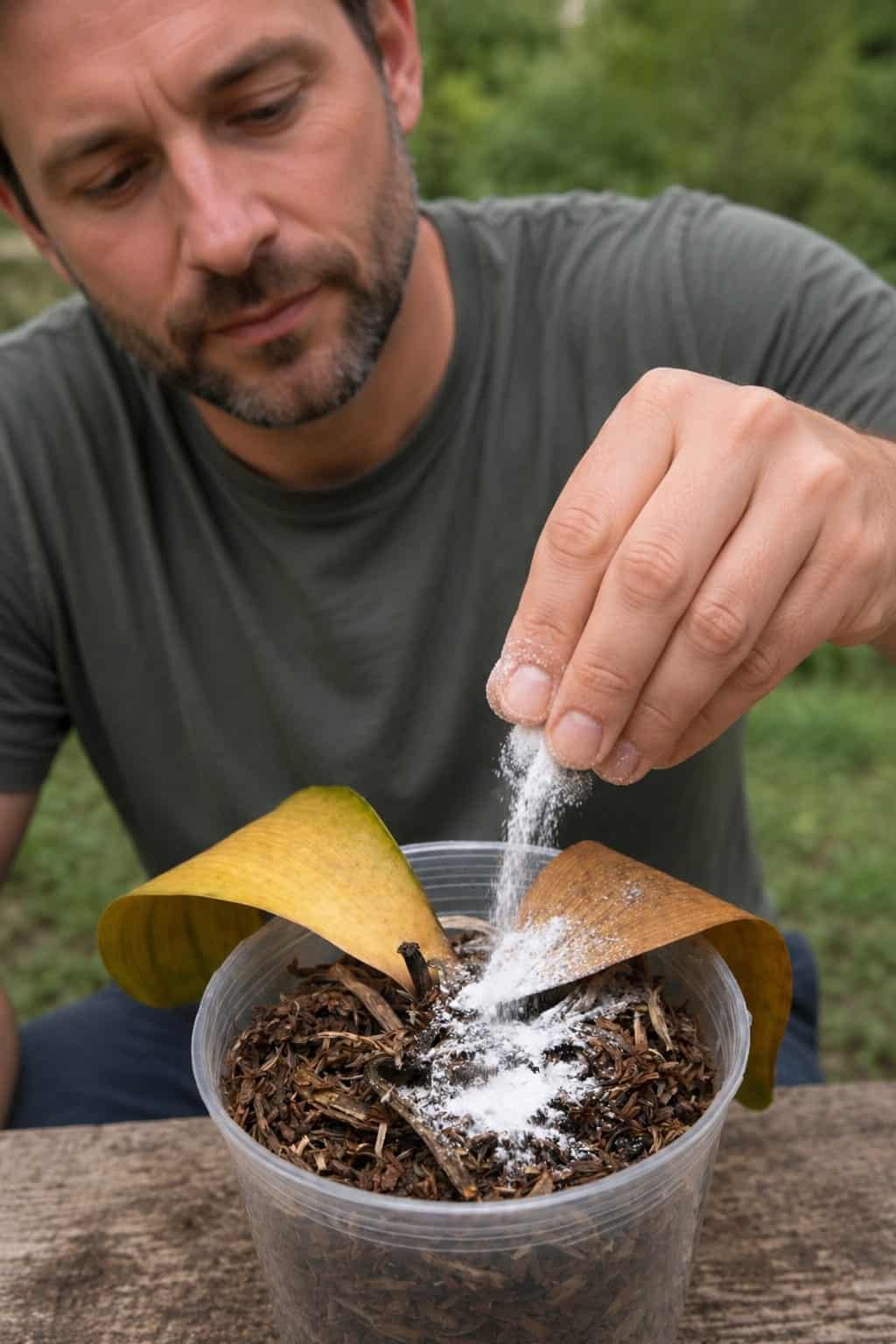
For an orchid like the one shown, start by stopping the powder treatment. Do not add more baking soda. Remove the plant from the pot and inspect the roots.
Discard old bark if it is soft, dark, compacted, or smelly. Trim roots that are mushy, hollow, or dead. Keep firm roots. Rinse gently with room-temperature water and let the plant drain.
Repot into fresh orchid bark in a pot with drainage. Keep the crown above the bark. Place the orchid in bright indirect light. Water only when the bark is nearly dry.
Do not fertilize until new roots appear. Do not expect the yellow leaves to turn green. Watch for new roots and a firm crown.
What to Do If You Already Added Too Much Baking Soda
If you already sprinkled a lot of baking soda onto the orchid, remove as much powder as possible from the surface. Use a spoon or gently lift away the top layer of bark.
If the powder has already dissolved into the pot, flush the medium with plain water and let it drain completely. However, if the bark is old or the plant is already stressed, repotting into fresh bark may be safer than trying to wash the old medium.
Check the roots during repotting. If any roots look burned, brown, mushy, or hollow, trim only the dead parts. Keep healthy roots.
After repotting, avoid all treatments for a while. Let the orchid stabilize with simple care.
How Long Recovery Takes
Orchid recovery is slow. After repotting, the plant may look unchanged for weeks. Yellow leaves may continue to drop. This does not always mean failure.
New roots may appear after several weeks or a few months, depending on the season, temperature, light, and plant condition. Once new roots grow, the orchid has a stronger chance of recovery.
A new leaf may come later. Flowers will come much later, only after the plant has enough roots and energy.
Do not keep changing treatments every few days. Orchids need stability. Too many experiments can delay recovery.
How to Prevent Yellowing in the Future
Use fresh orchid bark and replace it when it breaks down. Water when the roots turn silver-gray and the bark is nearly dry. Keep the pot drained. Avoid leaving the orchid in standing water.
Keep the crown dry. Water trapped between leaves can cause rot. Use bright indirect light and avoid cold drafts.
Feed lightly during active growth with a diluted orchid fertilizer. Flush the pot occasionally with plain water to reduce mineral buildup. Do not overuse kitchen ingredients.
Inspect roots regularly if the orchid is in a clear pot. Healthy roots are the best protection against yellowing leaves.
Common Mistakes to Avoid
- Using baking soda as fertilizer – it is not plant food.
- Sprinkling a heavy layer of powder over orchid bark – this can stress sensitive roots.
- Ignoring root rot – yellow leaves often come from damaged roots, not from lack of powder.
- Repotting into regular soil – Phalaenopsis orchids need airy bark or orchid mix.
- Overwatering after treatment – a stressed orchid must not sit in wet medium.
- Expecting yellow leaves to turn green – recovery is measured by new roots and new leaves.
- Using homemade treatments before diagnosis – always check roots, crown, and medium first.
Frequently Asked Questions
Can baking soda save a dying orchid?
No. Baking soda cannot save a dying orchid by itself. A stressed orchid needs root inspection, fresh bark, proper watering, good drainage, and bright indirect light.
Is baking soda safe for orchid roots?
Heavy baking soda is not recommended around orchid roots. It can create alkaline salt buildup and stress sensitive roots. Avoid sprinkling it directly into the pot.
What should I do if I already sprinkled baking soda on my orchid?
Remove as much powder as possible. Flush with plain water if needed, or repot into fresh bark if the orchid is already stressed or the medium is old.
Why are my orchid leaves turning yellow?
Yellow leaves can be caused by natural aging, overwatering, root rot, underwatering, old bark, low light, sunburn, cold stress, or fertilizer burn. Check the roots and growing medium first.
Should I cut off yellow orchid leaves?
If the leaf is fully yellow and loose, you can remove it gently. Do not pull hard on attached leaves. If it is still partly green, let the plant use it until it naturally declines.
Can baking soda kill fungus in orchid bark?
It is not the best solution. Mold or fungus usually indicates excess moisture or old medium. Remove affected bark, improve airflow, and repot if needed.
What is better than baking soda for orchid recovery?
Fresh orchid bark, clean trimming, proper watering, drainage, bright indirect light, and patience are much more important. For cut wounds, some growers use a tiny amount of cinnamon, but even that should be used carefully.
When will my orchid bloom again?
A stressed orchid should not be forced to bloom. It must first grow healthy roots and leaves. Blooming may take several months or longer after recovery.
🌿 Remember: Baking soda is a cleaning agent, not a miracle cure for yellowing orchids. Healthy roots, fresh bark, correct watering, and bright indirect light are the real keys to recovery. Use any powder only after diagnosis, and never as a substitute for proper orchid care.