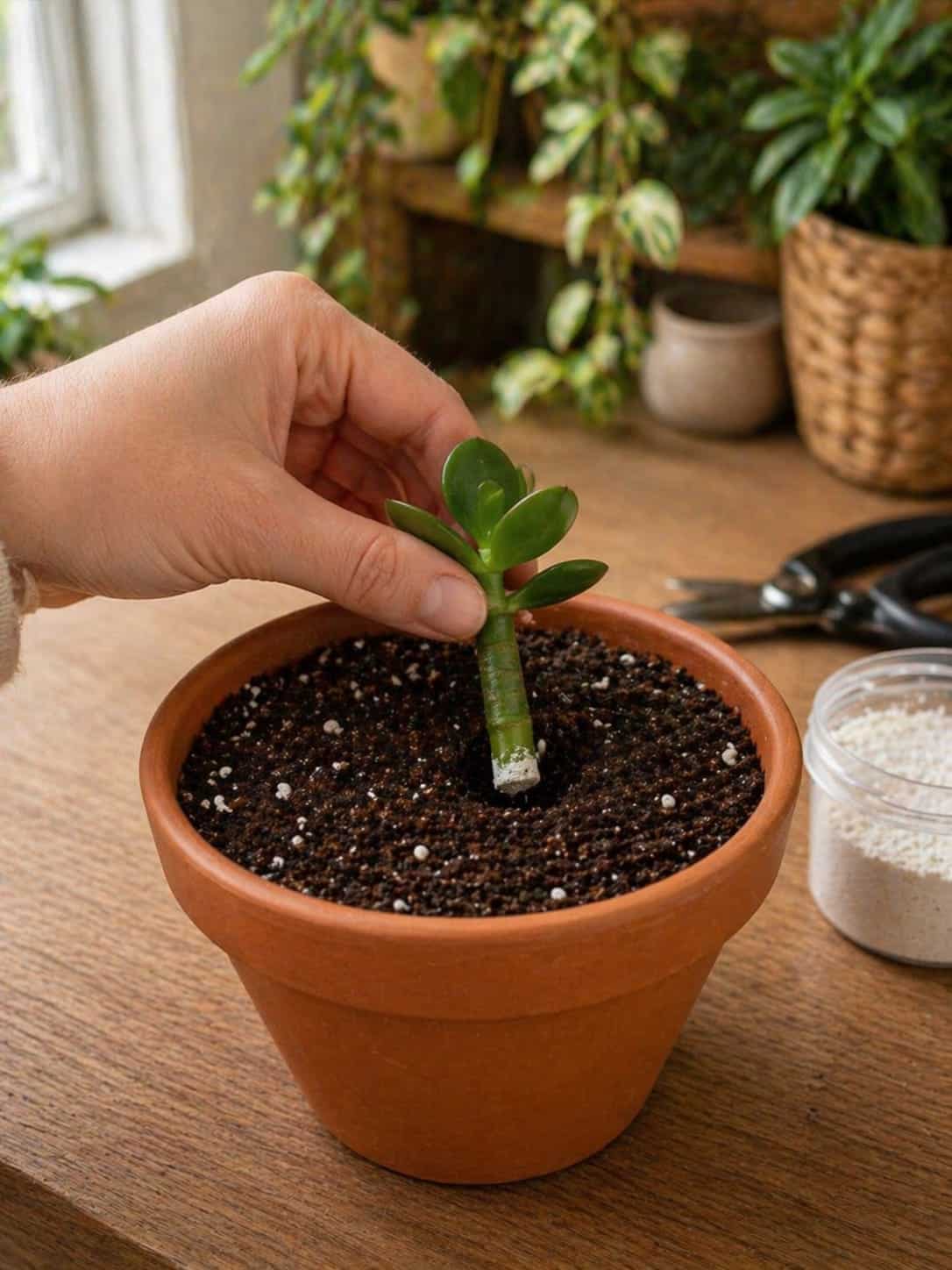
When Will You See Results? (A Realistic Timeline)
Jade cuttings are not instant. Here is what to expect.
· Week 1–2: The cutting will look unchanged. That is normal. Do not water more.
· Week 2–4: Roots usually start forming. You may see tiny white root tips at the base or through drainage holes.
· Week 4–6: New growth may appear – small leaves at the top of the cutting.
· Week 8–12: The cutting is now a small plant with a decent root system. You can begin normal jade plant care.
With patience, your cutting becomes a full, beautiful jade plant. Some varieties root faster than others, but all will root with the right care.
Propagating from a Single Leaf (Slower but Works)
If you do not have a stem cutting, a single leaf works too. Here is how.
- Twist a healthy leaf from the stem. Ensure the entire leaf comes off, including the base.
- Let it callus for 2–3 days.
- Lay the leaf on top of cactus soil – Do not bury it. The cut end should touch the soil.
- Mist lightly every few days. Do not soak.
- Wait. Roots and a tiny rosette will form at the base of the leaf. This takes 4–8 weeks.
- Once the baby plant has several leaves, you can gently move it to its own pot.
Leaf propagation is slower, but it produces many new plants from a single leaf (sometimes multiple babies).
How to Care for Your New Jade Plant After Rooting
Once your cutting has established roots (4–6 weeks), you can transition to regular jade plant care.
· Water when the soil is completely dry – Typically every 2–3 weeks in spring/summer, less in winter.
· Provide bright light – A south or west window is ideal. Rotate the pot for even growth.
· Do not fertilize for the first 6 months – The soil provides enough nutrients. After that, use a half‑strength succulent fertilizer once in spring.
· Keep in a snug pot – Jade plants like to be slightly root‑bound. Do not repot too soon.
After a year, your propagated jade plant will look like a miniature version of the mother plant. After two years, it will be a substantial, beautiful succulent.
Frequently Asked Questions (Jade Plant Propagation)
Can I propagate a jade plant in water?
Yes, but soil propagation is easier and produces stronger roots. Water roots are more fragile. If you try water, let the cutting callus first, then place it in a glass with the bottom inch submerged. Change water weekly. After roots appear (2–4 weeks), move to soil.
How do I know if my jade cutting is rotting?
Signs of rot: black or mushy stem, foul smell, leaves turning yellow and falling off. If you see this, cut above the rot, re‑callus, and try again with fresh soil.
Can I use honey instead of rooting hormone?
Honey has mild antifungal properties, but it is sticky and can attract pests. It is not recommended. Stick to callusing and optional cinnamon or rooting hormone.
Why are my jade leaves shriveling after planting?
New cuttings lose some moisture while they focus on root growth. Slight shriveling is normal. If severe, increase humidity slightly by placing a clear plastic bag over the pot (ventilated). Do not overwater.
How long does it take for a jade leaf to grow a new plant?
4–8 weeks for roots, then another 4–8 weeks for a visible baby plant. It takes several months to get a small rosette. Be patient.
Can I propagate a jade plant in winter?
Yes, but growth will be slower. Keep the cutting in a warm spot (65°F+) and provide bright light. A grow light helps.
Should I cover the cutting with a plastic bag to increase humidity?
No. Jade plants are succulents and prefer dry conditions. High humidity encourages rot. Avoid covering.
How many new plants can I get from one stem cutting?
One stem cutting produces one new plant. However, you can take multiple cuttings from the same mother plant. Each leaf can also produce a new plant.
Why Propagation Is So Rewarding (And How to Share Your Plants)
Propagating jade plants is one of the most satisfying things you can do as a plant lover. With just a small cutting and a little patience, you can create new plants for your home or to share with others. Here are some ideas:
· Fill out your own pot – Plant multiple cuttings together for a fuller look.
· Give as gifts – Rooted jade cuttings in pretty pots make thoughtful, inexpensive presents.
· Swap with other plant lovers – Trade jade cuttings for other succulents.
· Create a jade collection – Propagate from different varieties (variegated jade, ‘Gollum’, ‘Hobbit’, etc.).
· Sell them – Rooted jade plants sell well at plant swaps, markets, or online.
Once you start propagating, you may find it hard to stop. That is the joy of jade plants – they want to multiply.
The Bigger Picture: Understanding How Jade Plants Grow
Jade plants are native to South Africa, where they experience dry periods followed by rain. In nature, broken branches fall to the ground, callus over, and root into the soil. The propagation method we use mimics exactly that process.
The “simple trick” is not a secret ingredient. It is understanding how the plant naturally heals and roots. By letting the cutting dry, planting in fast‑draining soil, and watering sparingly, you are simply recreating the conditions of the jade plant’s natural habitat.
That is why this method works so well. It is not about forcing growth. It is about getting out of the plant’s way and letting it do what it evolved to do.
Final Thoughts
Propagating a jade plant is one of the most rewarding and easiest propagation projects for any home gardener. With a healthy cutting, a little patience, and the simple trick of letting the cut dry before planting, you can achieve fast root growth and a brand‑new plant.
Keep the process simple. Do not overcomplicate with exotic powders or liquids. The callus is your best friend. Once the cutting is callused, plant it in cactus soil, water sparingly, and give it bright indirect light. Then let nature take over.
In a few weeks, you will see tiny roots. In a few months, you will have a new jade plant. And in a year, you will have a beautiful, thriving succulent that you grew with your own hands.
That is the magic of propagation. It never gets old.
Have you propagated a jade plant using this method? Share your experience in the comments below. And if you found this guide helpful, save it for later or send it to a friend who wants to grow their jade plant family.
This article is for informational purposes only. Growing conditions vary. Always observe your cutting and adjust care as needed. When in doubt, less water is better than more.