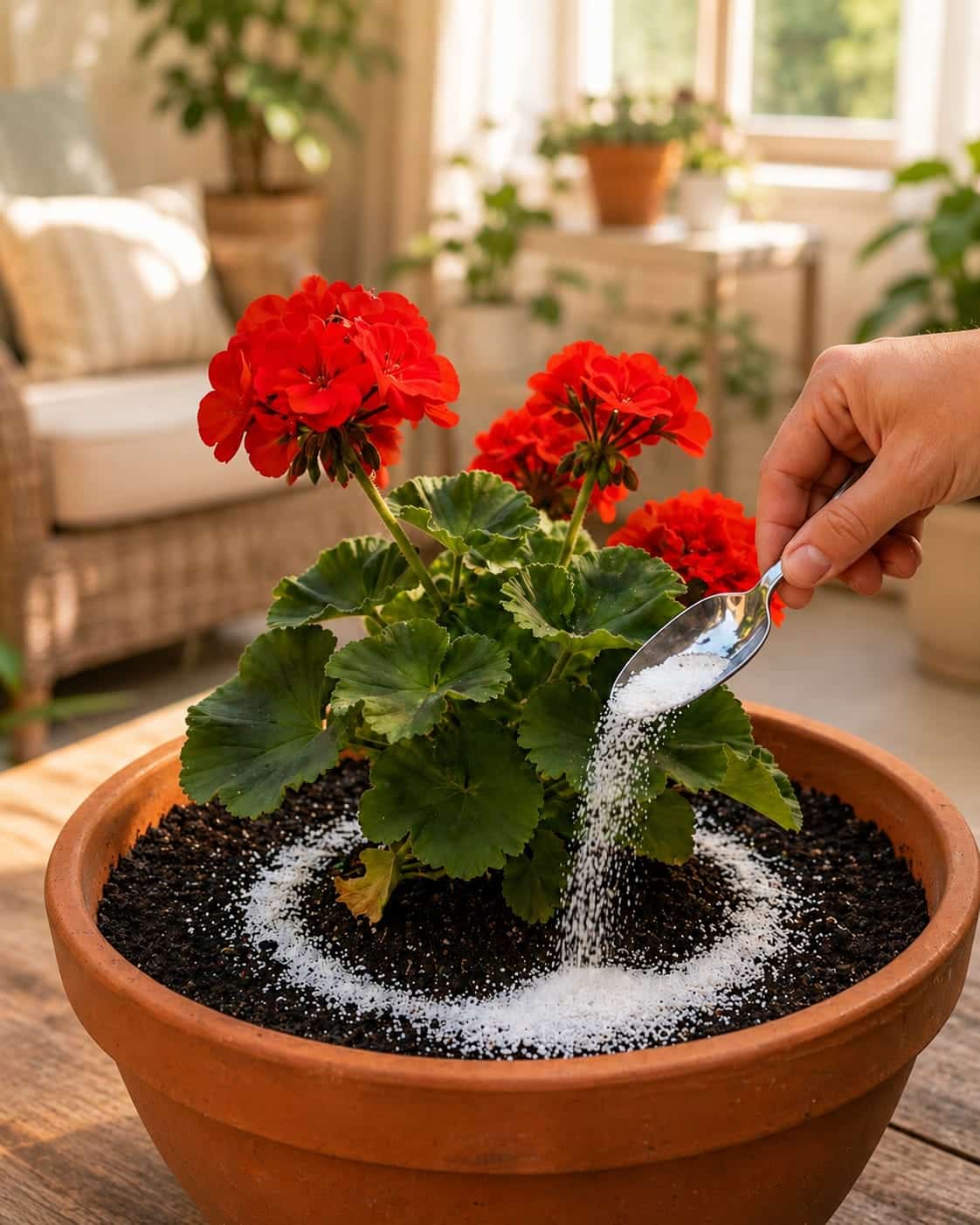
How Often Should You Use Epsom Salt?
For geraniums, Epsom salt should be occasional. Once every four to six weeks during active growth is the maximum gentle routine for most potted plants. If your geranium is already healthy and blooming well, you may not need it at all.
Do not use it weekly. Do not sprinkle it every time you water. Do not combine it with multiple other homemade treatments at the same time.
Too many supplements can make the soil unbalanced. Geraniums do best with a simple routine: good light, good drainage, correct watering, deadheading, and balanced feeding.
If you notice brown edges, white crust on the soil, or signs of stress after using Epsom salt, stop using it and flush the pot with plain water if drainage is good.
The Real Secret to Geranium Flowers
The real secret to geranium blooms is strong light. Geraniums need several hours of bright light to flower well. Outdoors, they often bloom best with morning sun and plenty of brightness. Indoors, they need the sunniest window you can provide.
If a geranium has lush leaves but few flowers, it may not be receiving enough light. Move it gradually to a brighter spot. Do not expect a shaded geranium to bloom heavily just because you add supplements.
Another secret is deadheading. Remove faded flower clusters as soon as they begin to decline. This keeps the plant from wasting energy on seed production and encourages more flower stems.
Pruning also helps. If the plant becomes leggy, pinching back stems encourages branching. More branches can mean more places for flowers to form.
How to Deadhead Geraniums for More Blooms
Deadheading is one of the most effective ways to keep geraniums blooming. When a flower cluster fades, follow the flower stem down to where it connects to the plant. Pinch or cut the entire spent flower stem away.
Do not just remove the faded petals. The old flower stalk should come off too. This gives the plant a clearer signal to keep producing new blooms.
Use clean scissors if the stem does not snap easily. Regular deadheading keeps the plant tidy and encourages repeat flowering.
This simple habit often improves blooming more than any homemade supplement.
Best Light for Geraniums
Geraniums love bright light. Outdoors, they usually do well in a sunny location, though very hot afternoon sun may be intense in some climates. Morning sun with bright afternoon light is often excellent.
Indoors, place geraniums near a bright south, west, or east-facing window. If the plant stretches or stops blooming, it likely needs more light. Rotate the pot occasionally so growth stays even.
In low light, geraniums may become leggy and produce fewer flowers. Epsom salt cannot replace sunlight. Light is the energy source that drives flowering.
If natural light is weak, a grow light can help indoor geraniums stay compact and productive.
Watering Geraniums Correctly
Geraniums prefer a balanced watering routine. They do not like to dry out completely for long periods, but they also dislike soggy soil. Let the top inch of soil dry before watering again.
When you water, water deeply until excess drains out. Then allow the soil to dry slightly before the next watering. Avoid giving tiny sips every day. Frequent shallow watering can encourage weak roots and damp surface soil.
Outdoor geraniums in hot weather may need water more often than indoor plants. Terracotta pots dry faster than plastic or glazed pots. Large pots dry more slowly than small pots.
Always check the soil rather than following a fixed schedule.
Best Soil for Potted Geraniums
Geraniums need well-draining soil. A high-quality potting mix works well if it does not stay heavy and wet. Adding perlite can improve drainage and airflow.
If the soil stays wet for many days, roots may struggle. If the soil becomes hard and compacted, water may not move evenly through the pot. In both cases, repotting may help.
Terracotta pots are often useful for geraniums because they allow moisture to evaporate through the pot walls. This helps reduce the risk of overwatering.
Good soil makes feeding more effective. If the soil is poor, supplements will not work well.
Feeding Geraniums the Right Way
Geraniums are flowering plants, and they benefit from light feeding during active growth. A balanced flowering plant fertilizer can support blooms better than Epsom salt alone.
Use fertilizer according to the label, but avoid overfeeding. Too much fertilizer can cause salt buildup, brown leaf tips, and weak growth. A high-nitrogen fertilizer may produce lots of leaves but fewer flowers.
Epsom salt can be used occasionally as a magnesium supplement, but it should not replace balanced fertilizer. If you use both, keep the doses mild and avoid applying everything at once.
A simple approach is best: balanced fertilizer on a normal schedule, Epsom salt only rarely if needed.
Can Epsom Salt Fix Yellow Leaves?
Epsom salt can help only if yellowing is caused by magnesium deficiency. But yellow leaves have many possible causes, including overwatering, underwatering, low light, old age, root problems, pests, or nutrient imbalance.
If lower leaves yellow one at a time, it may be natural aging. If many leaves yellow at once, check the soil and roots first. If the soil is wet and the plant is yellowing, overwatering may be the issue.
If the plant is pale because it is in low light, Epsom salt will not fix it. Move the plant to brighter light.
Do not treat yellow leaves blindly. Diagnosis matters.
Can Epsom Salt Fix Brown Edges?
Epsom salt usually does not fix brown edges. Brown leaf edges can be caused by underwatering, overwatering, fertilizer burn, salt buildup, heat stress, or dry air.
If brown edges appeared after feeding, the plant may have too many minerals in the soil. Adding Epsom salt could make that worse.
If the soil has white crust, flush the pot with plain water if it drains well. If the soil is old, repot into fresh mix.
Brown tissue will not turn green again. The goal is to prevent new damage.
Using Epsom Salt After Repotting
Do not use Epsom salt immediately after repotting if the roots were disturbed. Freshly handled roots need time to settle. Plain water and stable conditions are usually enough at first.
Wait until the geranium shows signs of active growth before adding supplements. New leaves or new buds are signs that the plant is adjusting well.
If the fresh potting mix already contains fertilizer, additional Epsom salt may not be needed. Many commercial potting mixes include nutrients for the first few weeks.
Too much too soon can stress roots. Let the plant settle first.
Using Epsom Salt for Outdoor Geraniums
Outdoor potted geraniums may benefit from occasional light supplementation because nutrients wash through containers during watering and rain. However, the same rule applies: use a weak solution and do not overdo it.
For garden-bed geraniums, soil conditions matter. If the soil already contains enough magnesium, extra Epsom salt may not help. In gardens, soil testing is the best way to know what nutrients are actually needed.
Outdoor plants also face different stresses: heat, wind, pests, and rain. If blooms decline, check these factors before adding minerals.
Epsom salt is only one small tool, not a complete outdoor geranium care plan.
⚠️ Important: If you notice white crust on the soil, brown edges worsening, or the plant declining after Epsom salt, stop using it immediately. Flush the pot with plain water or repot if needed.
Warning Signs After Using Epsom Salt
If leaves develop brown edges or the plant looks more stressed after using Epsom salt, stop using it. The dose may have been too strong, or the plant may not have needed it.
If white crust appears on the soil surface, mineral buildup may be present. Remove the crusted layer and flush the pot with plain water if drainage is good.
If the plant wilts while the soil is wet, inspect the roots. Overwatering or root rot may be the real issue.
If flowering does not improve, do not keep increasing Epsom salt. Focus on light, deadheading, and balanced fertilizer instead.
What to Do If You Used Too Much Epsom Salt
If you sprinkled a heavy amount of Epsom salt onto the soil, remove as much as possible from the surface. Scoop off the top layer carefully without damaging the roots.
If the pot has drainage holes, flush the soil with plain water to help wash out excess minerals. Let the pot drain completely afterward.
If the plant continues to decline or the soil has heavy crusting, repot into fresh well-draining mix. Check the roots during repotting and trim any rotten or damaged parts.
After correcting the problem, avoid supplements for a while. Let the geranium recover with simple care.
A Simple Monthly Geranium Care Routine
- Every few days (warm weather): check soil moisture. Water when the top inch is dry.
- Every week: remove faded flower clusters and yellow leaves to encourage repeat blooming.
- Every 2–4 weeks during active growth: feed lightly with a balanced flowering plant fertilizer if needed. Use Epsom salt only occasionally.
- Every month: rotate the pot and inspect for pests (aphids, whiteflies, spider mites).
Common Mistakes to Avoid
- Using Epsom salt as a complete fertilizer – it is not plant food.
- Sprinkling too much dry salt on the soil – diluted solution is safer.
- Using Epsom salt too often – once every 4–6 weeks is enough.
- Applying it to wet soil – geraniums need oxygen around roots.
- Ignoring light – geraniums need bright light to bloom well.
- Leaving old blooms on the plant – deadheading is essential.
- Using supplements on a plant with root rot – rotten roots need fresh soil and corrected watering.
Frequently Asked Questions
Is Epsom salt good for geraniums?
Epsom salt can be useful if a geranium needs magnesium, but it should be used sparingly. It is not a complete fertilizer and should not replace balanced feeding.
How much Epsom salt should I use for geraniums?
A gentle mixture is one teaspoon of Epsom salt dissolved in one gallon of water. For smaller or stressed plants, use half that amount.
Can I sprinkle Epsom salt directly on the soil?
It is safer to dissolve it in water first. Dry crystals can create concentrated spots around roots when they dissolve.
How often should I use Epsom salt on geraniums?
Use it occasionally, about once every four to six weeks during active growth if needed. Many geraniums do not need it at all.
Will Epsom salt make geraniums bloom?
It may support plant health if magnesium is lacking, but it does not directly force blooms. Geraniums bloom best with bright light, deadheading, healthy roots, and balanced fertilizer.
Can Epsom salt fix yellow leaves?
Only if yellowing is related to magnesium deficiency. Yellow leaves can also come from overwatering, low light, old age, pests, or root problems.
Can Epsom salt damage geraniums?
Yes, if used too much or too often. Excess minerals can stress roots and cause leaf burn or buildup in the soil.
Should I use Epsom salt after repotting?
Wait until the plant settles and shows active growth. Freshly disturbed roots do not need extra mineral stress immediately after repotting.
🌿 Remember: Epsom salt is a gentle occasional supplement, not a miracle cure. Bright light, proper watering, deadheading, and balanced fertilizer are the real secrets to lush, blooming geraniums. Use Epsom salt only when needed, always diluted, and never as a substitute for good care.