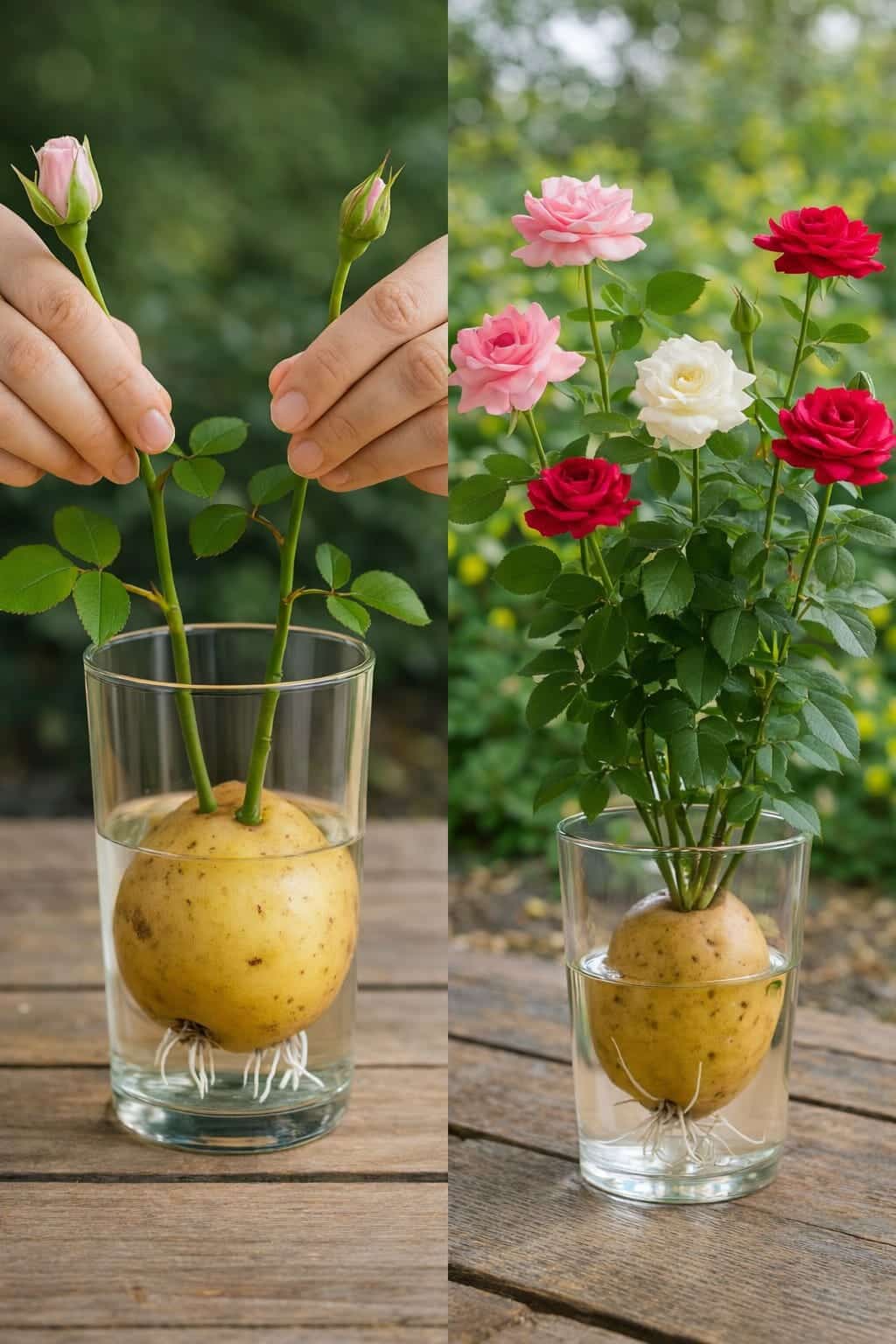
The Biggest Mistake: Too Much Water
This is where many people fail with the potato method. Because the potato already holds moisture, too much watering can lead to:
· Stem rot – The base of the cutting turns black and mushy.
· Potato rot – The potato decomposes, releasing foul odors and inviting fungus.
· Mold – White or green mold appears on the soil surface.
· Fungal problems – Damping‑off disease kills the cutting.
The rule: The setup should stay lightly moist, never soggy. Water only when the top inch of soil feels dry to the touch — which may be only once every 7–10 days. When in doubt, wait another day.
Light and Temperature Matter Too
A rose cutting does best in:
· Bright indirect light – A windowsill with a sheer curtain is ideal.
· Mild warmth – 65–75°F (18–24°C) encourages root growth.
· No harsh direct sun – Direct sun overheats the plastic covering and dries out the cutting.
· Stable temperatures – Avoid drafts, air conditioners, or heaters.
Too much hot sun can dry the cutting out before it roots. Too little light slows everything down. If your home is cool (below 60°F), consider using a seedling heat mat to warm the soil gently.
How Long Does Rooting Take?
Rose cuttings do not root overnight. Depending on the rose variety, conditions, and time of year, rooting may take:
· Fast‑rooting varieties (e.g., some shrub roses): 4–6 weeks.
· Average varieties: 6–10 weeks.
· Hard‑to‑root varieties (e.g., hybrid teas): 10–12 weeks or longer.
Important: New leaves alone do not always mean roots have formed well. The cutting may push out new growth using stored energy even without roots. Be patient and do not disturb the cutting. You can gently tug on the stem after 6 weeks — if you feel resistance, roots have likely formed.
Does the Potato Make Rooting Faster?
Sometimes people claim the potato method makes rooting faster. In reality, the speed depends much more on:
· The health and type of the cutting
· Humidity (high humidity is critical)
· Warmth (consistent 70°F is ideal)
· Cleanliness (sterile tools, fresh mix)
· The rose variety (some root like weeds; others are stubborn)
· Whether rot is avoided
So the potato may help moisture stability, but it is not the main reason cuttings root quickly. In controlled experiments, cuttings rooted in perlite or vermiculite often root just as fast — or faster — because those mediums provide better aeration.
The potato method is best seen as a fun, low‑tech experiment, not a guaranteed shortcut.
Signs the Cutting May Be Succeeding
A successful cutting will show these signs over time:
· Leaves staying firm instead of collapsing – No wilting or drooping.
· Fresh new growth – Tiny new leaves or buds emerging from the top.
· Resistance when gently tugged – After 6–8 weeks, a gentle pull meets resistance, indicating roots.
· Healthy green stem tissue – No blackening or shriveling from the bottom up.
· No foul odor – The soil smells earthy, not sour or rotten.
If you see new leaves but no roots, do not celebrate too early. Wait for the tug test.
Common Mistakes to Avoid
If you want better results, avoid these common errors.
Using Weak or Diseased Cuttings
A cutting from an unhealthy rose will not root, no matter what you do. Always start with a vigorous, pest‑free stem.
Leaving Flowers or Buds on the Stem
Flowers and buds consume energy that should go to root formation. Snip them off.
Overwatering
As mentioned, this is the #1 killer. Let the soil dry slightly between waterings.
Using Mushy or Sprouting Potatoes
A potato that is already soft or has long sprouts is more likely to rot. Use fresh, firm potatoes.
Placing the Cutting in Hot Direct Sun
The plastic covering magnifies sunlight and can cook the cutting. Bright indirect light only.
Expecting Instant Roots
Propagation is a patience game. Do not tug on the cutting every few days. Leave it alone.
Skipping the Humidity Dome
In dry indoor air, uncovered cuttings dehydrate quickly. Use a plastic bag or dome.
Forgetting Air Circulation
Open the plastic bag once a day for a few minutes to prevent mold and allow fresh air.
Is This the Best Method Overall?
Not always. Many gardeners root roses successfully without potatoes using:
· Propagation mix (perlite + peat) – Excellent aeration and moisture control.
· Sand or vermiculite – Clean, sterile, and great for drainage.
· Water propagation – Simple, but roots can be weak and transplanting is tricky.
· Direct soil under a humidity dome – Works well for easy‑to‑root varieties.
The potato method is more of a home‑garden shortcut experiment than a guaranteed best practice. It is particularly appealing to beginners because it uses common kitchen items. But professional growers rarely use potatoes because they prefer sterile, consistent mediums.
Still, it can be a fun and satisfying way to try growing new roses from stems you love. Even if only half of your cuttings root, you have gained experience and free plants.
Transplanting Your New Rose Plant
Once your cutting has developed a strong root system (visible roots through drainage holes or resistance when tugged), it is time to transplant.
Step‑by‑step transplanting:
- Prepare a larger pot (6–8 inches) with high‑quality potting soil.
- Gently remove the cutting from the propagation pot. Be careful not to break the roots.
- Separate the potato from the roots if it is still intact. Often, the potato will have decomposed. If it is still firm, you can leave it — it will eventually rot away in the soil.
- Plant the cutting in the new pot at the same depth it was growing. Do not bury the stem deeper than before.
- Water lightly and place in bright indirect light.
- Gradually acclimate to normal conditions over 1–2 weeks (remove humidity dome, introduce more light).
- Wait to fertilize until you see active new growth (about 4 weeks after transplanting). Use a half‑strength balanced fertilizer.
After a few months, your new rose plant can be planted outdoors in a sunny location with well‑draining soil.
Frequently Asked Questions (Rose Cuttings in Potatoes)
Can I use any type of potato?
Firm, organic potatoes are best. Avoid potatoes that are soft, sprouting, or have green skin. Russet, Yukon Gold, or red potatoes all work.
Do I need to use rooting hormone with the potato?
No, but it helps. Rooting hormone (powder or gel) significantly increases success rates, especially for difficult roses. Dip the cutting in hormone before inserting into the potato.
Can I use this method for other plants?
Yes. Some gardeners use potatoes for hydrangeas, figs, and other softwood cuttings. The same principles apply.
Why did my cutting turn black?
Blackening usually indicates rot from too much moisture or bacteria. The potato may have been contaminated, or the soil stayed too wet. Next time, use a fresh potato, sterilize your tools, and water less.
Can I reuse the potato after a failed cutting?
No. Discard the potato. It may harbor rot organisms.
How many cuttings can I put in one potato?
One cutting per potato. Multiple cuttings in one potato compete for space and increase rot risk.
Should I remove the potato when transplanting?
If the potato is still firm, you can gently remove it, but be careful not to damage roots. If it is soft and decomposing, leave it — it will add organic matter to the soil.
What is the success rate with this method?
For home gardeners, success rates vary from 30% to 70%, depending on conditions. Easy‑to‑root roses like shrub roses and groundcovers do best. Hybrid teas are more challenging.
Final Thoughts
Rose cuttings in potatoes can work, but the real secret is not the potato itself. The real success comes from:
· Healthy cuttings – Start with vigorous, disease‑free stems.
· Clean preparation – Sterilize tools, use fresh potatoes, and fresh propagation mix.
· Steady moisture – Keep the soil lightly moist, not soggy. Do not overwater.
· High humidity – Use a plastic bag or dome to prevent drying.
· Bright indirect light – No harsh sun, but enough light for photosynthesis.
· Patience – Roots take weeks to months. Do not disturb.
The potato may simply help hold moisture around the stem while roots begin to form. It is a clever, low‑tech trick that can be especially rewarding for beginner gardeners who enjoy experimenting.
So if you want to try it, go ahead — just think of it as a helpful propagation aid, not a miracle shortcut. Because strong new rose plants are built the same way most good garden successes are built: slowly, carefully, and with the right conditions from the start.
Now grab a potato, take a cutting from your favorite rose, and give it a try. You might just end up with a beautiful new rose bush — and a great story to tell.
Have you tried rooting rose cuttings in potatoes? Share your experience in the comments below. And if you found this guide helpful, save it for later or send it to a friend who loves garden experiments.