Signs Rice Is Causing Problems
Remove rice immediately if you notice any of these signs:
- Mold on the rice layer
- Sour smell
- Sticky surface
- Fungus gnats
- Rice grains swelling or clumping
- Wet crown area
- Yellowing leaves
- Mushy roots
- Bark staying damp too long
After removing rice, flush the pot with plain water if the orchid is due for watering. If the bark smells sour or the roots look unhealthy, repot.
What to Do If You Already Added Rice
If you already added rice to your orchid pot, remove it before the next watering. Use a spoon or your fingers to gently lift the rice from the surface. Be careful not to damage roots near the top.
If some grains fell deep into the bark, remove what you can. If a lot of rice is mixed into the medium, repotting may be safer.
After removing the rice, let the orchid return to a normal care routine. Do not add fertilizer immediately if the plant seems stressed.
Can White Pebbles Be Used Instead?
White pebbles are safer than rice because they are inert and do not decompose. However, even pebbles should be used carefully. A thick layer can trap moisture and make it harder to judge when the bark is dry.
If you want a decorative top layer, use a thin layer of washed stones and keep them away from the crown. Make sure the pot still drains well and the roots have airflow.
For orchids, function should come before decoration.
Can LECA Be Used Instead?
LECA, or lightweight expanded clay aggregate, can be used for some orchids in semi-hydroponic growing systems. It is not the same as rice. LECA is inert, porous, and designed for plant culture.
However, switching an orchid to LECA requires a different watering method and is not as simple as adding pellets to the top of the pot. If you want to try LECA, research orchid semi-hydroponics carefully and transition the plant properly.
Do not confuse rice grains with plant-safe clay media.
Can Rice Water Help Orchid Roots Grow?
Weak rice water may support the root zone slightly, but it is not a guaranteed root-growth booster. New orchid roots grow when the plant has good light, proper moisture, fresh medium, and stable conditions.
If you want stronger roots, focus on:
- Fresh bark
- Correct watering
- Good airflow
- Bright indirect light
- Gentle fertilizer
- Warm temperatures
Rice water is optional. Whole rice grains are not recommended.
Can Rice Save a Weak Orchid?
No. A weak orchid needs diagnosis, not rice. If the leaves are wrinkled, the roots may be too dry or rotten. If the leaves are yellow, the plant may be stressed from water, light, temperature, or root issues. If the orchid is not blooming, it may need better light or seasonal temperature cues.
Rice cannot fix root rot, poor light, or bad potting medium. In fact, whole rice can make a weak orchid worse by encouraging mold or pests.
For a struggling orchid, inspect the roots and potting medium first.
A Safe Orchid Care Routine Without Rice
Here is a reliable routine for a Phalaenopsis orchid:
- Grow it in orchid bark or another airy orchid medium.
- Use a pot with drainage and ventilation.
- Place it in bright indirect light.
- Water when roots turn silvery and the medium is nearly dry.
- Let water drain completely.
- Keep water out of the crown.
- Feed lightly during active growth.
- Repot when bark breaks down.
- Keep the leaves clean.
- Be patient between bloom cycles.
This routine is more effective than any rice layer.
A Safer “White Top” Look for Styling
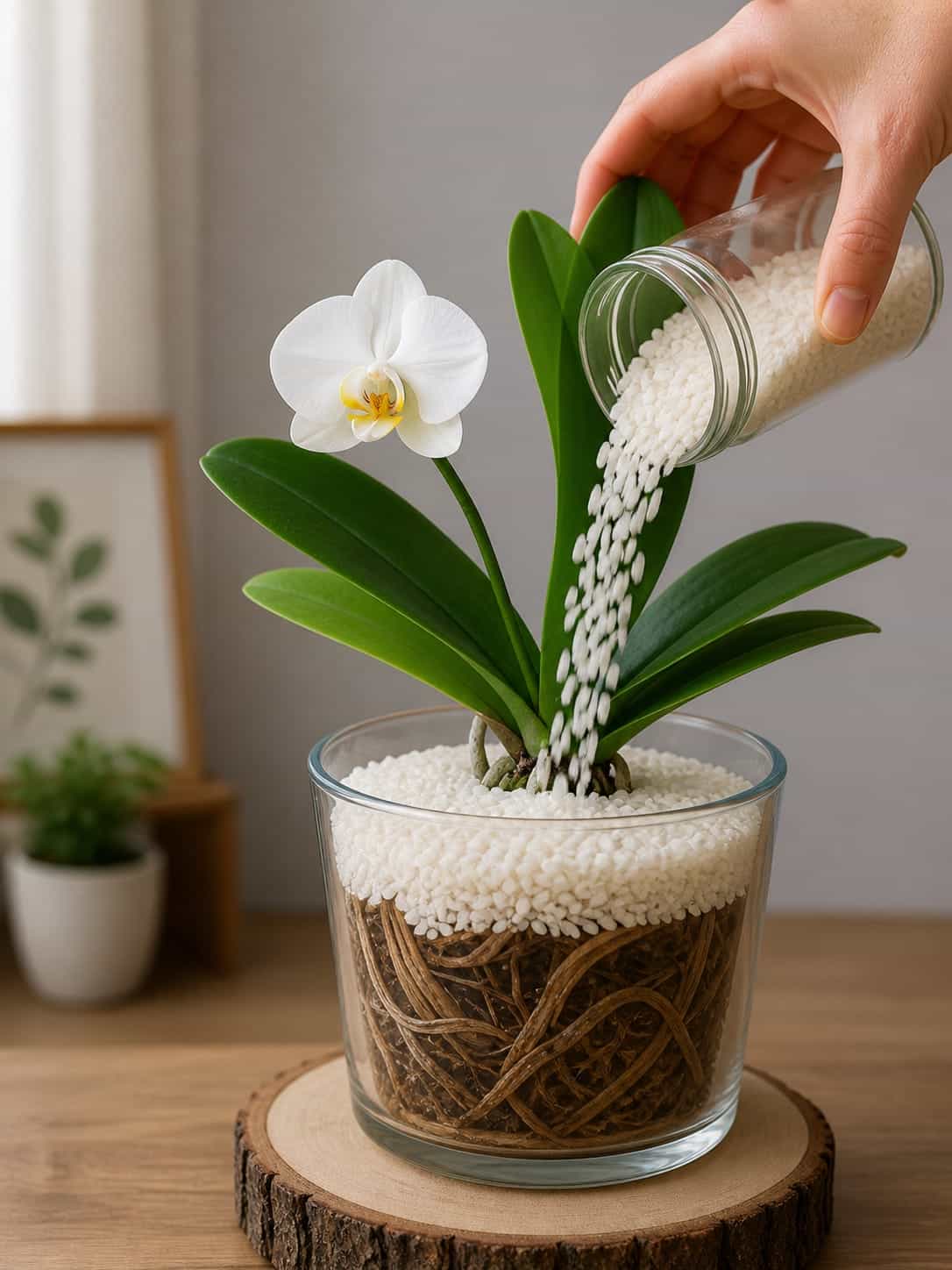
If you like the look of the image and want a clean white surface for display, use safer materials. Choose washed white stones, coarse pumice, or decorative orchid-safe gravel. Keep the layer thin, and do not cover the crown.
Another option is to use a decorative outer pot and leave the orchid medium visible. Orchids are naturally beautiful when their bark and roots show.
Never sacrifice airflow and drainage for appearance. A beautiful orchid display should still let the plant breathe.
Common Mistakes With the Rice Orchid Trick
Leaving Dry Rice in the Pot
Dry rice will not stay dry after watering. It can swell, clump, mold, and attract pests.
Using a Thick Layer
A thick layer blocks airflow and traps moisture around the orchid base.
Pouring Rice Into the Crown
The crown must stay clear and dry. Rice or water trapped there can cause rot.
Using Cooked Rice
Cooked rice is even worse than dry rice because it spoils quickly.
Using Rice as Fertilizer
Rice is not a balanced orchid fertilizer. Use proper orchid food instead.
Using Rice in a Pot Without Drainage
This increases the risk of rot, sour smells, and fungus gnats.
Ignoring Root Health
Orchid success depends on roots. Always check the roots before trying hacks.
Frequently Asked Questions
Can I put uncooked rice on my orchid?
It is not recommended. Uncooked rice can absorb water, swell, mold, ferment, and attract pests.
Can rice make orchids bloom?
No. Rice cannot force orchid blooms. Blooming depends on light, root health, temperature cues, and proper care.
Is rice water good for orchids?
Very weak fresh rice water can be used occasionally, but it is optional and should not replace orchid fertilizer.
Can I use cooked rice water?
No. Cooked rice water is usually too starchy and may contain salt or food residue.
How often can I use rice water?
No more than once every six to eight weeks during active growth, and only if the orchid is healthy.
What should I use instead of rice as a white top layer?
Use washed white stones, coarse pumice, or orchid-safe decorative gravel, and keep the layer thin.
Will rice attract bugs?
Yes, damp rice can attract fungus gnats and other pests.
Can rice cause mold?
Yes. Rice is organic and can mold when damp.
Should orchid roots be covered with rice?
No. Orchid roots need air. Covering them with rice can reduce airflow and trap moisture.
What is the best way to feed an orchid?
Use a balanced orchid fertilizer at a diluted strength during active growth, and flush with plain water between feedings.
Final Thoughts
The rice top-dressing orchid trick looks beautiful in a photo. White rice poured around a blooming orchid creates a clean, natural, eye-catching effect. It suggests a simple kitchen secret that might feed the plant and make it bloom more often.
But in real orchid care, whole rice grains are not a good long-term potting material. They can absorb water, swell, decompose, grow mold, attract fungus gnats, and trap moisture around sensitive orchid roots and crowns. Orchids need air and drainage more than they need kitchen scraps.
If you want to use rice in orchid care, the safer option is a very weak fresh rice rinse made from uncooked rice, diluted heavily, and used only occasionally. Even then, it should be poured through the bark only when the orchid needs watering, and the pot must drain completely afterward.
For true orchid health, focus on the basics: bright indirect light, fresh orchid bark, healthy roots, proper watering, complete drainage, good airflow, and gentle orchid fertilizer. These are the things that help orchids produce firm leaves, strong roots, and future flower spikes.
Use rice as inspiration carefully, not as a thick pot covering. The prettiest orchid care is the kind that keeps the plant alive, breathing, and ready to bloom again.