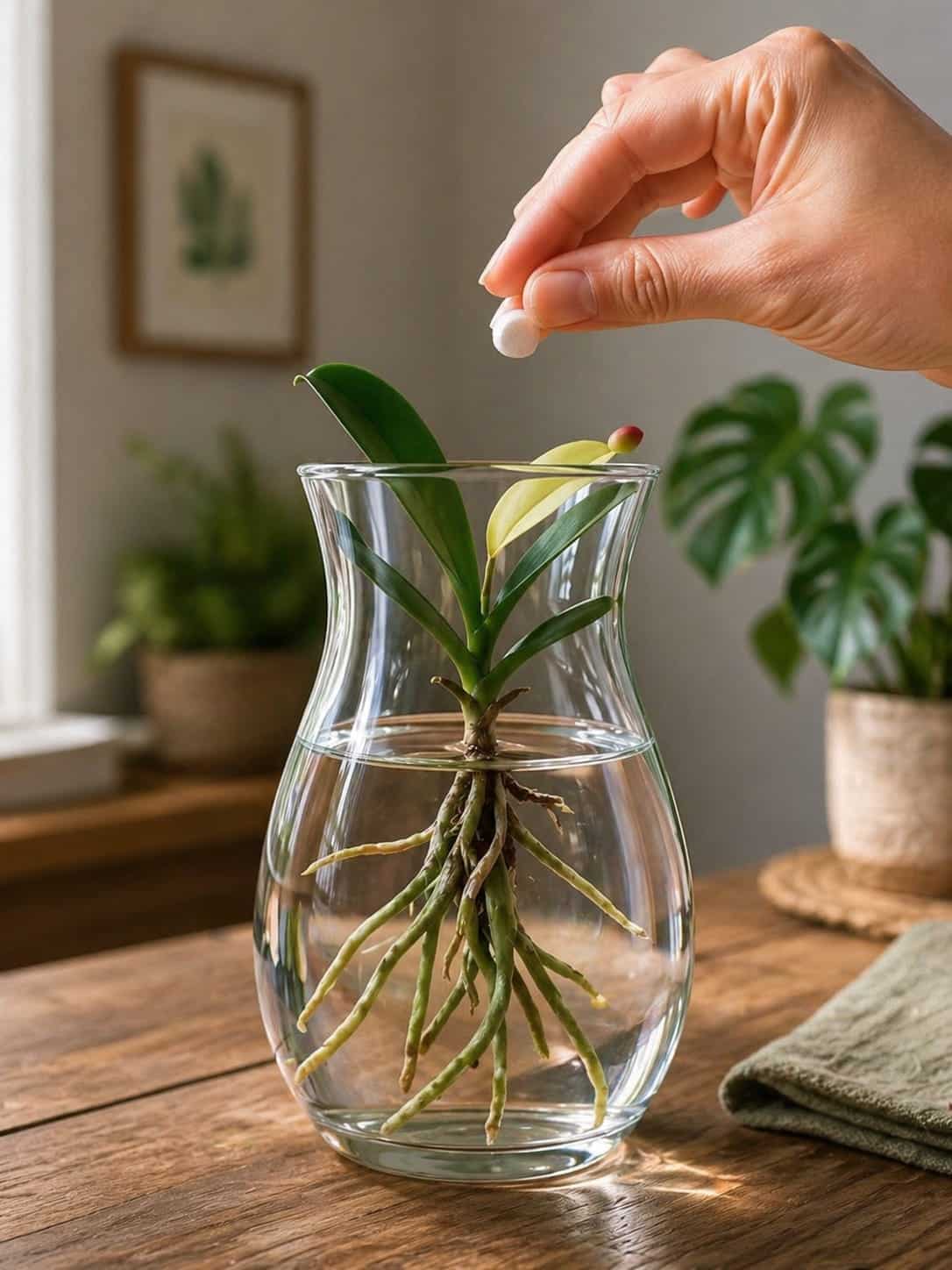
What Orchids Actually Need to Thrive (No Magic Tablets)
If you want strong roots and beautiful blooms, focus on the basics. These are the proven, non‑negotiable factors that keep orchids healthy.
- Bright Indirect Light
Orchids love filtered light. An east‑facing window is ideal. A south or west window with a sheer curtain also works. Too much direct sun scorches leaves; too little light prevents blooming. Signs of proper light: leaves are medium green (not dark green, which indicates too little light; not reddish, which indicates too much).
- Proper Watering (The Most Important Factor for Roots)
· For bark‑grown orchids: Water when the potting medium is nearly dry (every 7–10 days). Water thoroughly, letting it run through the pot. Empty the saucer.
· For water culture orchids: Change the water every 3–5 days. Use filtered or distilled water. Do not let roots sit in stale water.
- Good Airflow
Roots need oxygen. In a pot, use bark or a chunky mix that allows air pockets. In water culture, change water frequently and consider using an air stone. Stagnant conditions lead to rot.
- Clean Water
Tap water may contain chlorine, fluoride, and dissolved minerals that can harm orchids over time. Use filtered, distilled, or rainwater for best results. Let tap water sit out overnight to dissipate chlorine.
- Orchid‑Specific Fertilizer (Weakly, Weekly)
If you want to feed your orchid, use a balanced, water‑soluble orchid fertilizer (such as 20‑20‑20) diluted to quarter strength. Apply every other week during spring and summer. Do not fertilize in fall and winter. Never use a whole tablet in a small water container. Always follow label instructions.
- Humidity and Temperature
· Humidity: 50–70% is ideal. Use a humidifier, pebble tray, or group plants together.
· Temperature: Daytime 65–80°F (18–27°C). Many orchids need a slight temperature drop at night (10–15°F cooler) to trigger blooming.
Signs of Healthy Orchid Roots vs. Unhealthy Roots
Knowing what healthy roots look like will help you avoid unnecessary “cures.”
Healthy orchid roots are:
· Firm to the touch
· Green when wet (after watering)
· Silvery when dry (in bark)
· Plump, not flat or shriveled
· Free of black or brown spots
Unhealthy orchid roots are:
· Mushy, soft, or slimy (rot)
· Brown, black, or dark gray
· Hollow or stringy (dead)
· Flat and papery (dehydrated)
If your orchid has mostly healthy roots, it does not need a tablet. If it has unhealthy roots, a tablet will not help — you need to trim the rot and repot in fresh bark.
A Step‑by‑Step Orchid Care Routine (No Gimmicks)
Follow this simple routine to keep your orchid thriving.
Weekly
· Check the potting medium. Water if nearly dry.
· Inspect roots (through a clear pot or by gently removing the inner pot).
· Wipe leaves with a damp cloth to remove dust.
Monthly
· Flush the pot with plain water to remove salt buildup.
· Inspect for pests (mealybugs, scale, spider mites).
· Remove any dead or yellow leaves.
Spring & Summer (Active Growth)
· Bright indirect light (10–12 hours).
· Water every 7–10 days (when bark is nearly dry).
· Feed every 2 weeks with quarter‑strength orchid fertilizer.
· Maintain humidity.
Fall & Winter (Resting Period)
· Still bright light, but days are shorter — consider a grow light.
· Water less often (every 10–14 days).
· Stop fertilizing.
· Keep away from cold drafts (below 55°F / 13°C).
Annually
· Repot every 1–2 years with fresh orchid bark.
· Trim dead roots.
· Use a pot only 1–2 inches larger.
Frequently Asked Questions (Orchid Tablets and Water Culture)
Can I use aspirin in orchid water?
There is no reliable evidence that aspirin benefits orchids. It can lower pH and may cause root burn. Stick to orchid‑specific products.
What is the best fertilizer for orchids in water culture?
Use a balanced, water‑soluble orchid fertilizer (like 20‑20‑20) diluted to quarter strength. Apply once a month during spring and summer. Do not use slow‑release tablets in water; they release too quickly.
How do I know if my orchid needs nutrients?
Signs of nutrient deficiency include pale leaves, very slow growth (no new leaves in over a year), and lack of blooms despite good light. If you have been using plain water for a long time, a light feeding may help.
Can I use vitamin B‑complex for orchids?
Human vitamins are not formulated for plants. They can cause root rot and algae growth. Avoid them.
Why are my orchid roots turning black in water?
Black roots indicate rot, usually from stale water, lack of oxygen, or bacterial contamination. Change water more frequently, ensure the vessel is clean, and consider switching to bark culture.
Is water culture better than bark for orchids?
For most home growers, bark is easier and more forgiving. Water culture requires frequent water changes and careful attention to avoid rot. Water culture is not recommended for beginners.
How often should I change the water for an orchid in water culture?
Every 3–5 days. Never let water sit for more than a week. Use filtered or distilled water.
Can I use ice cubes to water my orchid?
Ice cubes are a popular marketing gimmick for some orchids, but cold water can shock tropical roots. Use room‑temperature water instead.
The Bottom Line: No Tablets, Just Good Care
That tiny tablet might look like a secret hack, but your orchid does not need mystery ingredients. It needs clean water, proper light, airflow, and gentle feeding. Healthy orchid roots come from balance — not from shortcuts.
The next time you see a viral video promising “instant results” with a tablet in water, remember: the improvement likely came from better care, not the tablet itself. Focus on the fundamentals: bright indirect light, correct watering, fresh bark, and occasional light feeding. That is what truly keeps orchids blooming year after year.
So skip the aspirin. Skip the vitamins. Skip the random minerals. Give your orchid what it actually needs, and it will reward you with strong, healthy roots and beautiful, long‑lasting flowers.
Have you ever tried a tablet in your orchid’s water? Share your experience in the comments below. And if you found this guide helpful, save it for later or send it to a friend who needs real orchid care advice.
This article is for informational purposes only. Always research any product before applying it to your orchids. When in doubt, stick to proven orchid care methods: light, water, bark, and patience.