How to Clean African Violet Leaves
Because African violet leaves are fuzzy, they should not be wiped like peace lily or anthurium leaves. A wet cloth can damage the leaf hairs or leave spots. Instead, use a soft dry brush, a clean makeup brush, or a small paintbrush to remove dust and powder.
Brush gently from the center outward. Support leaves if needed. Do not press hard. Do not use leaf shine products.
If leaves become very dirty, you can rinse the plant carefully with room-temperature water, but it must dry quickly in a warm place with good airflow. Avoid leaving water in the crown.
Clean leaves help the plant absorb light better, which supports blooming.
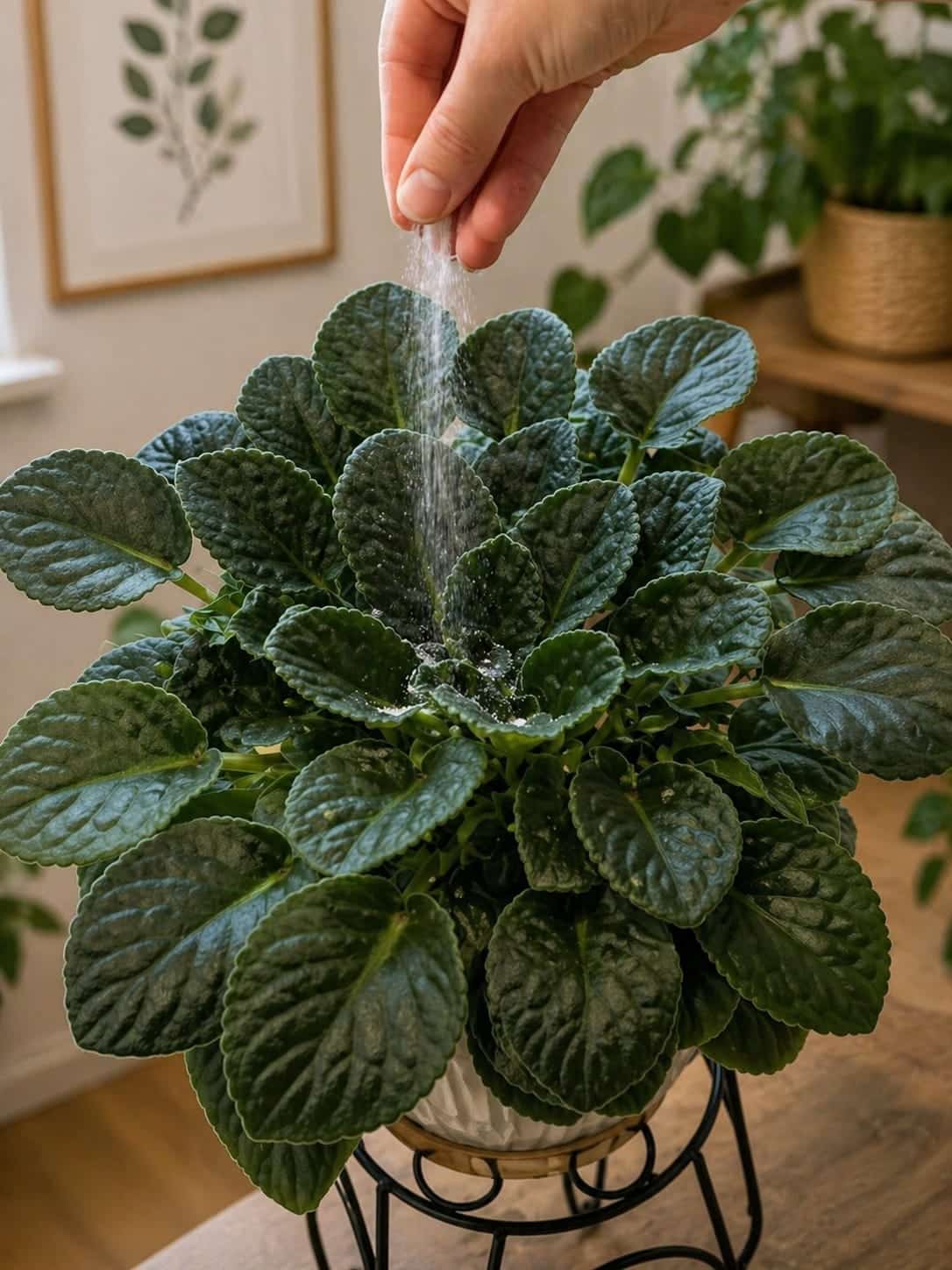
How to Apply the White Powder Without Harming the Plant
Use a small spoon, not your fingers, for control. Move the leaves gently aside if needed. Sprinkle the powder only onto the soil surface around the outer edge of the pot. Avoid the crown.
If using eggshell powder, mix it lightly into the top layer. If using dry Epsom salt, use only a few grains and water carefully. If using fertilizer powder, follow label directions and dilute properly.
After applying, check the leaves. If powder landed on them, brush it off with a soft dry brush. Do not leave powder sitting on the fuzzy surface.
Less is better. African violets respond best to gentle care.
How Often Should You Use the White Powder Trick?
If using Epsom salt water, once every four to six weeks during active growth is enough. If using eggshell powder, once every three to four months is enough. If using African violet fertilizer, follow the label, but use a weak dose if feeding regularly.
Do not use all three at the same time. Too many amendments can confuse the routine and stress the plant. Choose one method based on what your plant needs.
If the plant is healthy, blooming, and growing well, you may not need the trick at all. Healthy African violets often do best with simple consistent care.
Best Time to Use the White Powder Trick
The best time is during active growth, when the plant is producing new leaves or preparing to bloom. Spring and summer are common active periods, but African violets can grow and bloom year-round indoors if they have stable warmth and good light.
Avoid using the trick right after repotting. Newly disturbed roots need time to settle. Wait a few weeks before adding supplements.
Avoid using it on a sick plant unless you know the problem is nutrient-related. If the plant has crown rot, root rot, or pests, fix those issues first.
Can You Use This Trick on Mini African Violets?
Yes, but use even less. Mini African violets have smaller pots and less soil, so it is easy to overdo any amendment. A few drops of weak Epsom salt solution may be enough. A dusting of eggshell powder should be almost invisible.
Mini plants dry differently and can be more sensitive to buildup. Always use a tiny amount and monitor the plant carefully.
Can You Use This Trick on Other Flowering Houseplants?
A weak Epsom salt solution may be used occasionally on some flowering houseplants, but not all plants need it. Eggshell powder can be used lightly in some soil mixes, but it breaks down slowly. Proper fertilizer is usually more reliable.
Do not assume every plant wants the same treatment. Orchids, succulents, carnivorous plants, and sensitive tropicals may need completely different care.
The white powder trick should be adjusted to each plant’s needs.
Common Mistakes With the White Powder Trick
Using Too Much
A spoonful is usually too much for an African violet. Use tiny amounts only.
Sprinkling the Crown
The crown must stay clean and healthy. Avoid letting powder collect in the center.
Coating the Leaves
Fuzzy leaves hold powder. Brush it off gently if it lands there.
Using Random White Powders
Only use plant-safe powders. Avoid flour, sugar, salt, detergent, and unknown powders.
Expecting Instant Blooms
Blooms come from light, pot size, watering, and balanced feeding. Powder alone will not create instant flowers.
Feeding a Rotting Plant
If roots or crown are rotting, fertilizer or supplements can make things worse. Fix rot first.
Signs the Trick Is Helping
If the white powder trick is helping, new leaves may appear a richer green, growth may look steadier, and the plant may become more willing to bloom when light and care are right. The soil should remain fresh, with no crust, sour smell, or pest activity.
The plant should not droop, yellow, or develop brown edges after treatment. If it does, the dose may have been too strong or the plant may have another problem.
Results will be gradual. African violets may take weeks to show improvement. Do not keep adding more powder because you want faster results.
Signs You Should Stop Using It
Stop using the trick if you notice white crust on the soil, brown leaf edges, yellowing, wilting, powder stuck in the crown, sour soil smell, or fewer blooms after treatment. Return to plain water and simple care.
If the plant is declining, check the roots and crown. Repot if the soil is old or compacted. Improve light if the plant is not blooming.
A good trick should support the plant, not make it harder to care for.
A Complete African Violet Care Routine
For a healthy African violet, focus on the full routine:
- Place the plant in bright indirect light.
- Use a small pot with drainage holes.
- Grow it in light African violet mix with extra perlite if needed.
- Water with room-temperature water.
- Avoid wetting the leaves and crown.
- Keep the soil lightly moist but not soggy.
- Feed gently with African violet fertilizer.
- Use Epsom salt only occasionally if needed.
- Remove old flowers and damaged leaves.
- Repot every 6 to 12 months to refresh the soil.
This routine is much more important than any single powder. African violets thrive when conditions are steady.
How to Encourage More African Violet Blooms
If your African violet is not blooming, start with light. Move it to a brighter indirect location or use a grow light. The plant needs enough energy to make flowers.
Next, check the pot size. A pot that is too large can reduce blooming. African violets often bloom best when slightly snug.
Then check feeding. Use a balanced African violet fertilizer at a weak dose. Avoid too much nitrogen, which can encourage leaves instead of flowers.
Remove spent blooms so the plant can focus on new buds. Keep the crown healthy and do not let old leaves crowd the center.
The white powder trick can support the plant, but bloom success comes from light, roots, and steady feeding.
Frequently Asked Questions
What is the white powder used on African violets?
It is usually Epsom salt, finely crushed eggshell powder, or a pale African violet fertilizer. The safest choice depends on the plant’s need.
Can I sprinkle Epsom salt directly on African violets?
It is safer to dissolve it in water. If sprinkling dry, use only a tiny amount on the soil and keep it away from leaves and the crown.
How much Epsom salt should I use?
Use 1/8 teaspoon in 4 cups of water. Apply only occasionally during active growth.
Can white powder make African violets bloom?
It may support health, but blooms mostly depend on bright indirect light, snug pot size, correct watering, and balanced fertilizer.
Can I use baking soda?
Baking soda is not recommended as a regular African violet supplement. Too much can disturb the soil and stress roots.
Can I use flour or sugar?
No. Flour can mold, and sugar can attract pests. Do not use them on houseplant soil.
Should powder be sprinkled on the leaves?
No. African violet leaves are fuzzy and can hold powder. Keep the powder on the soil only.
How do I remove powder from leaves?
Use a soft dry brush and gently brush the powder away. Avoid wetting the leaves unless necessary.
How often should I use the trick?
Epsom salt water can be used once every four to six weeks if needed. Eggshell powder should be used only every few months. Fertilizer should follow label directions at a weak dose.
What is better than the white powder trick?
Bright indirect light, proper watering, a snug pot, fresh African violet mix, and gentle balanced fertilizer are more important for long-term blooms.
Final Thoughts
The white powder African violet trick is simple, eye-catching, and easy to try, but it must be done gently. The safest versions are weak Epsom salt water, finely crushed eggshell powder applied lightly to the soil, or a proper African violet fertilizer used according to directions. The powder should never be dumped heavily over the leaves or allowed to collect in the crown.
African violets are sensitive, beautiful plants. Their fuzzy leaves, delicate roots, and central crown need careful handling. Too much powder, the wrong powder, or moisture trapped in the center can cause problems. Use only plant-safe ingredients, use tiny amounts, and keep the leaves clean.
The real secret to African violet success is not one white powder. It is bright indirect light, a small draining pot, airy soil, room-temperature water, gentle feeding, and consistent care. When those basics are right, the plant can produce lush leaves and repeat blooms indoors.
If you use the white powder trick, treat it as a small support method, not a miracle cure. Start weak, watch the plant, and stop if you see stress. With patience and the right routine, your African violet can grow into a full, glossy, flower-covered plant that looks beautiful season after season.