How Long Does Spiral Training Take?
This depends on the plant and how dramatic you want the result to be. A soft styled look can begin to appear within a week or two, especially if you are only creating gentle curves. A more dramatic sculptural effect may take several weeks or longer, because the shaping must be gradual.
Snake plants are slow growers, and their leaves do not instantly become flexible like vine stems. That is why patience matters. Rushing the process is the fastest way to crease a leaf. A spiral snake plant is not an overnight trick. It is a styling project that evolves over time.
The good news is that even partial progress looks beautiful. You do not need a perfect corkscrew leaf to create impact. A few elegant curls can already transform the plant.
Using Support Structures the Right Way
Support structures are often the hidden secret behind a polished spiral plant. Instead of relying only on your hands, create gentle supports that guide the leaves. You can bend thin coated plant wire into loops, arcs, or semi-circles and place these near the leaves. The leaves can then be loosely tied to the supports.
Always add padding if a support presses closely against the leaf. A bit of soft cloth, foam, or plant tape can protect the leaf from rubbing. Avoid sharp metal edges or anything rough that may scar the surface.
Do not secure the ties too tightly. Leaves need a bit of freedom and airflow. Tight binding can create marks and may even damage the tissue. Check the ties every few days and loosen them if needed.
Can Pruning Help Create the Spiral Look?
Yes, selective pruning can improve the final look. Spiral styling is not only about bending leaves; it is also about removing distractions. If the plant has a badly damaged leaf, a crooked weak leaf, or overcrowded old growth that interrupts the shape, pruning can make the composition cleaner.
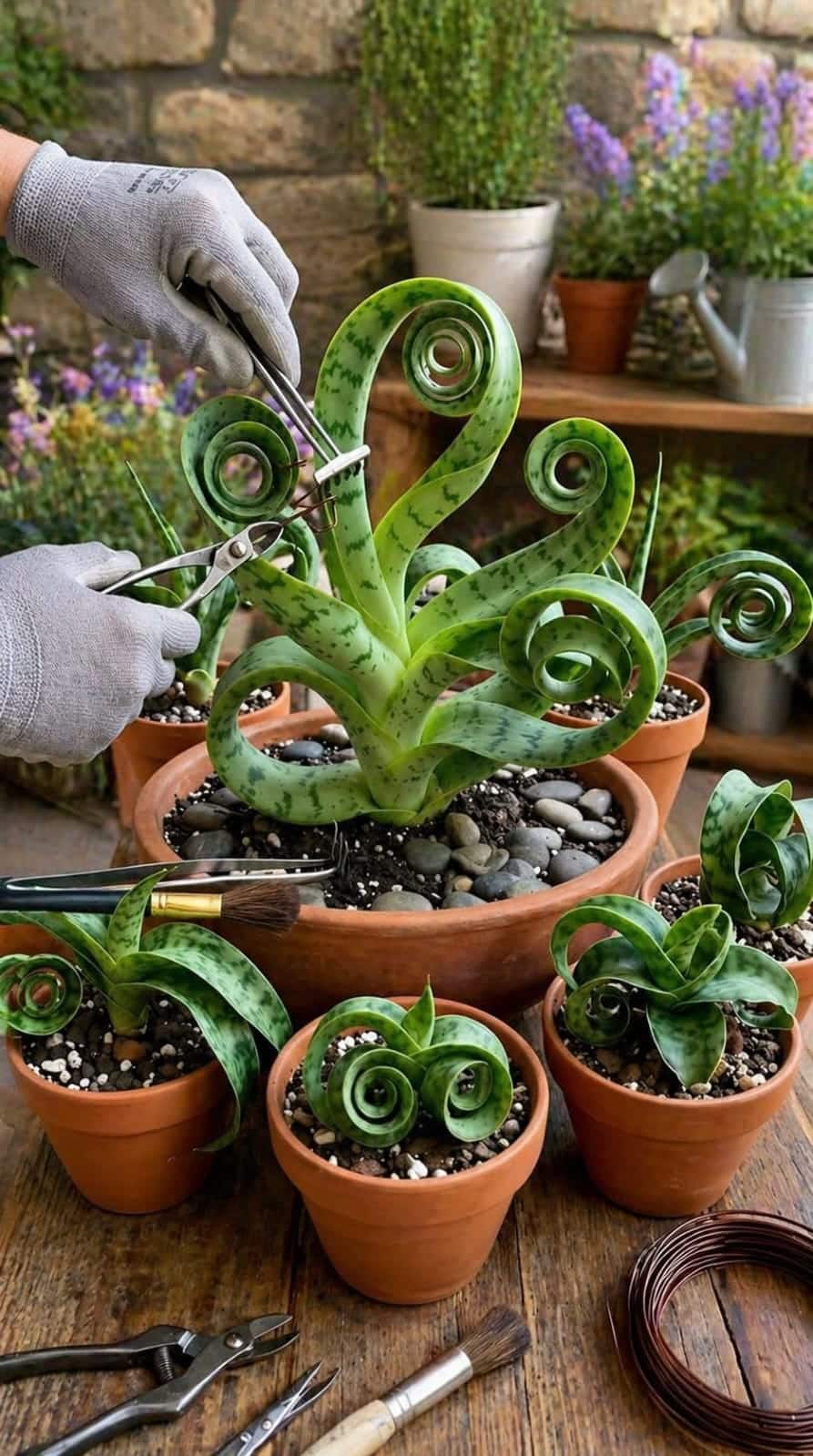
Use clean pruning snips and remove unwanted leaves at the base. Do not cut healthy leaves halfway unless you are intentionally removing damage, because cut snake plant leaves do not regain a natural pointed finish. If a leaf must go, it is usually better to remove it cleanly at the base rather than shorten it awkwardly.
Pruning also helps highlight the shaped leaves. A few beautifully spiraled leaves stand out more when the surrounding foliage is neat and balanced.
How to Keep Your Spiral Snake Plant Healthy
A styled plant still needs proper care. In fact, a spiral snake plant benefits even more from stable conditions because stress can weaken the leaves and reduce the crisp sculptural look.
Light
Place the plant in bright indirect light. Snake plants tolerate lower light, but if you want the plant to stay strong and continue producing good growth, brighter conditions are better. Avoid intense scorching afternoon sun if the plant is not used to it, but give it enough light that the leaves stay firm and colorful.
Water
Water only when the soil is dry. Snake plants do not like sitting in wet soil. Overwatering causes soft leaves, root rot, and collapse at the base, which is the last thing you want in a carefully styled plant. Water deeply, then let excess drain away completely.
Soil
Use fast-draining soil, ideally a cactus or succulent-style mix. You can improve drainage further with perlite or pumice. Good drainage keeps the roots healthy, which supports firm leaves.
Pot
A pot with drainage holes is essential. Terracotta is often a good choice because it helps the soil dry more evenly and suits the sculptural look of a styled snake plant.
Feeding
Feed lightly during spring and summer with a diluted houseplant or cactus fertilizer. Snake plants do not need heavy feeding. Too much fertilizer can stress the roots and does not improve spiral styling.
How to Make the Spiral Shape Look Even More Dramatic
If you want a truly show-stopping plant, presentation matters just as much as training. A styled snake plant looks more elegant in a clean, simple pot. Neutral containers in terracotta, matte white, beige, black, or stone textures often work beautifully because they let the sculptural leaves stand out.
You can also top-dress the soil with smooth pebbles or decorative stones. This gives the plant a finished look and visually supports the art-like quality of the design. Keep the top dressing light enough that watering remains easy and the soil can still breathe.
Another way to enhance the effect is to display the plant at eye level or slightly below eye level. This allows people to appreciate the spirals fully. A styled snake plant on a low floor corner may still look nice, but on a console table or plant stand, the shape becomes much more noticeable.
Can You Create Smaller Spiral Snake Plants from Pups?
Yes, and this is actually one of the most fun parts of the project. Smaller pups or divisions can be styled into miniature spiral forms. These are ideal for tabletops, shelves, and gift plants. Because the leaves are younger, they may also be easier to guide into compact curls.
If your main snake plant produces pups, you can separate them during repotting and place them into small terracotta pots. Then train each one with its own style. Some can be formed into two-leaf swirls, others into soft loops. A group of small spiral snake plants looks especially artistic when displayed together.
Common Mistakes to Avoid
Forcing the Leaves Too Fast
This is the biggest mistake. Snake plant leaves can crease if bent too sharply. Once creased, the damage is permanent. Always shape gradually.
Tying Too Tightly
Tight ties can scar or cut into the leaves. Use soft, loose ties and check them often.
Working With an Unhealthy Plant
A weak plant is much more likely to fail during training. Start only with a healthy, firm plant.
Overwatering After Styling
Some people overcompensate after training and water too much. Snake plants still need dry-down periods. Too much moisture can quickly ruin the plant.
Expecting Perfect Symmetry
A spiral snake plant is handmade. It does not need machine-like perfection. Slight variation often makes it look more natural and beautiful.
How to Repair a Leaf If You Bent It Too Much
If a leaf feels stressed but not fully creased, immediately release some tension. Move it back to a gentler position and support it lightly. Give the plant time to recover before trying again. If the leaf has already creased badly, it may never look smooth again. In that case, decide whether to keep it as part of the design or remove it at the base later.
Do not keep tightening a damaged leaf in hopes that it will improve. Once the tissue is compromised, more pressure only worsens the damage. It is better to work with the leaves that respond well and learn from the process.
How Often Should You Adjust the Shape?
There is no exact universal schedule, but a gentle check every few days works well. If the leaf looks happy and stable, you may refine the curve slightly after several days or about a week. If the leaf looks stressed, wait longer.
The process should feel calm and gradual. Think of it as styling in stages. Small, thoughtful adjustments are far better than one dramatic bending session.
Can Light Direction Help the Shape?
Yes, light can support the final presentation. Snake plants often lean slightly toward stronger light sources over time. Once your spiral styling is established, placing the plant so that the light complements the direction of the spirals can make the curves appear even more elegant.
However, do not rely on light alone to create the spiral. Light can influence posture, but the sculptural effect comes mainly from manual training. Still, light plays a role in maintaining a strong, attractive plant.
Rotate the pot occasionally if one side begins to dominate too much, unless you intentionally want the plant to face one direction as part of the display.
Best Time of Year to Start This Project
Spring and early summer are the best times to begin. During the growing season, the plant is more active, the light is often better, and recovery from minor stress tends to be easier. Winter is not ideal because snake plants grow more slowly and may be sitting in cooler, darker indoor conditions.
If you start in spring, the plant has time to adapt and settle into its new styled look through the active months of the year.
Why Patience Is the Most Important Tool
Spiral snake plants look impressive because they do not look rushed. The most elegant ones are shaped with patience. Each leaf is guided, observed, adjusted, and respected. When you rush, the plant tells the story through creases, scars, or awkward tension. When you work slowly, the plant becomes graceful.
Patience also makes the project more enjoyable. Instead of trying to finish in one afternoon, you get to watch the design evolve. Every small improvement feels rewarding. The plant becomes a creative project rather than just another chore.
Frequently Asked Questions
Can I really shape a snake plant into a spiral?
Yes, you can create a spiral-inspired look by training the leaves gradually. The effect is usually achieved through gentle shaping, support, and patience rather than one-time bending.
Will the leaves stay in shape forever?
The styled look can last a long time when maintained properly, especially if the leaves are supported during shaping and the plant stays healthy. Some leaves may relax slightly over time, so occasional adjustment may help maintain the design.
What is the best snake plant for spiral shaping?
A young, healthy snake plant with firm but still somewhat flexible leaves is best. Medium-sized plants are often easier to style than very large, rigid ones.
Can I use wire directly on the leaves?
It is better not to use bare wire directly against the leaves. Use soft ties, padded supports, or plant tape to avoid marks and damage.
Should I cut the leaves to make them curl?
No. The best spiral look comes from training, not from cutting the leaves into decorative shapes. Cutting healthy leaves usually weakens the natural appearance.
How long does it take to make a spiral snake plant?
A soft styled look can begin to appear within a week or two, but a more dramatic sculptural result often takes several weeks or longer.
Can I do this with small pups?
Yes. Small pups can be styled into charming miniature curls and loops, and they are often easier to manage because their leaves are younger.
What if a leaf breaks or creases?
If a leaf is badly creased, it usually will not return to a perfect appearance. Release pressure immediately and decide later whether to keep or remove the damaged leaf.
Final Thoughts
Transforming your snake plant into a stunning spiral shape is one of the most creative and satisfying ways to style a houseplant. It turns a familiar indoor favorite into something far more artistic and memorable. With its bold upright leaves and naturally sculptural presence, the snake plant is already beautiful. When trained into gentle spirals, loops, and curves, it becomes living décor.
The secret is not force. It is patience, gentle guidance, and thoughtful design. Choose a healthy plant, work slowly, support the leaves carefully, and let the shape develop over time. You do not need perfection to create something beautiful. Even a few soft curls can give your snake plant a dramatic designer look.
Once the shaping is complete, keep the plant healthy with bright indirect light, well-draining soil, careful watering, and occasional grooming. Display it in a simple pot, add a neat top dressing if you like, and let the sculptural form shine. Whether you create one dramatic centerpiece or a collection of smaller curled snake plants, this project can completely transform the way you see this classic houseplant.
A spiral snake plant is more than a plant. It is a piece of living art, shaped by time, patience, and creativity. And once you create one, you may never look at ordinary upright leaves the same way again.