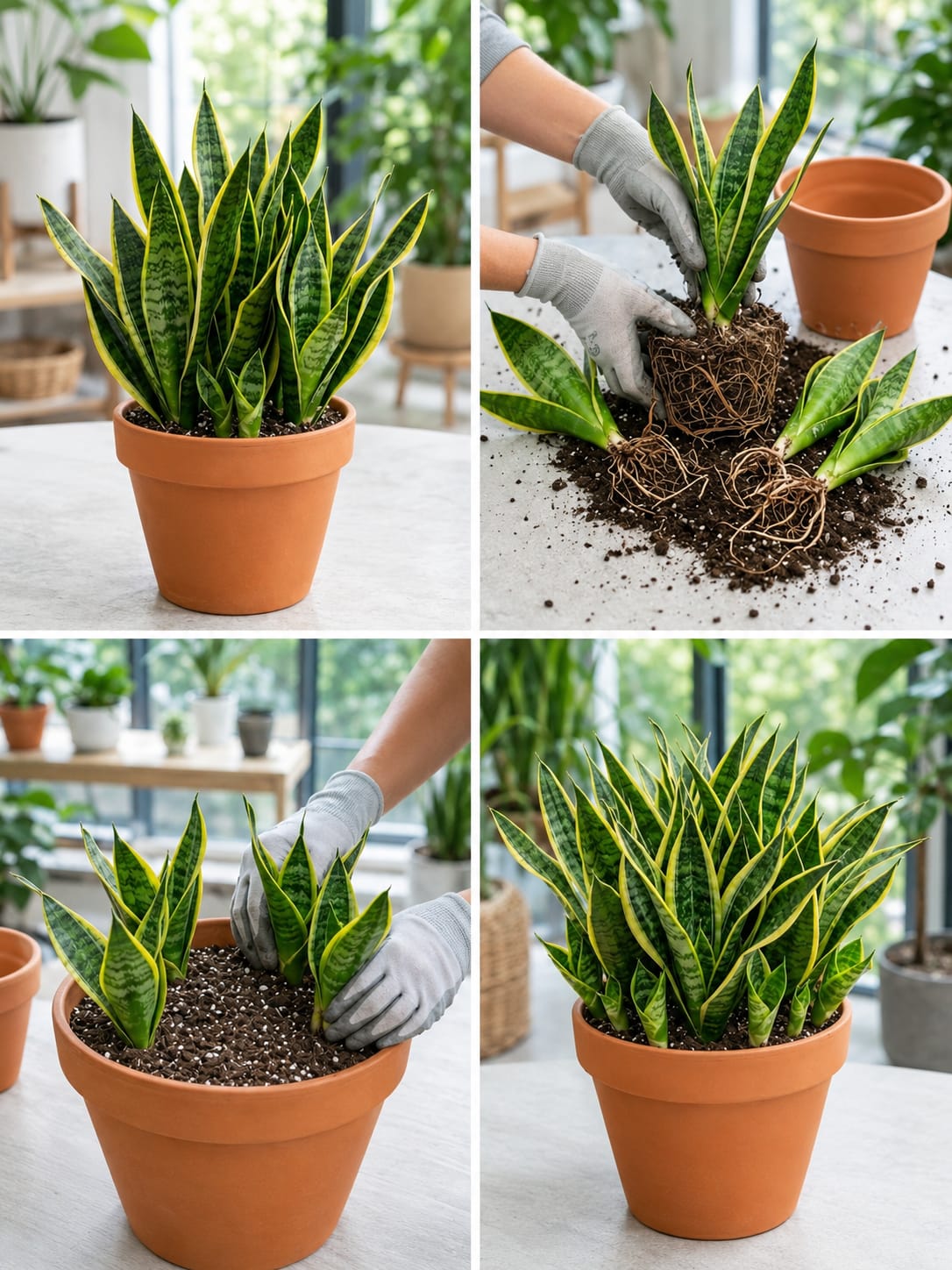
Snake plants are some of the most reliable houseplants you can grow. They are bold, architectural, drought-tolerant, and perfect for beginners. Their upright leaves bring structure to a room, their green patterns add natural texture, and their yellow-edged varieties look especially striking in terracotta, ceramic, black, or stone-style pots. A single healthy snake plant can slowly become a full cluster of leaves, and with time, it can produce pups that are easy to separate and grow into new plants.
One of the best ways to multiply a snake plant is by division. Unlike leaf cuttings, which can take months to root and may not always keep the same variegation, division gives you new plants with roots already attached. This method is practical, reliable, and ideal when a snake plant has become crowded in its pot. By dividing the plant carefully, you can refresh the mother plant, create several new pots, and encourage a fuller, healthier display.
Snake plant division is simple, but it must be done with care. These plants have thick leaves, underground rhizomes, and firm roots that store water and energy. They do not like soggy soil, oversized pots, or rough handling. The best results come from using clean tools, separating healthy pups, choosing fast-draining soil, and watering lightly after repotting.
Why Snake Plants Are Perfect for Division
Snake plants grow from underground rhizomes. These rhizomes spread below the soil and send up new shoots, often called pups. Over time, a small snake plant can become a dense clump with many leaves growing from different points in the pot.
Division works because each pup or clump can be separated with roots and rhizome attached. This gives the new plant a strong start. Instead of waiting for a leaf cutting to grow roots from nothing, the divided plant already has a working root system.
This is why division is one of the fastest and most reliable ways to grow more snake plants.
When Should You Divide a Snake Plant?
You do not need to divide a snake plant often. These plants like being slightly snug in their pots. However, division becomes useful when the plant is crowded, the pot is full of pups, or the plant has become difficult to water properly.
Good signs that your snake plant may be ready for division include:
- The pot is packed with leaves
- New pups are pushing against the pot edge
- Roots are coming out of the drainage holes
- The plant dries out very quickly
- The pot is bulging or cracking
- The plant is top-heavy
- You want to create more plants
If the plant is healthy and comfortable, you can wait. Snake plants do not mind being somewhat root-bound. But when the pot becomes too crowded, division can refresh growth and improve the plant’s appearance.
Best Season for Dividing Snake Plants
The best time to divide snake plants is during spring or summer. These seasons give the plant warmth, light, and active growth energy. After division, the plant can recover faster and produce new roots more easily.
Division can be done in fall or winter if necessary, but recovery may be slower. During cooler months, soil dries more slowly, so the risk of overwatering after repotting is higher.
For the safest results, choose a warm bright day during the active growing season.
Tools You Need
Prepare your tools before removing the plant from its pot. This keeps the process clean and organized.
- Clean gloves
- Sharp knife or pruning shears
- Fresh fast-draining soil
- Small pots with drainage holes
- A tray or table for working
- Optional cinnamon powder for cut rhizomes
- Watering can
- Plant labels if dividing several pups
Always clean your cutting tools before use. Dirty tools can introduce bacteria or fungus into fresh cuts. Wipe blades with rubbing alcohol or wash them with hot soapy water and dry them well.
Choosing the Right Pots
Snake plants do best in pots that are only slightly larger than their root system. A pot that is too big holds excess soil, and excess soil holds extra moisture. This can lead to root rot.
Choose pots with drainage holes. This is essential. Terracotta pots are excellent because they breathe and help soil dry faster. Ceramic and plastic pots can also work if the soil mix drains well and the pot has holes.
For a divided pup, start with a small pot. The plant will grow better in a pot that matches its root size.
Best Soil for Divided Snake Plants
Snake plants need fast-draining soil. Regular indoor potting soil is often too heavy by itself. It can hold too much water around the roots.
A good snake plant mix may include:
- Cactus or succulent soil
- Perlite
- Pumice
- Coarse sand
- Small bark chips
- A small amount of regular potting mix
The final mix should feel loose and airy. When watered, it should drain quickly. If water sits on the surface or the mix stays wet for many days, it is too dense.
Step One: Remove the Snake Plant from the Pot
Start by gently loosening the plant from the pot. If the pot is flexible plastic, squeeze the sides to release the root ball. If it is terracotta or ceramic, run a dull knife or plant label around the inside edge to loosen the soil.
Hold the plant near the base and slide it out carefully. Avoid pulling hard on the leaves because they can break or detach from the rhizome.
If the plant is very root-bound, it may take a little patience. Tap the pot gently and work slowly.
Step Two: Inspect the Roots
Once the plant is out, look at the roots and rhizomes. Healthy roots are usually firm and pale tan, cream, orange, or white. Healthy rhizomes are firm and thick.
Remove old loose soil so you can see where the pups are connected. Do not worry about removing every bit of soil. The goal is to understand the plant’s structure.
Look for natural separation points where pups have their own roots attached.
Step Three: Separate the Pups
Some pups may pull apart gently by hand. Others may need to be cut with a clean knife. Each divided section should have leaves, rhizome, and roots attached.
Do not separate a pup if it has no roots unless you plan to treat it like a cutting. Rooted divisions are much easier and faster to establish.
If you need to cut the rhizome, make a clean cut. Avoid crushing it. A clean cut heals better and reduces the risk of rot.
Step Four: Let Cut Sections Dry
If you made cuts through rhizomes or roots, let the divided sections sit in a shaded airy spot for a few hours. Some gardeners let them dry overnight. This helps the cut areas seal slightly before planting.
You can dust a tiny amount of cinnamon powder on large cut rhizome surfaces if desired. Use only a light dusting. Do not coat the roots heavily.
This drying step is especially useful for snake plants because they dislike wet wounds in soil.
Step Five: Plant Each Division
Add a layer of fresh fast-draining mix to the bottom of the new pot. Place the snake plant division in the pot and position it upright. Add soil around the roots and gently firm it in place.
Do not bury the plant too deeply. The base of the leaves should sit near the soil surface. Burying the crown can increase the risk of rot.
Make sure the plant stands stable. If it leans, add more mix around the root ball and press gently.
Step Six: Wait Before Watering
If the roots were cut or disturbed heavily, wait 2 to 3 days before watering. This gives damaged roots time to dry slightly and reduces rot risk.
If the plant was separated cleanly with minimal root damage, you can water lightly after potting, but do not soak the soil heavily.
After the first watering, let the soil dry well before watering again.
How to Water After Division
Newly divided snake plants should be watered carefully. Their roots need time to settle into the new soil.
Water only when the soil is dry. When watering, water thoroughly until excess drains out, then empty the saucer. Do not let the pot sit in water.
For the first few weeks, avoid heavy watering. A newly divided plant is more vulnerable to rot than an established plant.
Light After Repotting
Place divided snake plants in bright indirect light. Avoid harsh direct sun immediately after division because the plant may be slightly stressed.
After a few weeks, once the plant looks stable, it can handle brighter light. Snake plants can tolerate low light, but they grow better and keep stronger color in brighter conditions.
Good light helps the plant recover and produce new roots.
How Long Recovery Takes
Snake plants recover slowly but steadily. After division, the plant may pause growth for a few weeks while it adjusts. This is normal.
Do not panic if you do not see immediate new leaves. Snake plants often work underground first, growing roots before producing visible growth.
With warmth, bright light, and careful watering, the divisions should settle in and eventually begin growing.
Signs a Division Is Healthy
A healthy divided snake plant will stay firm and upright. The leaves should remain strong, not mushy or collapsing. Over time, the plant may produce new shoots from the soil.
Healthy signs include:
- Firm leaves
- No bad smell from the soil
- Stable upright growth
- Soil drying between waterings
- New pups appearing later
- No soft crown
If the plant remains firm, it is likely doing fine even if growth is slow.
Signs of Trouble After Division
Watch for warning signs:
- Leaves turning mushy
- Base becoming soft
- Yellowing leaves with wet soil
- Bad smell from the pot
- Black spots near the crown
- Soil staying wet too long
These signs usually mean overwatering, poor drainage, or root damage. Stop watering, check the roots, and repot into dry fast-draining soil if necessary.
Should You Fertilize After Division?
Do not fertilize immediately after division. Freshly separated plants need time to settle. Fertilizer can burn damaged roots.
Wait at least 4 to 6 weeks before feeding. Once the plant shows stable growth, use a diluted cactus or succulent fertilizer at half strength during spring or summer.
Snake plants do not need heavy feeding. Light feeding is enough.
How to Encourage More Pups
After division, each healthy plant can eventually produce new pups. To encourage pups, provide bright indirect light, use a snug pot, avoid overwatering, and feed lightly during active growth.
A pot that is slightly snug often encourages snake plants to produce new shoots. Oversized pots may cause the plant to focus on roots and hold too much moisture.
Patience matters. Pups may take months to appear.
Why Division Is Better Than Leaf Cuttings for Variegated Snake Plants
Yellow-edged snake plants are often propagated by division because it preserves the color pattern. Leaf cuttings from variegated snake plants may produce pups that are solid green instead of yellow-edged.
If you want new plants that look like the parent plant, division is the best method. Each pup keeps the same natural growth pattern and color because it is part of the same plant structure.
Leaf cuttings are fun, but division is more reliable for matching the original plant.
Can You Plant Several Divisions Together?
Yes. Planting several divisions together creates a fuller pot faster. This is a great method if you want a lush display rather than many small separate pots.
When planting multiple divisions, leave enough space for roots and future pups. Do not pack them too tightly. Crowding too much can make watering difficult and reduce airflow around the base.
A wide terracotta pot works beautifully for a fuller snake plant arrangement.
Creating a Full Snake Plant Bowl
For a full decorative pot, choose several similar-sized divisions. Arrange taller pieces toward the center and shorter pups around the edges. This creates a layered, balanced look.
Use a gritty soil mix and a pot with drainage. Add a thin top dressing of pebbles, pumice, or clay balls if you want a finished style.
Do not make the top dressing too thick, because thick layers can trap moisture.
Cleaning the Leaves After Repotting
After division and repotting, the leaves may be dusty from soil. Wipe them gently with a soft damp cloth. Clean leaves look better and absorb light more efficiently.
Support each leaf while wiping so it does not bend or break. Avoid oily leaf-shine products. Snake plants look best with their natural clean surface.
A clean plant instantly looks more polished and decorative.
Common Mistakes When Dividing Snake Plants
Avoid these common mistakes:
- Dividing a weak or rotting plant without checking roots
- Using heavy wet soil
- Planting divisions too deeply
- Watering heavily right after cutting roots
- Using pots without drainage
- Choosing oversized pots
- Fertilizing immediately after division
- Keeping new divisions in dark corners
Snake plants are tough, but they still need dry, airy, bright conditions after division.
Best Indoor Light Locations
Snake plants can adapt to many indoor spaces, but they look best with good light. Place them near east-facing windows, bright living rooms, home offices, bedrooms with natural light, or sunny kitchen corners.
They can tolerate lower light, but growth will be slower. Variegated varieties often keep stronger color in brighter light.
If the plant leans toward the window, rotate the pot every few weeks.
Outdoor Placement After Division
If growing outdoors, keep newly divided snake plants in bright shade at first. Avoid direct hot sun until they recover. Outdoor light is stronger than indoor light and can scorch stressed leaves.
Protect the pots from heavy rain. Too much rain can saturate the soil and cause rot.
Once the plants are established, they can handle more light if introduced gradually.
Temperature and Cold Protection
Snake plants prefer warm conditions. Keep them away from frost, cold drafts, and freezing temperatures.
If the plants are outdoors during warm months, bring them inside before cold weather arrives. Cold damage can create soft, dark patches on the leaves.
Warmth helps divided plants recover faster.
Repotting vs. Dividing
Sometimes a snake plant only needs repotting, not division. If the plant is slightly root-bound but still has space and looks healthy, you can move it into a pot one size larger without separating pups.
Division is best when the pot is very crowded, when you want more plants, or when sections are growing in separate clumps.
Do not divide just because the plant is growing well. Snake plants often enjoy being snug.
Continue to Page 2
Continue to page 2 for more details about this article and the key points many readers miss on the first page.