Signs You Should Stop Immediately
Stop using powder if you notice:
- Mold on the bark
- Fungus gnats
- Sour or musty smell
- Powder turning into paste
- Roots becoming brown or mushy
- Buds dropping suddenly
- Leaves yellowing after application
- White or yellow crust building up
- Water draining more slowly than before
These signs mean the powder is disturbing the orchid’s root environment. Remove it and flush or repot if needed.
Better Ways to Support Orchid Flower Spikes
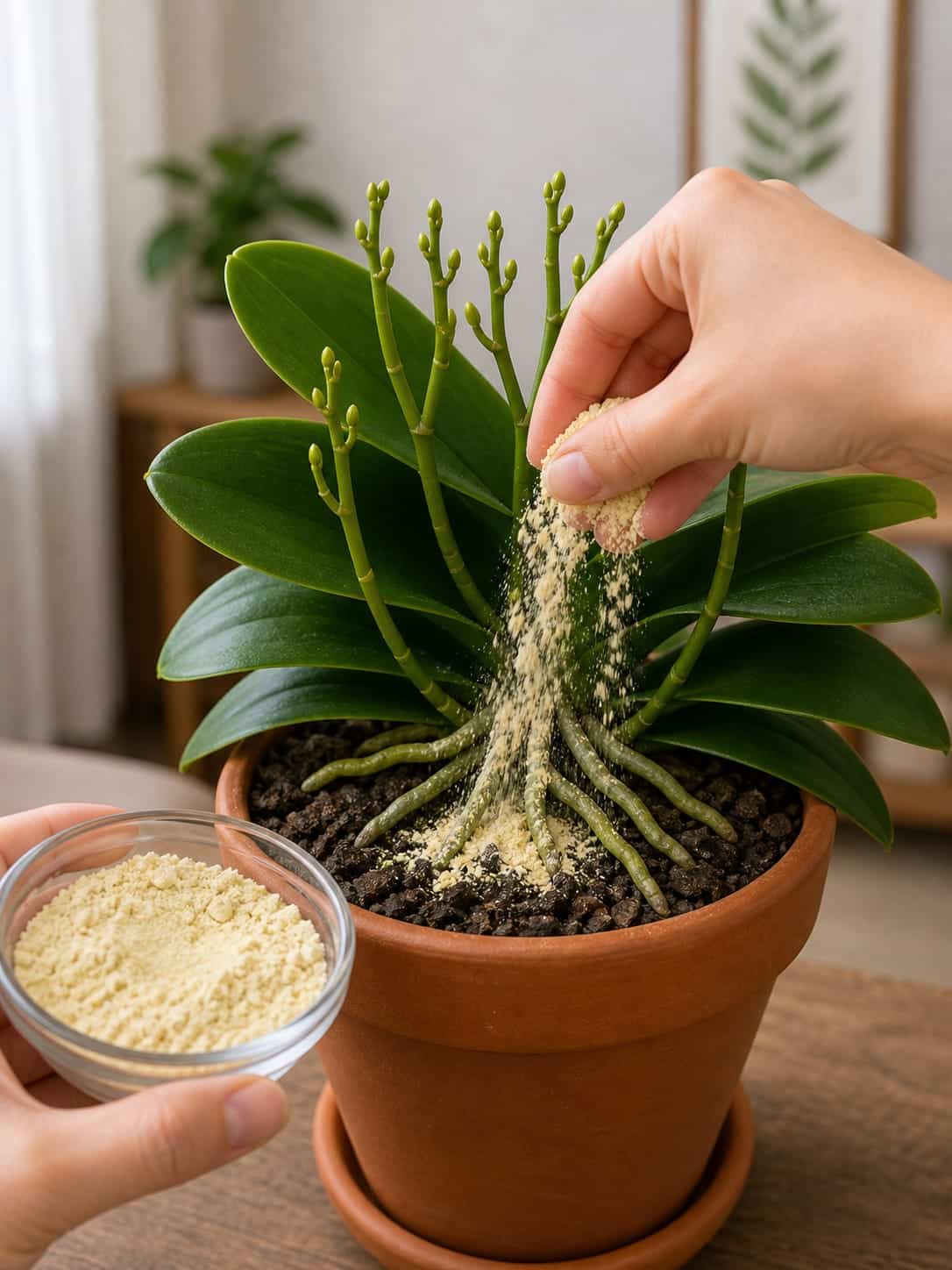
If your orchid is growing flower spikes like the one in the image, the best support is steady care. Do not over-handle the plant or change conditions dramatically.
To support flower spikes:
- Keep the orchid in bright indirect light.
- Maintain stable temperatures.
- Avoid cold drafts.
- Water when the bark is nearly dry.
- Keep water out of the crown.
- Use stakes gently if spikes need support.
- Do not repot while buds are forming unless absolutely necessary.
- Avoid strong fertilizer during bud development.
Orchid buds are sensitive. Calm, consistent care is better than dramatic feeding.
Should You Mist an Orchid After Applying Powder?
No. Misting after applying powder can make it clump and stick to roots or leaves. If powder gets wet on the leaf bases, it may hold moisture where you do not want it.
If your home is dry, raise humidity with a pebble tray or humidifier nearby rather than misting powder-covered areas.
Keep the plant clean and airy.
Humidity for Orchids
Phalaenopsis orchids enjoy moderate humidity, but they also need airflow. High humidity without airflow can lead to fungal issues. If you use a humidifier, keep gentle air movement in the room and avoid soaking the plant’s crown.
Humidity helps leaves and roots stay comfortable, but it does not replace watering or feeding.
Best Pot for Orchids
The orchid in the image is in a terracotta pot. Terracotta can work for orchids if the pot has drainage and the medium dries appropriately. However, many Phalaenopsis orchids are easiest to manage in clear plastic orchid pots with drainage holes and side vents.
Clear pots let you see root color and moisture levels. This makes watering easier. The pot can then be placed inside a decorative cover pot if desired.
Whatever pot you use, drainage is essential.
Best Potting Mix for Orchids
Orchid potting mix should be chunky and airy. Good ingredients include:
- Orchid bark
- Coconut husk chips
- Perlite
- Charcoal
- LECA, in suitable systems
- Sphagnum moss, used carefully
Fine powder should never become the main component. If the mix becomes dense, repot into fresh bark.
How to Tell If the Orchid Needs Repotting
Repotting may be needed if the bark has broken down or the roots are unhealthy. Signs include:
- Sour smell from the pot
- Mushy roots
- Bark turning crumbly and soil-like
- Water draining slowly
- Fungus gnats
- Roots packed too tightly
- Plant wobbling because the medium has collapsed
Do not repot only because you want to add powder. Repot when the root environment needs refreshing.
Can This Trick Help a Non-Blooming Orchid?
Not much. If an orchid is not blooming, check light first. A healthy Phalaenopsis orchid often needs brighter indirect light and a slight nighttime temperature drop to initiate spikes.
If the plant has healthy leaves but no flowers, move it gradually to a brighter location. Avoid direct harsh sun. Feed lightly during active growth. Be patient.
Powder cannot replace environmental bloom cues.
Can This Trick Help Weak Roots?
If roots are weak because the potting medium is old, wet, or compacted, powder will not help. The orchid needs fresh bark and corrected watering.
If roots are healthy but the plant is growing actively, a tiny mineral supplement may be harmless. But root growth is best supported by air, moisture balance, light, and gentle fertilizer.
Healthy roots come from good structure, not from coating them in powder.
Can This Trick Help Yellow Leaves?
Yellow orchid leaves can happen for many reasons. One lower leaf yellowing slowly may be natural aging. Multiple yellow leaves may signal overwatering, root rot, too much sun, cold stress, or nutrient imbalance.
Do not treat yellow leaves with powder until you know the cause. If roots are damaged, powder may worsen the situation.
Inspect first, amend later.
A Safe Yellow Powder Orchid Routine
If you want to try the safest version, use this routine:
- Choose only a plant-safe powder, such as clean ground eggshell.
- Make sure the orchid is healthy and actively growing.
- Use only a tiny pinch.
- Apply it to the outer bark surface.
- Keep it away from the crown and leaf bases.
- Do not coat aerial roots heavily.
- Do not water until the orchid actually needs water.
- Flush gently with plain water if buildup appears.
- Repeat no more than every few months.
- Stop if mold, gnats, odor, or root issues appear.
This keeps the trick small enough that it is unlikely to overwhelm the orchid’s root zone.
Better Alternatives to the Yellow Powder Trick
If your goal is more flowers and stronger growth, these steps are more reliable:
- Move the orchid to bright indirect light.
- Use fresh orchid bark when the old mix breaks down.
- Water only when the bark is nearly dry.
- Let the pot drain completely.
- Keep water out of the crown.
- Use diluted orchid fertilizer during active growth.
- Maintain moderate humidity and airflow.
- Give a slight nighttime temperature drop to encourage spikes.
- Avoid major changes once buds form.
These basics matter far more than any powder.
Common Mistakes With the Yellow Powder Orchid Trick
Using Too Much Powder
A thick layer can clog bark and reduce airflow. Orchids need air around their roots.
Using Kitchen Spices
Turmeric, curry powder, and other spices are not orchid fertilizers.
Using Flour or Cornmeal
These can mold, sour, and attract pests.
Sprinkling Powder Into the Crown
The crown must stay clean and dry to prevent rot.
Coating Aerial Roots
Aerial roots need to breathe and dry normally.
Using Powder on a Sick Orchid
A sick orchid needs diagnosis, not random additives.
Expecting Instant Blooms
Flower spikes develop from long-term care, not one quick sprinkle.
Frequently Asked Questions
What is the yellow powder being sprinkled on the orchid?
It could represent ground eggshell powder, plant-safe mineral dust, or powdered fertilizer. The safest homemade option is a tiny amount of clean ground eggshell powder.
Can yellow powder make orchids bloom?
No powder can force blooms. Orchids bloom when they have healthy roots, bright indirect light, proper watering, and suitable temperature cues.
Can I use turmeric on orchids?
It is better not to sprinkle turmeric into orchid pots. It is a kitchen spice, not a balanced orchid treatment.
Can I use eggshell powder on orchids?
Yes, but only in a very tiny amount, fully cleaned and finely ground. Keep it away from the crown and do not use it often.
Can powder harm orchid roots?
Yes, if too much is used. Fine powder can clog bark, hold moisture, or irritate roots.
Should I sprinkle powdered fertilizer directly on orchid bark?
Only if the product label says to do so. Most powdered fertilizers should be dissolved in water and diluted.
How often should I use eggshell powder?
No more than every few months, and only a tiny pinch. Many orchids do not need it.
Can this trick help orchid buds open?
Not directly. Buds open best with stable care, bright indirect light, proper watering, and no drafts or sudden stress.
What if mold appears after using powder?
Remove the powder, flush or repot if needed, and return to plain orchid care.
What is the best fertilizer for orchids?
A balanced orchid fertilizer used at a weak strength during active growth is usually best.
Final Thoughts
The yellow powder orchid trick looks convincing because the orchid in the image is already healthy, full of spikes, and ready to bloom. A pale powder falling over the roots creates the feeling of a secret bloom booster. But orchids do not respond well to heavy or random additives.
If the powder is clean ground eggshell or another plant-safe mineral supplement, it can be used only in a very tiny amount. It should be kept away from the crown, lower leaf bases, and aerial roots. It should never form a thick layer or paste in the bark.
Do not use turmeric, flour, cornmeal, sugar, spices, or mystery powders on orchids. These can create mold, pests, residue, and root stress. If the powder is fertilizer, follow the label and dilute it properly rather than sprinkling it directly onto sensitive roots.
The real secret to orchid blooms is not yellow powder. It is bright indirect light, healthy roots, airy bark, careful watering, complete drainage, gentle fertilizer, and steady conditions. Once an orchid begins forming buds, avoid sudden changes and keep care consistent.
Use homemade tricks lightly, if at all. Let the orchid’s roots breathe, let the crown stay clean, and let proper care do the real work. With patience and a stable routine, your orchid can reward you with strong spikes, healthy leaves, and beautiful blooms that last for weeks.