Jade plants are some of the most loved houseplants in the world. Their thick, glossy, coin-shaped leaves make them look rich, healthy, and full of life. Their strong woody stems can grow into miniature tree-like shapes, and with time, a jade plant can become a beautiful living sculpture on a sunny windowsill. Many people also associate jade plants with good luck, prosperity, and positive energy, which makes them even more special in the home.
But even though jade plants are known for being easy, they can still become weak. Sometimes the leaves look dull instead of shiny. Sometimes the stems stretch and lean. Sometimes the plant stops producing fresh growth. Older leaves may wrinkle, drop, or turn soft. A jade plant can survive for a long time in poor conditions, but surviving is not the same as thriving.
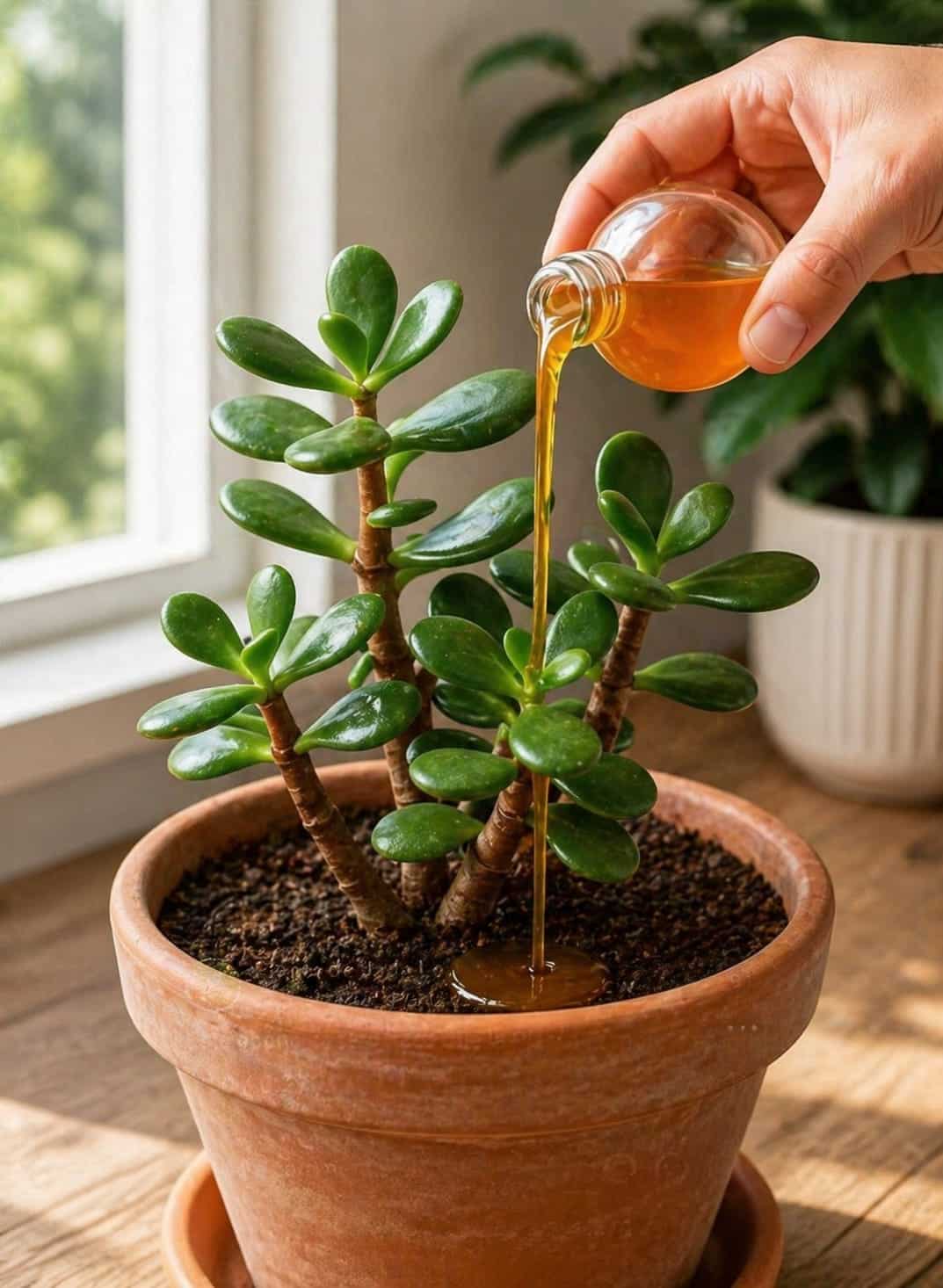
That is why many plant lovers are starting to notice the “golden liquid” jade plant trick. In photos, a warm amber liquid is poured around the base of the jade plant, soaking into the soil like a rich natural tonic. It looks almost like honey, tea, or a homemade plant syrup. The visual effect is powerful: a golden stream feeding the roots of a plant known for luck and abundance.
So what exactly is this golden liquid?
The safest version of this trick is not straight honey, cooking oil, syrup, or any sticky kitchen liquid. For jade plants, the best version is a very diluted golden plant tonic, usually made from banana peel water, weak worm casting tea, or a tiny amount of honey water diluted heavily and used with extreme caution. Because jade plants are succulents, they do not like heavy, wet, sugary soil. That means the golden liquid must be light, watery, strained, and used rarely.
The goal is not to drown the plant in a thick sweet mixture. The goal is to give a healthy jade plant a gentle boost during its active growing season while keeping the roots dry, airy, and safe. Used correctly, this trick can become a small part of a care routine that helps jade plants look fuller, glossier, and stronger over time.
In this complete guide, you will learn what the golden liquid jade plant trick is, how to make a safer version at home, how often to use it, what mistakes to avoid, and what jade plants truly need for beautiful long-term growth.
What Is the Golden Liquid Jade Plant Trick?
The golden liquid jade plant trick is a homemade plant-care method where a light amber-colored liquid is poured into the soil around a jade plant. The liquid is usually presented as a natural growth booster, and it often looks like honey or golden tea. The idea is that this liquid gives the plant a small natural boost, helping it grow stronger leaves and healthier stems.
For jade plants, the safest golden liquid is usually a diluted banana peel tea or weak worm casting tea. These liquids can have a golden-brown color and are much safer than thick sweet liquids. Some people also talk about honey water, but honey must be used very carefully because it contains sugar and can attract insects or feed unwanted microbes in the soil.
Jade plants are succulents. They store water in their thick leaves and stems. This means they do not need frequent watering or rich wet soil. A jade plant’s roots like to dry between waterings. Any homemade liquid must respect that. If a golden liquid is too thick, too strong, or used too often, it can harm the plant instead of helping it.
The trick works best when used as an occasional supplement during spring or summer, when the jade plant is actively growing. It should never be used every week, and it should never replace proper light, drainage, soil, and watering.
Why Jade Plants Respond to Gentle Care
Jade plants grow slowly and steadily. They do not usually explode with growth overnight. Instead, they build strong stems, thick leaves, and woody trunks over time. This slow growth is part of their charm. A jade plant can live for decades when cared for properly.
Because jade plants grow slowly, they do not need heavy feeding. In fact, too much fertilizer or too much organic liquid can make them weak. Overfed jade plants may grow soft, stretched, or unstable. Overwatered jade plants may develop root rot, leaf drop, or mushy stems.
Gentle care is the secret. A little support during the growing season can help, but the plant should never be overwhelmed. The golden liquid trick fits this idea only when it is diluted and occasional.
The real foundation of jade plant health is bright light, gritty soil, drainage, and careful watering. Once those basics are correct, a mild golden tonic can be used as a small extra boost.
What Is Usually in the Golden Liquid?
There are several safe versions of the golden liquid. The best choice depends on what you have available and how cautious you want to be.
The first option is banana peel tea. This is made by soaking a banana peel in water, straining the liquid, and diluting it. Banana peel water often turns pale gold or amber. It is popular because banana peels are associated with potassium, which supports general plant strength.
The second option is worm casting tea. This is made by soaking a small amount of worm castings in water, then straining and diluting the liquid. It can look light brown or golden. Worm castings are gentle and plant-friendly when used properly.
The third option is extremely diluted honey water. This should be used only rarely and very weakly. Honey is not a normal fertilizer, and it can attract pests if used too strongly. If used at all, it should be more like lightly tinted water than syrup.
The fourth option is a diluted liquid succulent fertilizer that naturally has an amber color. This is the most predictable option because it is made for plants and has measured nutrients.
For beginners, banana peel tea or diluted succulent fertilizer is usually better than honey water.
Why Straight Honey Is Risky for Jade Plants
The image of golden liquid often makes people think of honey. Honey looks beautiful and natural, but straight honey should not be poured into a jade plant pot. It is thick, sticky, sugary, and not designed for roots. In soil, honey can attract ants, fungus gnats, fruit flies, and mold. It can also create sticky pockets that interfere with water movement.
Jade plants need fast-draining soil. Their roots should receive water, then dry out. A sticky sweet liquid can remain in the potting mix and create an unhealthy environment. This is especially risky indoors, where there is less airflow and less natural breakdown than outdoors.
If honey is used at all, it must be diluted heavily. A tiny drop in a large amount of water is more than enough. Even then, it should be used rarely and only in a pot that drains well.
For most jade plant owners, banana peel tea or worm casting tea gives the golden look with less risk.
The Best Golden Liquid Recipe for Jade Plants
The safest beginner-friendly golden liquid for jade plants is diluted banana peel tea. It gives a warm amber color, uses a common kitchen scrap, and can be made mild enough for succulents.
Ingredients
- 1 small banana peel
- 4 cups clean water
- A clean jar
- A fine strainer
- 4 to 8 extra cups water for dilution
Instructions
- Cut the banana peel into small pieces.
- Place the pieces into a clean jar.
- Add 4 cups of room-temperature water.
- Let the mixture soak for 12 to 24 hours.
- Strain out every piece of peel.
- Dilute the liquid with at least 4 to 8 cups of clean water.
- Use only when the jade plant soil is completely dry and ready for watering.
The final liquid should be pale gold, not dark, thick, or syrupy. If it smells sour, throw it away. Fresh and weak is best.
Worm Casting Golden Tea Recipe
Worm casting tea is another gentle option. It is less dramatic than honey, but it is more plant-friendly. It can support soil life and provide mild nutrition.
Ingredients
- 1 teaspoon worm castings
- 4 cups clean water
- A jar or bowl
- A coffee filter, cloth, or fine strainer
- Extra water for dilution
Instructions
- Add 1 teaspoon of worm castings to the jar.
- Pour in 4 cups of water.
- Stir gently.
- Let it sit for 2 to 4 hours.
- Strain carefully until no particles remain.
- Dilute with extra water if the liquid looks dark.
- Use as a light watering only when the jade plant soil is dry.
For jade plants, the mixture should be weak. The liquid should look like pale tea, not muddy compost water.
Very Diluted Honey Water Recipe
If you want to create the golden honey-style version, use extreme dilution. This is not something to use often, and it is not necessary for every jade plant.
Ingredients
- 1 tiny drop of plain honey
- 2 cups warm water
- 2 additional cups plain water for dilution
Instructions
- Add one tiny drop of honey to 2 cups of warm water.
- Stir until fully dissolved.
- Add 2 more cups of clean water.
- Let the mixture cool to room temperature.
- Use only a small amount on dry soil.
- Let the pot drain completely.
The mixture should not feel sticky. It should not smell strong. If you can see thick golden syrup in the soil, it is too strong. Jade plants do not need sugar. This version should be treated more like a novelty tonic than a regular feeding method.
How to Apply the Golden Liquid Correctly
Before applying any golden liquid, check the soil. This is the most important step. Jade plants should be watered only when the soil is dry. Push your finger deep into the potting mix, or use a wooden skewer. If the skewer comes out with damp soil attached, wait.
When the soil is dry, pour the diluted golden liquid slowly around the outer soil surface. Do not pour it directly onto the trunk. Do not splash it over the leaves. Do not let it pool into a thick puddle.
Water only enough to moisten the soil and allow excess liquid to drain from the bottom. Then empty the saucer. Never let a jade plant sit in golden liquid, water, fertilizer, or any homemade tonic.
If your pot has no drainage holes, do not use this trick. In fact, jade plants should not be grown long-term in pots without drainage holes.
How Often Should You Use the Golden Liquid?
Use the golden liquid rarely. Once every six to eight weeks during spring and summer is enough. If the plant is not actively growing, do not use it. During fall and winter, avoid it unless the jade plant is under strong grow lights and still producing new growth.
Jade plants are not heavy feeders. Too much liquid feeding can cause weak growth, soil buildup, pests, and root stress. A jade plant would rather be slightly underfed than overfed.
Use plain water most of the time. Use the golden liquid only as an occasional boost, not as a regular replacement for proper watering.
What Results Can You Expect?
The golden liquid trick will not transform a jade plant overnight. Jade plants are naturally slow-growing. Real improvement takes time. If the plant is healthy and receiving enough light, you may notice firmer leaves, glossier growth, and new small leaves at the tips over several weeks or months.
If your jade plant was slightly undernourished, a mild feeding routine may support stronger growth. If your plant was dusty, dry, or neglected, the act of caring for it more carefully may make it look better quickly.
However, if the plant is weak because of low light, root rot, poor drainage, or soggy soil, the golden liquid will not fix it. In those cases, you need to correct the real problem first.
The Real Secret: Bright Light
Jade plants need bright light to grow strong. This is the biggest secret behind thick stems, compact growth, and glossy leaves. A jade plant in low light may survive, but it often becomes stretched, pale, or weak. The stems may lean toward the window, and the leaves may become spaced far apart.
Place your jade plant near a bright window. A south-facing or west-facing window can work well if the plant is introduced gradually. East-facing windows are also good, especially for gentler morning light. If your home is dark, a grow light can make a big difference.
Without enough light, no golden liquid will create strong growth. Fertilizer and homemade tonics only help when the plant has enough energy to use them.
Best Soil for Jade Plants
Jade plants need fast-draining soil. Regular potting soil often holds too much moisture. Since jade plants store water in their leaves and stems, wet soil can quickly lead to root rot.
A good jade plant mix can include:
- 2 parts cactus or succulent mix
- 1 part perlite or pumice
- 1 part coarse sand, lava rock, or orchid bark
This mix allows water to drain quickly and air to reach the roots. It also helps prevent homemade liquids from lingering too long in the pot.
If your jade plant is in heavy, wet soil, repotting into a gritty mix will help more than any trick. Healthy roots are the foundation of healthy leaves.
Best Pot for Jade Plants
Jade plants can become top-heavy because their leaves and stems are thick. A sturdy pot is important. Terracotta pots are excellent because they are heavy, breathable, and help the soil dry faster. Ceramic pots can also work if they have drainage holes.
Drainage holes are essential. A jade plant in a no-drainage pot is at high risk of rot. If you love a decorative pot without holes, keep the jade plant in a smaller nursery pot inside it. Remove the nursery pot when watering, let it drain, and then place it back.
Choose a pot that is only slightly larger than the root ball. A huge pot holds too much soil, and too much soil holds too much water.
Continue to Page 2
Continue to page 2 for more details about this article and the key points many readers miss on the first page.