Why the Powder Alone Is Never the Real Answer
This is the part most viral videos leave out.
Even if the powder is the “right” one, it is almost never the reason an orchid succeeds all by itself. Orchids recover and grow because of a full care routine, not because of one dramatic sprinkle.
Healthy orchids still need:
· Bright indirect light – Without enough light, no powder will create blooms.
· Fresh, airy bark or moss – Old, broken‑down medium suffocates roots.
· Careful watering – Orchids need to dry out between waterings.
· Good airflow – Stagnant air promotes fungus and rot.
· Stable temperatures – Most orchids prefer 65–80°F during the day.
· Healthy roots – Firm, green or silvery roots are the foundation of everything.
If those things are wrong, no powder will save the plant for long. That is why copying a reel without understanding the product is risky.
When Powders Can Actually Help
A powder can be useful when:
· you just trimmed rotten roots and need to protect cut areas (cinnamon or fungicide)
· you are propagating orchids and want rooting support (rooting hormone)
· you are dealing with surface fungal concerns (light dusting of fungicide)
· the powder is a properly labeled orchid‑safe product used according to directions
In those cases, it becomes one small helpful step in a bigger process. That is very different from thinking every weak orchid just needs “the white powder.”
When Powders Can Cause Problems
Using the wrong powder can create new issues, especially if:
· it is used too heavily (cinnamon can cake and trap moisture)
· it traps moisture in the crown (leading to crown rot)
· it is added to already soggy medium (turns to paste, blocks air)
· it is not actually meant for orchids (baking soda, flour, etc.)
· it is used repeatedly without understanding the dose (salt buildup)
Orchid roots need air as much as they need moisture. Anything that interferes with that balance can slow recovery instead of helping it.
What to Do Before Using Any Powder on an Orchid
If your orchid looks weak, ask these questions first:
- Are the roots healthy?
Healthy roots are firm, plump, and green or silvery. Unhealthy roots are mushy, brown, or hollow. If roots are rotten, no powder will fix them — you need to trim and repot. - Is the bark old and compacted?
Broken‑down medium often causes more problems than people realize. Repot every 1–2 years with fresh orchid bark. - Is the plant getting enough light?
Weak light slows both growth and recovery. Move to a brighter spot (east window or south with sheer curtain). - Is the plant being overwatered?
This is one of the biggest reasons orchids decline. Let the medium dry out between waterings. - Is there good airflow?
Stagnant air promotes fungus. Use a small fan if needed.
Once those basics are addressed, then a powder might be useful if you know exactly what it is and why you are using it.
How to Recognize a Likely Rooting or Fungicide Situation
If the video shows:
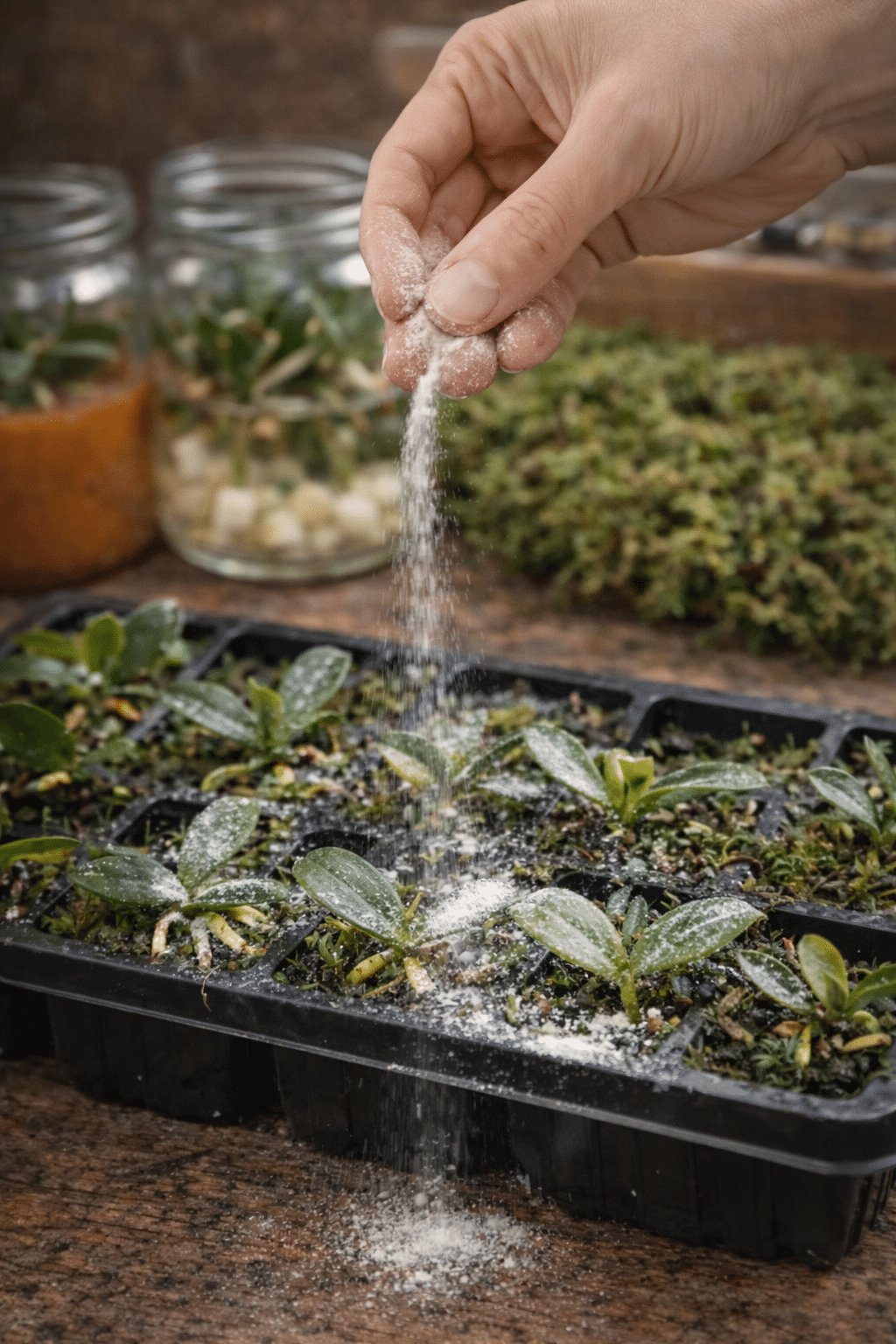
· baby orchids in trays
· tightly grouped plants in moss or fine bark
· recently separated plantlets (keikis)
· very small starts being dusted lightly
then the white powder is more likely to be rooting hormone, fungicide, or a professional propagation product. That is very different from the powders used on mature houseplant orchids in decorative pots.
If the video shows a single, mature orchid in a pot with cinnamon being dusted on cut roots after repotting, that is a different context entirely.
Always look at the whole picture before copying.
The Safest Takeaway
If you do not know what the powder is, do not guess. That is the smartest approach.
A powder that works beautifully for one orchid grower might be:
· meant only for propagation (rooting hormone)
· intended only for cut wounds (cinnamon)
· used in tiny amounts (fungicide)
· part of a larger professional setup with controlled humidity and airflow
Without that context, it is easy to misuse.
Instead of chasing mystery powders, focus on what actually makes orchids thrive:
· Fresh, airy medium – Repot with quality orchid bark.
· Proper watering – Soak, then let dry.
· Bright indirect light – A window with a sheer curtain.
· Good airflow – Open a window or use a fan.
· Gentle feeding – Use a balanced orchid fertilizer diluted to half strength.
Those steps will do more for your orchids than any powder ever could.
A Quick Reference Table
White Powder Primary Use Safe for Routine Orchid Care? How to Apply
Rooting hormone Propagation, rooting keikis No – only for cuttings/divisions Dip cut end, or light dust on propagation medium
Powdered fungicide Prevent surface fungus Yes, only when needed Light dusting on medium; avoid crown
Cinnamon Antifungal for cut wounds Yes, after trimming Light dust on cut surfaces only
Epsom salt Magnesium supplement Yes, but dissolved in water 1 tsp per gallon, water monthly
Diatomaceous earth Pest control (fungus gnats) Yes, only for pest issues Light dust on dry medium
Baking soda Not recommended No – can harm roots Avoid
Frequently Asked Questions (White Powder for Orchids)
Can I use rooting hormone on a mature orchid?
Rooting hormone is intended for cuttings and keikis, not for mature plants with established roots. Using it on a mature orchid’s roots is unnecessary and may cause harm.
Is cinnamon safe for all orchids?
Yes, in small amounts on cut wounds. Do not sprinkle cinnamon over the entire potting medium or into the crown. Use it sparingly.
How often should I use Epsom salt on orchids?
Once a month at most, and only if your orchid shows signs of magnesium deficiency (yellowing between leaf veins). Dissolve 1 teaspoon per gallon of water.
Can I use baking soda on orchids?
No. Baking soda alters pH and can damage delicate orchid roots. There are much safer antifungal options like cinnamon or commercial fungicides.
Why do professional growers use white powder on baby orchids?
Professional propagators often use rooting hormone or powdered fungicide to protect vulnerable young plants in high‑humidity trays. This is a specialized technique, not a general care tip for home growers.
What should I do if I already sprinkled the wrong powder?
Scrape off as much as possible. Flush the pot with plain water. If the medium stays soggy, repot into fresh bark. Observe the plant for signs of stress.
Is there a “miracle” white powder for orchids?
No. No single powder will fix poor light, overwatering, or root rot. Healthy orchids come from consistent, correct care — not magic sprinkles.
Final Thoughts
So what is the white powder everyone is using for orchids?
Most likely, it is one of these: rooting hormone powder, powdered fungicide, cinnamon (in some cases), or a light fertilizer/mineral powder in others. From videos showing small orchids in trays, it often looks more like rooting hormone or fungicide than a standard fertilizer.
But the real lesson is bigger than the powder itself.
Healthy orchids do not thrive because of one mystery ingredient. They thrive because their roots are healthy, their medium is airy, their watering is balanced, and their care is consistent.
The powder may help — in the right situation, at the right time, with the right product.
But the care routine is what actually makes the difference.
So before you reach for that white powder, check your orchid’s roots. Repot if needed. Adjust your light and watering. Then, if you decide to use a powder, know exactly what it is and why you are using it.
Your orchid will thank you — not with a viral video, but with firm leaves, healthy roots, and beautiful blooms.
Have you used a white powder on your orchids? Share your experience in the comments below. And if you found this guide helpful, save it for later or send it to a fellow orchid lover who is wondering what that mystery powder really does.